Fraudulent will
Dead SoulsThe Fraudulent will is the forged testament at the center of the novel’s later legal crisis. Its significance lies not only in the alleged fraud attributed to Chichikov, but in the way the case draws officials into the struggle over a rich woman’s inheritance and forces a confrontation between documentary proof and the presumption of guilt.
The will and the legal case
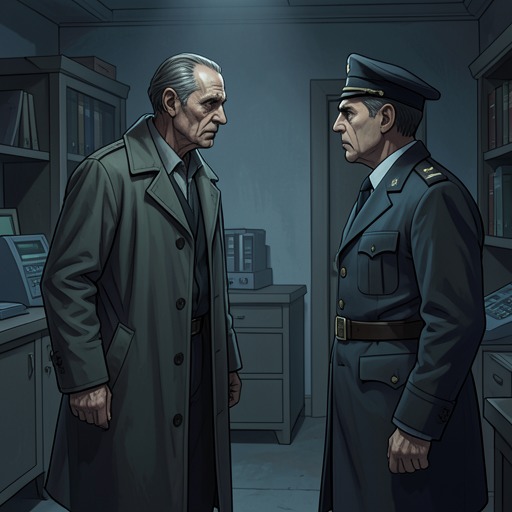
The Governor-General identifies the affair as a fraudulent will and declares that Chichikov deserves public flogging. He says that the woman who impersonated the deceased is the chief witness and orders her brought in for questioning. The accusation is therefore presented as a concrete case involving an alleged impersonation, a disputed testament, and a witness whose testimony may establish what happened.
The Governor-General’s anger extends beyond Chichikov. He says that leading officials, including the local Governor, have become implicated, and treats their involvement as evidence of a broad collapse of official honesty. The will thus turns a private inheritance dispute into a public scandal: the authority charged with judging wrongdoing is itself entangled in the matter.
Competing claims about proof and responsibility
Murazov does not defend Chichikov’s conduct as innocent. Instead, he challenges whether the case has been proved, noting that sufficient evidence against him is still lacking. His response distinguishes suspicion and moral condemnation from the evidentiary grounds needed to punish a defendant.
He also points out that the local Governor is one of the heirs under the will and therefore has a personal interest in intervening. In Murazov’s account, the rush of outsiders toward a wealthy woman’s estate follows from the absence of an exact, regular disposition of her property. That explanation does not erase the fraud allegation; it places the officials’ conduct within a wider contest over inheritance, self-interest, and the weakness of orderly settlement.
Documentary legality and the novel’s wider pattern
The will’s importance resonates with the novel’s other transactions in people recorded on paper. In the earlier purchase from Manilov, Chichikov insists that deceased peasants be entered as living in the census returns, presenting his respect for civil law and sacred obligation as a rationale for the paperwork. With Korobochka, he argues that transferring the peasants’ dues to himself would spare her further payments and payments to an assessor. To Sobakevitch, he concedes that a purchase deed should be made to put their transaction in order; later, he takes a purchase list of peasants to the serf-affairs desk for registration.
The estate offices at Koshkarev’s property reveal the limits of such formal maneuvering. Chichikov learns that the souls there are already pledged under first and second mortgage deeds, apart from a village caught in litigation and subject to a court caveat. Across these episodes, documents do not simply record settled facts: census entries, deeds, tax obligations, mortgages, and court notices determine what can be claimed and transferred. Against that background, the fraudulent will marks a darker counterpart to Chichikov’s earlier insistence on legal form: paperwork can support a transaction’s appearance of order, but it can also become the contested instrument of fraud.
Significance
The affair brings the novel’s satire of official corruption into direct contact with questions of evidence and justice. The Governor-General sees a scandal deserving exemplary punishment; Murazov insists that the proof remains incomplete and that the supposed guardians of public order have interests of their own. The will therefore exposes a legal crisis in which neither official indignation nor formal procedure alone settles the truth, while the crowd of claimants around an improperly disposed estate shows how quickly property disputes recruit both private ambition and public power.