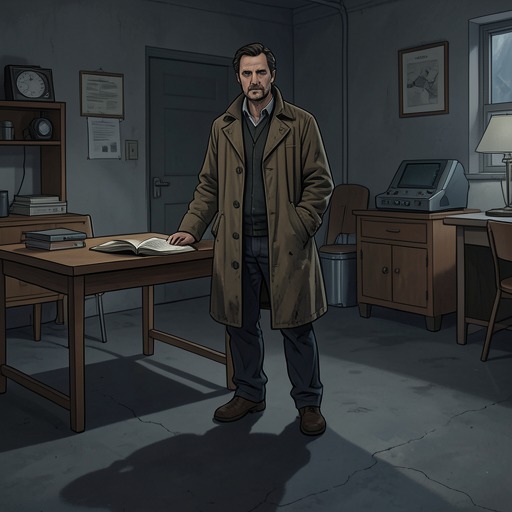
Gogol burns the second part manuscript of Dead Soul
Dead SoulsGogol’s destruction of the second part of Dead Souls was a decisive act of artistic self-cancellation: during a wakeful night, he burned the manuscript along with other writings, and only fragments survived. The novel’s continuation was thereby left incomplete, while the reasons for the final destruction remain unsettled in the surviving account.
The act and its losses
In his final years, Gogol turned the struggle that had shaped his art back upon his own life and repented of what he had written. During a night of frenzy, he burned all his manuscripts, including the second part of Dead Souls. The destruction was not the first: the second part had already been written and burned once before. A third part was still to be written, so the final burning cut off a projected continuation as well as destroying the existing work.
The loss was not absolute, because fragments of the second part were saved. But the account gives no basis for reconstructing the whole from those remains. The surviving fragments stand as a partial trace of a work whose completion and relation to the planned third part can no longer be known.
Uncertain motives
The reasons for the final burning are reported variously rather than resolved. Religious remorse is one explanation; fury at adverse criticism and despair at failing to attain an ideal perfection are others. The account also preserves the possibility that Gogol destroyed the manuscript inadvertently along with his other writings. These explanations remain alternatives, not a single established motive, and the event’s significance lies partly in that unresolved tension between deliberate rejection and possible accident.
The writer and the work
The act is set against Gogol’s response to the world of his own novel. A romantic writing about realities, he was appalled by life’s commonplaces and by the many commonplace figures he had made into heroes. He felt that the book offered no single palliating circumstance or place for the reader to pause and find consolation; finishing it seemed like emerging from an oppressive cellar into the open air. The evidence suggests that he may have felt an inward need to redeem Chichikov, while Merejkovsky interpreted the effort as an attempt to save Gogol’s own soul that instead ended in its loss.
That biographical reading makes the burning more than a missing-manuscript episode, but it does not settle what the unwritten continuation would have meant. Gogol’s life and art had become entangled in a crisis of judgment: he regretted the work even as its incompletion left readers without the projected continuation. His destruction of the manuscript fixes that contradiction in material form, while the surviving fragments and disputed motives keep its final meaning open.