Qiqikof leaves N City
Dead SoulsChichikov’s departure from N. City turns a plan for a prompt escape into a sequence of comic delays and unsettling encounters. Accused in rumor of counterfeiting and plotting an abduction, he hastens to leave; yet he oversleeps, discovers that his horses need shoeing, and is held up by blacksmiths. On the road out, his carriage meets the funeral procession of the Public Prosecutor, while the town’s officials and ladies remain absorbed in their own concerns. The episode sends Chichikov away, but makes the departure a last, sharply observed portrait of the society he is leaving behind.
Causes and Decision to Leave
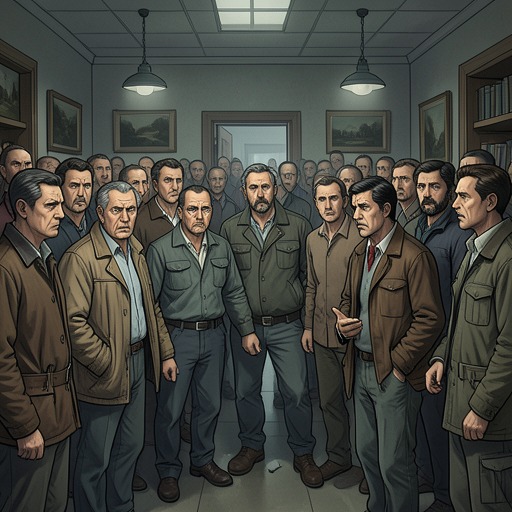
The immediate spur comes in a visit from Nozdrev, who reports that officials have questioned him about Chichikov and that the town believes its visitor to be a forger of currency notes. Nozdrev claims to have defended him, but his account offers little reassurance: he says some people suspect Chichikov of being a disguised brigand or spy, and that the officials fear the arrival of a new Governor-General. He also reports that the Public Prosecutor has died after the excitement of a public meeting. In this atmosphere of suspicion, a private accusation has swollen into a town-wide crisis.
Nozdrev adds that Chichikov is believed to have planned to carry off the Governor’s daughter. Chichikov reacts with astonishment and denies understanding the allegation. Nozdrev, however, treats the supposed scheme as established fact and even offers to help, asking for three thousand roubles in return for arranging the wedding, a carriage, and fresh horse relays. His absurd confidence makes the rumor more alarming rather than less: Chichikov must listen to an invented plot discussed as though it were a practical undertaking.
The cluster of charges and warnings leaves Chichikov dismayed. He decides that he should not linger and resolves to leave at once. The plan is urgent, but urgency does not put events under his control. The departure sequence begins with a clear intention to be gone at daybreak and immediately tests that intention against delays, servants, animals, and the practical demands of travel.
A Departure Thwarted by Practical Delays
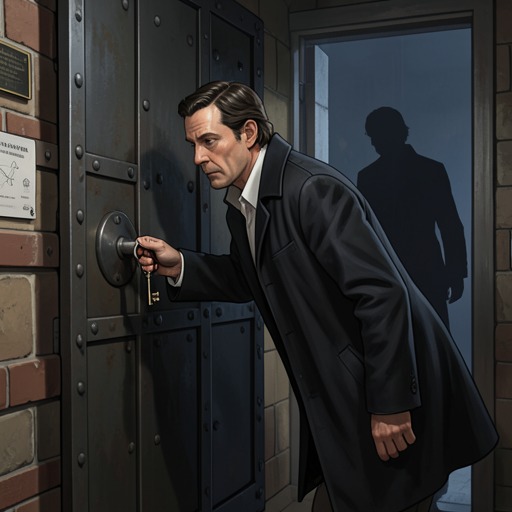
Chichikov orders Selifan to have the britchka cleaned and ready for a six o’clock start. He tells Petrushka to fetch the dusty portmanteau from beneath the bed, then stuffs it indiscriminately with socks, shirts, collars, boot trees, a calendar, and other belongings. The hurried packing is not orderly preparation but an effort to prevent anything from holding him back. Selifan, however, leaves the room slowly, pauses on the stairs, and scratches his head, an ambiguous gesture the narrator says might mean any of a hundred things.
The first failure is Chichikov’s own: he oversleeps. When he gets up and asks whether the carriage is harnessed and ready, neither task has been completed. Selifan explains that the horses need shoeing. Chichikov angrily reproaches him for not reporting the problem earlier, then orders him to fetch a blacksmith and have the work finished within two hours. He threatens Selifan, and, once the driver has gone, throws to the floor the poignard he habitually carries to inspire respect. The preparations for flight are marked by the same bullying impatience that has accompanied Chichikov’s dealings elsewhere.
The blacksmiths recognize that their services are needed in a hurry and raise their price. Chichikov calls them robbers and extortioners and tries to bargain, but they refuse to reduce their terms. Their work takes five and a half hours, not the two he demanded. While he waits amid string, waste paper, and the litter left by the packing, departure becomes an extended period of enforced stillness. At last the luggage is aboard, the faulty wheel has a new tyre, and the horses have been reshod. Chichikov can finally leave the inn, but the delay has made the escape feel less like a clean break than a struggle against the ordinary friction of travel.
The Funeral on the Road
As the britchka jolts over the cobblestones, Chichikov looks at the houses, streets, and garden walls he may never see again. The moment gives his departure a note of reluctant finality, though he cannot quite name the feeling. A procession then blocks the street, bringing the carriage to a halt. Petrushka tells him that the funeral is the Public Prosecutor’s, whose death Nozdrev had reported. Chichikov is disagreeably shocked and quickly raises the carriage hood, draws the curtains, and leans back into a corner.
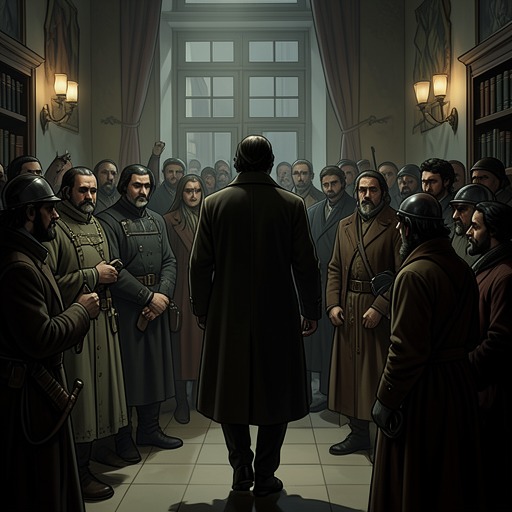
Selifan and Petrushka sit bareheaded as the cortege passes, under strict instructions not to greet any fellow-servant they recognize. The whole body of officials walks behind the hearse with uncovered heads. Chichikov worries briefly that someone might see him, but the mourners are not looking his way. Their attention is fixed instead on the coming Governor-General and the question of how he will take charge of the administration. Even the public funeral does not interrupt their calculations about what the new authority may mean for them.
Carriages follow, with ladies in mourning dress looking out from their windows. Their animated gestures and conversation suggest that their attention, too, has wandered from the dead man toward the Governor-General, the balls he may give, and their customary finery. Empty drozhkis bring up the end of the procession. Once they have passed, Chichikov throws back the hood and continues on his way. The funeral delays his escape for a second time, but also gives him a view of a town whose public grief sits beside private preoccupation.
Satirical Farewell and Narrative Significance
Chichikov addresses the dead Public Prosecutor as a good friend who has finished his life. He imagines the eulogy newspapers will publish: the deceased will be called regretted by his subordinates and by humanity, a respected citizen, kind father, and blameless husband, followed by tears from his widow and orphans. He then punctures that ceremonial praise by suggesting that, if the papers had to identify a concrete reason for it, they would mention the man’s exceptionally thick eyebrows. The joke reduces official remembrance to formula and appearance, while the procession itself has already shown the living officials thinking about their prospects rather than the deceased.
The episode’s comic movement depends on the contrast between the scale of Chichikov’s fears and the small obstacles that govern his escape. Rumors of forgery and abduction, a dead official, and a new Governor-General provoke his decision to flee; oversleeping, unshod horses, bargaining blacksmiths, a broken wheel, and a funeral dictate when he can actually move. The flight is urgent in intention but repeatedly slowed in execution. Chichikov finally tells Selifan to quicken the pace and concludes that meeting a funeral is lucky. His departure thus closes not with reassurance about the danger behind him, but with a superstitious consolation and a last look at a town absorbed in its own official and social calculations.