Sobakevitch
Dead SoulsSobakevitch is a provincial landowner whose heavy physical presence, terse manner, and practical dealings distinguish him from the more ceremonious company around him. He first encounters Paul Ivanovitch Chichikov at the Governor’s reception, where the two establish an acquaintance that soon becomes a business relationship: Sobakevitch sells Chichikov the deceased peasants still recorded on his estate rolls, then defends the sale when officials question it. His bluntness does not prevent him from maneuvering within social and legal conventions; instead, it gives his transaction a hard, literal-minded logic that exposes the oddity of a system in which dead people remain taxable property.
Introduction and Character
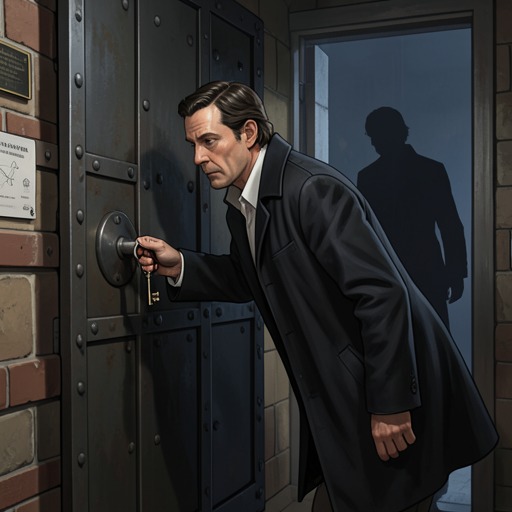
At the reception, Sobakevitch enters the narrative through an awkwardly physical gesture: he treads heavily on Chichikov’s toes and then begs his pardon. The narrator describes his exterior as uncouth, setting him against the smooth, flattering conduct Chichikov uses to win over the town’s officials and landowners. Sobakevitch’s approach is less polished, but the encounter establishes him as a person Chichikov is keen to know.
His appearance is later reinforced through the memorable detail of his boots. When he invites Chichikov to visit, he shuffles boots of such enormous dimensions that the narrator compares their wearer to one of the epic heroes whose race is beginning to die out in Russia. The image makes Sobakevitch’s bulk almost legendary, while keeping it rooted in an ordinary object: his body seems to exceed the scale of everyday life, but his conversation remains direct and practical.
Social Conduct and First Acquaintance
Chichikov gives special attention to Sobakevitch and Manilov at the reception, asking how many peasant souls each possesses, how their affairs stand, and about their social position and families. The questions combine sociability with information gathering. Chichikov’s interest in the landowners is not merely conversational: he is already finding out about the people and property that will matter to his scheme.
Sobakevitch’s invitation is brief: he tells Chichikov to pay him a visit. Chichikov, who has promised to call on both Sobakevitch and Manilov, spends more than two weeks attending dinners and evening parties before deciding to make those visits beyond the town. The narrator hints that a weightier purpose lies behind the journey than the fulfillment of a social promise. Sobakevitch thus becomes one of the first landowners whose estate Chichikov approaches, and their reception-room acquaintance gives way to a transaction.
Appetite and the Landowner’s Reputation
At a roadside tavern, Chichikov asks the landlady about the neighboring proprietors and learns a small but telling distinction between Sobakevitch and Manilov. Manilov orders roast fowl, veal, and mutton, but tastes only a morsel of each; Sobakevitch orders one dish and eats all of it, then asks for more at the same price. The contrast makes the two men legible through their habits of consumption: Manilov’s abundance is largely ceremonial, while Sobakevitch’s appetite is direct and complete.
The detail also anticipates the blunt practicality of his dealings. The landlady’s account is not a judgment delivered by Sobakevitch himself, but an everyday report that places him within the local network of reputation. His appetite, like his oversized boots and heavy step, becomes part of the recognizable portrait of a man who takes what is offered without the refinements of polite display.
The Sale and Its Defense
When Chichikov’s purchases come under official scrutiny, the authorities seek information from the landowners who sold him souls. Sobakevitch calls Chichikov an excellent fellow, but his defense quickly turns to the status of the transaction: he says the souls he sold were genuinely alive, while disclaiming responsibility for whatever might happen later. Fevers and other mortal complaints are common, he observes, and whole villages have perished from them. The argument treats death as a possible event after the sale, not as a reason to question the sale itself.
This testimony does not explain Chichikov’s real purpose to the investigators. Instead, it gives them a confident assertion about the peasants’ former life and a legal-sounding separation between the seller’s act and subsequent events. Sobakevitch’s answer is both a defense of himself and a way of preserving the transaction’s formal appearance: if the peasants were alive when transferred, what followed belongs to another moment and another responsibility.
Relations, Paperwork, and Narrative Role
Sobakevitch’s connection with Chichikov is founded on the sale, but it also extends into the practical process of recording it. At the registration, he insists that witnesses must be present, at least two on each side, and proposes calling the Public Prosecutor and the Inspector of the Medical Department. He describes these officials as men with little to do, adding that even their small amount of work is done by a chief clerk or displaced by a card party. His intervention helps move the transfer through the local office while turning a routine requirement into an opportunity to mock the town’s idle bureaucracy.
Later, when the officials pursue the mystery of Chichikov’s identity, their inquiries produce accounts that do not resolve it. Sobakevitch’s assertion that the purchased souls were alive is specific, but it reveals no motive behind the unusual sale. As the rumors and investigations widen, evidence of the dead-soul purchases becomes one strand in the authorities’ larger inquiry into Chichikov’s past. Sobakevitch’s part in that chain is limited but consequential: he supplies a seller’s testimony that sounds definite while leaving the central question unanswered.
Through this role, Sobakevitch embodies the material and administrative logic on which the scheme depends. The deceased peasants persist in the records as transferable property; a sale can be processed, witnessed, and defended even as the difference between a living person and a name on a roll becomes the source of suspicion. His appetite, immense boots, terse invitation, and carefully bounded defense all contribute to a portrait built around substance and possession. He is not the architect of Chichikov’s scheme, but his practical participation shows how easily that scheme can take shape within ordinary dealings between landowners and officials.