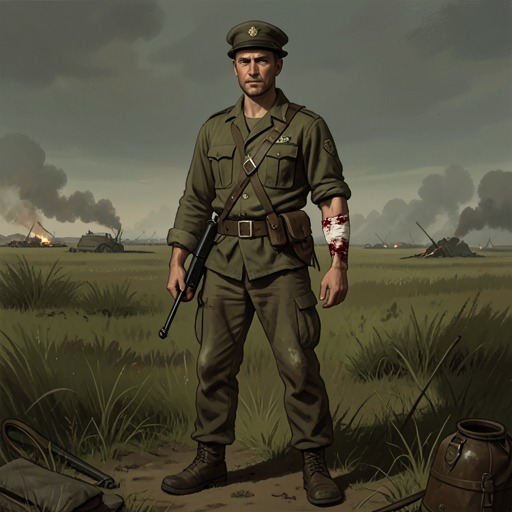
State provision for wounded soldiers
Dead SoulsState provision for wounded soldiers is depicted as an institutional absence rather than a dependable system of care. In the Postmaster’s embedded account of Captain Kopeikin, a veteran of the 1812 campaign returns with the loss of an arm and a leg, cannot earn a living, and finds that neither his family nor the state can provide a secure livelihood. His petition in St. Petersburg turns that predicament into a pointed contrast between service to the country and the uncertainty of receiving aid.
The Veteran’s Need
Kopeikin’s father can barely support himself and cannot take responsibility for his son. Since Kopeikin cannot work with his remaining arm, he travels to St. Petersburg to seek assistance, believing that his military service and the losses he sustained in the campaign give him grounds to ask for help. The account states plainly that in those days no provision was made for wounded soldiers; Kopeikin’s dependence on a petition is therefore not an exception to an otherwise reliable arrangement, but the consequence of the missing support itself.
Petition and Postponement
Kopeikin approaches the Temporary Commission, where its President recognizes his disability and tells him to return in a few days. On the next visit, however, the President explains that nothing can be decided without authorization from the Supreme Government. Until the Minister returns and the Military Committee meets, Kopeikin is told to wait; the President gives him only a small sum to meet immediate needs while the case remains undecided. Assistance exists here as provisional charity, not as a settled entitlement or a timely pension.
Consequences for Kopeikin
The delay collides with Kopeikin’s expectation of receiving a substantial gratuity promptly. After initially believing that his request had succeeded, he spends part of his limited money on food, wine, and the theatre. When the promised decision does not arrive, he faces renewed uncertainty about how to live and returns to the commission for a third time, demanding the means to meet his expenses. The episode links administrative postponement to a practical loss of security: a wounded veteran must stretch scarce funds while waiting for officials to determine whether he will receive lasting support.
Narrative Significance
The story’s contrast is between the President’s formal assurances and Kopeikin’s immediate material need. The commission acknowledges his service and says that he should not be left destitute, yet its response remains conditional on distant authorities and future meetings. Through this mismatch, the episode makes the absence of state provision visible not through a policy document but through one veteran’s repeated petitions, temporary relief, and inability to rely on a decision. The account is told by the Postmaster as a story within the novel, giving the rule’s failure the shape of an anecdote about an individual caught between public promises and bureaucratic delay.