
The Unspoken Attachment
Death in VeniceThis flow traces the emotional bond Aschenbach imagines with Tadzio despite their lack of conversation or mutual understanding.
increasing Bearing strength in each event
 decreasing
Bearing strength in each eventdecreasingAesthetic First Sight

Aesthetic First Sight
Beauty recognized
Aschenbach sees Tadzio in the lobby and is struck by the boy’s appearance. He understands the attraction first through art and classical ideals.
A private response
The boy has not addressed him, and no bond has been established. Yet the intensity of the observer’s attention gives the encounter emotional significance.
A Name Made Intimate

A Name Made Intimate
Listening closely
Aschenbach hears Tadzio’s name called across the beach and repeats it to himself. A sound from the family’s ordinary life becomes precious to the isolated listener.
Closeness without contact
The private repetition creates an impression of intimacy while preserving distance. Aschenbach’s attachment develops through observation rather than reciprocal exchange.
The Ritual of Looking
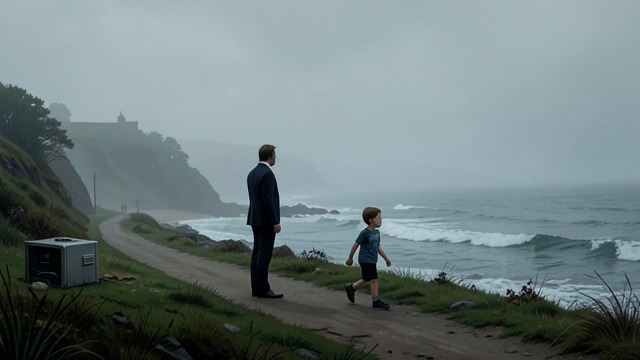
The Ritual of Looking
Daily expectation
Aschenbach watches for Tadzio each morning and follows his movements from afar. The predictable routine gives the attachment a structure resembling a private relationship.
One-sided dependence
Tadzio continues his ordinary life, while Aschenbach’s days increasingly depend on seeing him. The asymmetry is central: the observer experiences a bond that the observed has not agreed to share.
The Smile and the Confession

The Smile and the Confession
A moment magnified
Tadzio smiles toward Aschenbach, who experiences the gesture as intimate and compelling. The older man leaves the terrace overwhelmed by what he thinks the smile has given him.
Love spoken in solitude
In the park, he whispers that he loves Tadzio. The confession confirms the depth of his emotion, but it occurs without the boy’s knowledge or answer.
The Imagined Invitation
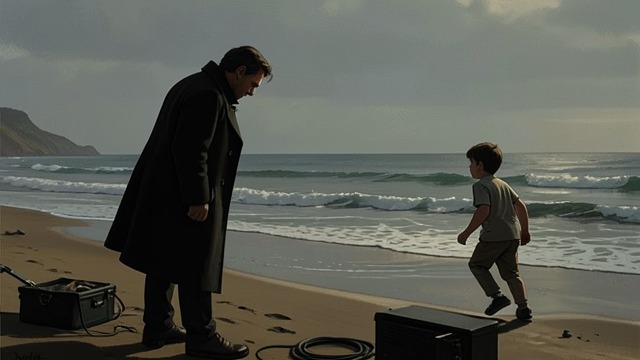
The Imagined Invitation
A final look
As Tadzio turns toward the shore, Aschenbach believes he sees a smile and a beckoning gesture. His hope interprets the distant movement as personal communication.
No mutual resolution
Aschenbach rises and collapses before reaching the boy. The attachment ends without conversation, confirmation, or reciprocity, leaving its apparent intimacy exposed as an inward construction.
The first evening at the Lido hotel
The first morning on the beach
During the settled weeks on the Lido
One evening after the family returns to the hotel
On the last afternoon at the Lido
