
The Masks of Youth
Death in VeniceThis flow links the false youth of a traveler, Aschenbach’s cosmetic disguise, and the novel’s deeper unease about appearance and age.
increasing Bearing strength in each event
 decreasing
Bearing strength in each eventdecreasingThe Painted Stranger
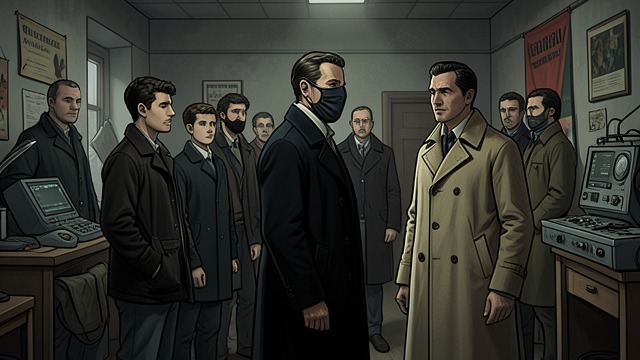
The Painted Stranger
Age disguised
Aschenbach sees an old traveler dressed and made up to pass among younger companions. The man’s artificial youth strikes him as grotesque and disturbing.
Appearance questioned
The scene introduces age as something people may attempt to hide. Its comic discomfort anticipates the seriousness of Aschenbach’s later imitation.
Tadzio as Contrast
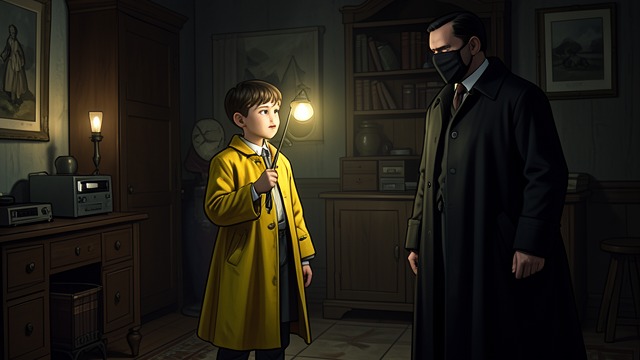
Tadzio as Contrast
Youth unmanufactured
Tadzio’s appearance seems effortless to Aschenbach, who treats it as naturally perfect. The boy’s youth contrasts sharply with the writer’s ageing body.
Desire formed by comparison
The contrast makes admiration inseparable from self-consciousness. Aschenbach’s attention to beauty also becomes an awareness of his own decline.
The Mirror’s Judgment
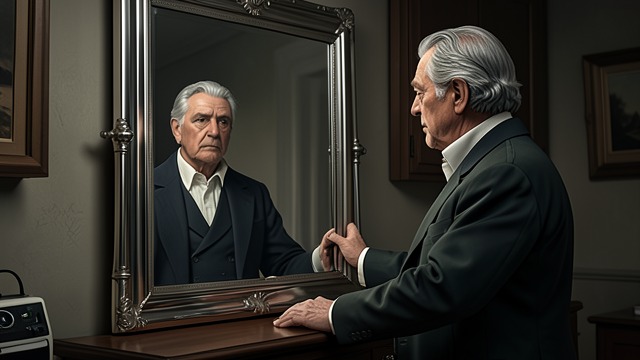
The Mirror’s Judgment
Age made visible
Aschenbach studies his grey hair and tired features in the hotel mirror. His public honors offer little comfort against the signs he sees.
A new aim
He begins to think of appearance as something that can be altered. His dissatisfaction prepares the ground for the cosmetic transformation he once would have despised.
The Barber’s Artifice
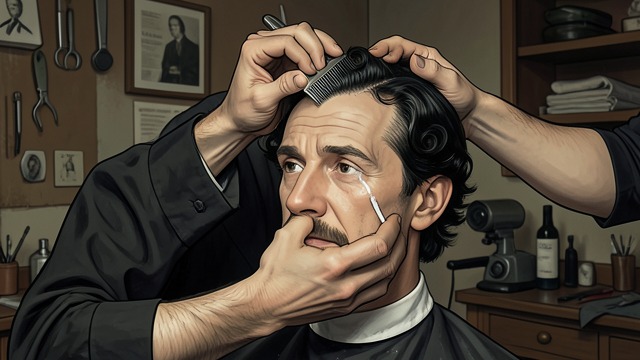
The Barber’s Artifice
Cosmetics applied
The barber darkens Aschenbach’s hair, curls it, colors his face, and smooths the marks of age. The service constructs a youthful surface for the customer.
The earlier judgment reversed
Aschenbach accepts the transformation eagerly. The man who recoiled from the painted traveler now depends on the same kind of disguise to sustain his hope of appearing desirable.
A Mask at the End
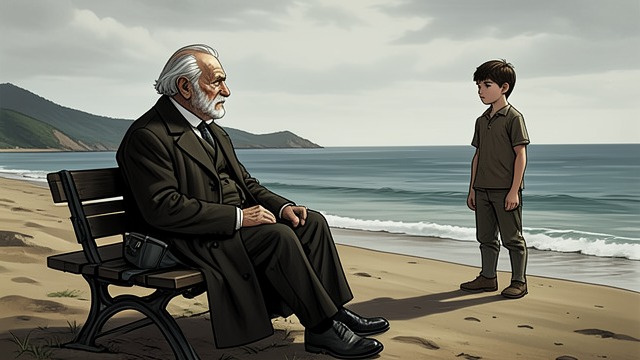
A Mask at the End
The altered figure watches
Cosmetically rejuvenated, Aschenbach watches Tadzio from the beach. The outward disguise cannot change his age, exhaustion, or the distance between them.
Appearance fails to save
He collapses before he can follow the boy. The mask conceals decline only briefly; it cannot supply the youth or reciprocity that he wants.
During the voyage to Venice
During the first days at the Lido
After Aschenbach returns to the Lido
A few days before the family leaves
On Aschenbach’s last day
