“The lover is more divine than the beloved”
Death in Venice“The lover is more divine than the beloved” is the paradox through which Aschenbach turns his response to Tadzio into an aesthetic and philosophical claim. Beauty, in this account, is a visible form through which the spirit can be apprehended by the senses; the lover is more divine because the god is present in the lover’s experience, not in the beloved as its passive object. The expression both dignifies Aschenbach’s desire and reveals the self-serving ingenuity with which he gives it an elevated form.
The Saying and Its Argument
The idea emerges as Aschenbach looks at Tadzio’s form and thinks of artistic creation: the disciplined work by which an artist releases a shape from the material of language resembles the mind’s apprehension of beauty. He imagines beauty as a perfect form, at once visible and spiritual, and treats the boy’s body as a likeness through which that perfection can be contemplated. In this account, sensual attraction becomes a route toward an idea rather than an end in itself.
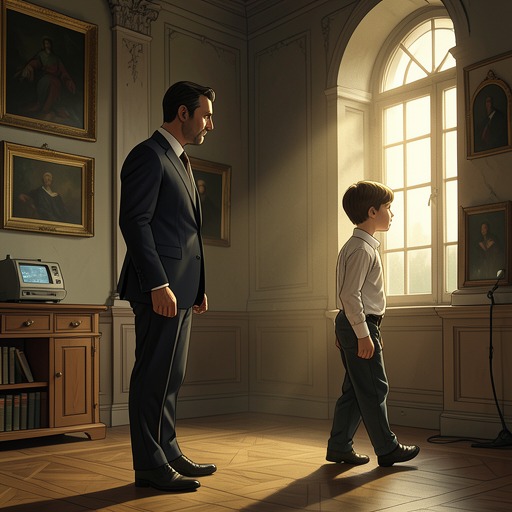
Aschenbach then imagines Socrates instructing Phaedrus beneath a plane tree outside Athens. The imagined dialogue distinguishes the reverent response to a beautiful body from the inability to recognize anything spiritual in its likeness. A noble-minded observer, confronted with godlike beauty, is overcome and honors the person who possesses it; beauty is uniquely suited to the senses because it makes the spiritual perceptible without requiring the direct, overwhelming appearance of reason or virtue. The path through beauty is therefore a means of approach, not the destination itself.
The final turn is deliberately paradoxical. The lover, Socrates suggests, is more divine than the beloved: the god resides in the lover, while the beloved serves as the occasion for that experience. The thought can be read as a subtle joke as well as a serious proposition, and the narrative marks its capacity to generate the cunning pleasures of desire. It offers Aschenbach a way to describe his passion as spiritual elevation even though its immediate object is another person’s visible beauty.
Aschenbach’s Artistic Use of the Idea
The saying is not a detached philosophical reflection; it arrives at a moment when Aschenbach’s attraction stimulates his work. He is seized by the wish to write about a public question of culture and taste, a subject familiar to him and connected with his own experience. His infatuation supplies the emotional charge through which he can make the argument vivid, joining feeling to thought in the kind of unity writers prize.
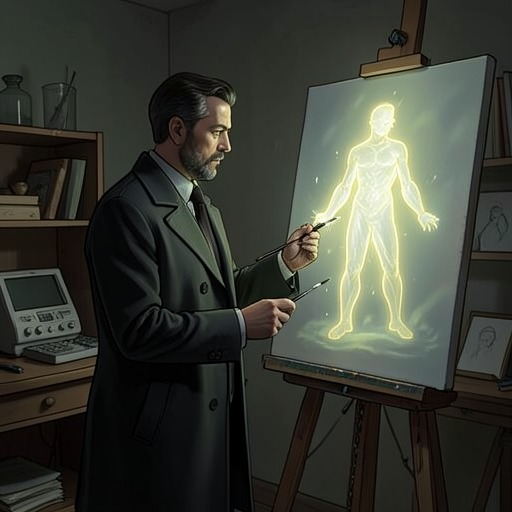
Aschenbach chooses to work in Tadzio’s presence and takes the boy’s appearance as a standard for his prose. He follows the lines of that form in his style and, in his imagination, carries visible beauty into the spiritual. The result is a short tract—only a page and a half—which wins admiration for its clarity, poise, and force. Its polished finish conceals the private circumstances of its composition: Aschenbach writes while watching Tadzio and listening to his voice. The distinction between the admired work and the desire that helped produce it gives the expression its moral ambiguity.
Myth, Recollection, and Desire
The philosophical account becomes part of a wider pattern in which Aschenbach interprets Tadzio through classical myth. At dawn, watching the sun rise over the sea, he imagines the light as the approach of a goddess associated with youthful desire. The spectacle awakens emotions and yearnings that his disciplined way of life had suppressed; he recognizes their return with embarrassment and astonishment, then falls asleep again in his chair. Myth gives the scene an elevated language, but it also shows how thoroughly his perception is being shaped by desire.
Later, as Tadzio plays ball on the beach in a white suit and colored sash, Aschenbach sees Hyacinth, the beautiful youth loved by gods. He imagines the rivalry and grief of the myth as he watches the boy. This identification intensifies the same pattern expressed in the saying: the beloved’s beauty becomes the surface on which the lover’s feeling, memory, and imaginative life are projected. The myth does not establish a shared understanding between the two; it records Aschenbach’s private interpretation of what he sees.
Their actual familiarity remains largely unspoken. They encounter one another repeatedly without acknowledging the connection, and Aschenbach watches for Tadzio’s approach as the boy walks along the beach near his habitual place. The narrator describes such eye-only acquaintance as charged with curiosity and restraint, but the particular evidence of attachment belongs to Aschenbach: he hopes for signs of response and gives meaning to the boy’s proximity. The saying’s distinction between lover and beloved thus has a concrete, unequal shape in the plot. Aschenbach’s experience is intense and elaborately interpreted; Tadzio’s inner response is not disclosed.
The Idea’s Darker Reversal
As the cholera outbreak spreads through Venice, Aschenbach learns the danger and decides to remain silent about it. His awareness of his complicity in the concealment intoxicates him, and he stays in the city, where his desire has made disorder seem preferable to the claims of art and virtue. The episode does not simply confirm the idea that love elevates the lover: it shows how the language of beauty and spiritual experience can coexist with compromised judgment and a consequential refusal to act.
That night, Aschenbach dreams of a tumultuous, ecstatic gathering dominated by a figure he recognizes as the foreign god. The dream overwhelms his resistance to forces opposed to intellectual poise and dignity; its imagery includes the scent of disease, joining the disorder of the vision to the plague already present in the city. The episode gives the expression a final, unsettling context. The lover’s supposed divinity no longer guarantees moral or spiritual ascent: Aschenbach’s desire has become bound up with self-deception, concealment, and a world in which the discipline he once prized is losing its command.