Attack on the Goya
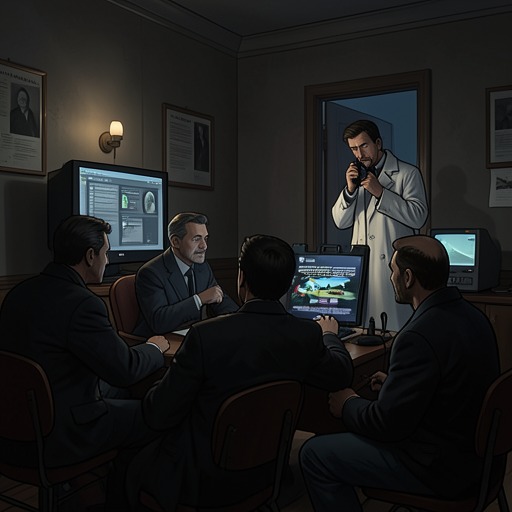
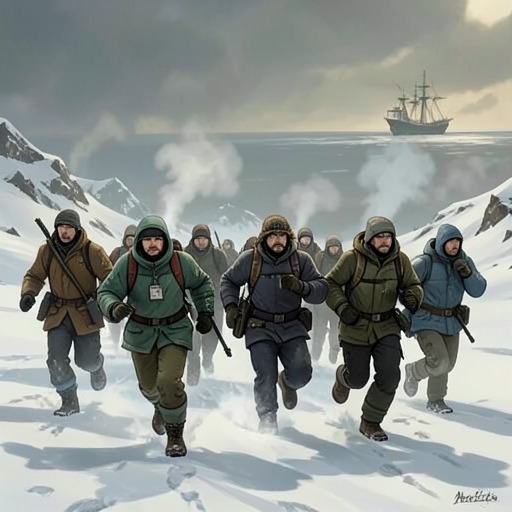
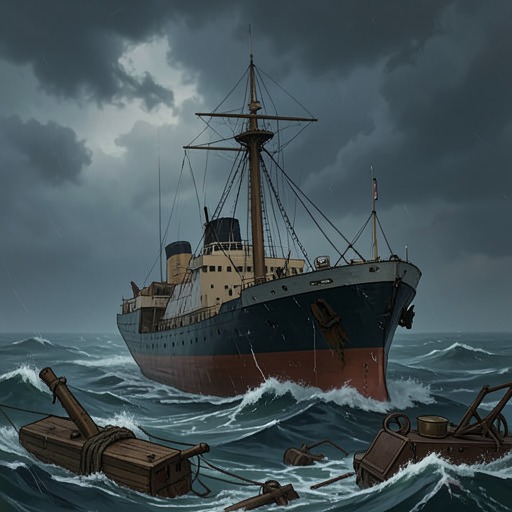
Deception PointThe attack on the Goya is a covert military assault designed to isolate and eliminate Rachel Sexton and Michael Tolland after their escape from the Milne Ice Shelf. It begins not with visible force but with a communications blackout: an armed Kiowa gunship uses its radar-jamming system to disable the ship’s ability to detect danger or call for help, then attacks from the darkness and destroys the Coast Guard helicopter as the survivors try to flee.## Preparation and isolationThe assault follows the escape of Rachel Sexton and Michael Tolland from the Milne Ice Shelf. Their attackers have already shown that they can watch a target without engaging it: a Delta team assigned to the region had been ordered to monitor a structure and report unexpected developments. Its mission was issued through secure electronic channels, and Delta-One had never met the controller. That separation between command and execution forms part of the larger operation’s secrecy, leaving the team to act without ordinary personal or institutional contact.The unit’s operating culture reinforces that distance. Delta-One has spent years on missions that include hostage rescues, counterterrorism, and covert killings, and he has learned to treat assignments as work to be completed rather than occasions for emotional response. The attack on the Goya belongs to this world of concealed action, where the objective is to prevent the targets from escaping and to leave them without a reliable channel to summon assistance.The gunship’s first advantage is electronic. Delta-Two reports that the Kiowa’s “umbrella” system is engaged, with barrage, modulated noise, and cover pulse activated. The system broadcasts background noise over the target area, disrupting radar and communications. Because the Goya’s communications depend on radio or microwave signals rather than hard-wired phone lines, the jamming can cut the vessel off from the outside world. Its crew loses the ability to see the approaching threat on radar and to transmit a warning or request for help.### The blackout aboard the GoyaThe electronic attack becomes visible to the survivors when the Coast Guard pilot rushes into the lab and reports that all onboard radar and communications have gone dead. Rachel responds immediately: she orders everyone to the helicopter and insists that they leave at once. She has stored papers inside her shirt, preserving the evidence while the group prepares to abandon the ship. The warning comes too late to restore their advantage; the failure of the Goya’s systems is the beginning of the assault, not an isolated technical problem.The gunship then approaches low from the southwest, above the Goya. Rachel recognizes both what it is and why it has come. Its first burst strikes across the fiberglass deck and along the stern. Rachel is grazed on the arm and takes cover behind the transparent dome of the Triton submersible as the helicopter passes and banks out over the ocean for another run. The ship’s isolation has now become an immediate physical threat: the attackers can strike again, while the people aboard cannot rely on their disabled systems to warn or protect them.The scene’s reversal is stark. The survivors had escaped the ice and reached a Coast Guard vessel, but distance from the shelf does not mean safety. The same coordinated operation that concealed its command structure now uses electronic interference to make the Goya vulnerable. The attack also shifts the danger from a remote pursuit to a close, unfolding crisis on the deck, where Rachel must judge the attackers’ next move while the others run toward the waiting helicopter.
The Coast Guard helicopter is destroyed
As Michael Tolland and Corky Marlinson run toward the waiting helicopter, Rachel sees a narrow red laser beam sweep across the Goya’s deck and settle on the aircraft. She lunges into their path, knocking the two men down before they can reach it. A Hellfire missile follows the laser’s line and strikes the helicopter, which explodes and falls from the ship into the sea. The Coast Guard pilot and Xavia are killed. Rachel’s intervention saves Tolland and Corky from reaching the aircraft, but the destruction removes their apparent means of escape and leaves the survivors exposed aboard the Goya.
Consequences and significance
The loss of the helicopter leaves Rachel Sexton, Michael Tolland, and Corky Marlinson aboard the Goya as the gunship prepares another attack. The strike also makes the operation’s purpose unmistakable: the attackers are not merely disrupting communications or trying to drive the survivors from the ship; they are attempting to eliminate them. Earlier, Delta-One had planned to make deaths on the Milne Ice Shelf resemble exposure, using covert methods that would leave little immediate evidence of violence. The attack on the Goya extends that secrecy into open combat, pairing a concealed electronic blackout with a missile strike that removes the survivors’ apparent route to safety.
The assault’s chain of command remains hidden from its intended victims. Delta-One has never met the controller who briefed him through secure electronic channels, while the gunship’s jamming prevents the Goya from contacting the outside world. Later, William Pickering tells Rachel that the President and NASA did not know the meteorite was fraudulent and that Pickering himself had arranged the deception to protect NASA and Zach Herney’s presidency. He treats the danger of exposing the fraud as a reason to suppress Rachel’s evidence, invoking the idea that a few may be sacrificed to save many. That argument exposes the moral logic behind the covert operation: institutional survival is made to justify violence against people who have uncovered the truth.
Consequences and significance
The destruction of the Coast Guard helicopter leaves Rachel Sexton, Michael Tolland, and Corky Marlinson aboard the Goya without their apparent escape route, while the gunship remains an active threat. The strike makes the operation’s purpose unmistakable: its perpetrators are not merely disrupting communications or trying to drive the survivors from the ship; they are attempting to eliminate them. On the Milne Ice Shelf, Delta-One had planned to disguise the deaths of the investigators as exposure. The assault at sea shifts from concealed killing to overt force, yet retains the same objective of preventing witnesses from surviving to reveal what happened.
The operation’s authority remains obscured from those under attack. Delta-One had received his mission through secure electronic channels without ever meeting its controller; aboard the Goya, the jamming cuts off the vessel’s ability to communicate beyond the immediate crisis. Much later, William Pickering explains to Rachel that Zach Herney and NASA believed the meteorite was authentic, while Pickering had arranged the deception to protect the agency and the presidency. He defends the danger of releasing Rachel’s evidence by appealing to the principle that a few may be sacrificed to save many. His justification casts the attack within a broader pattern of secret decisions made in the name of institutional survival, while the assault itself shows the human cost of that reasoning.