CNN
Deception PointCNN is the news organization through which the novel stages a consequential contest over NASA, political credibility, and the framing of scientific evidence. Its Washington-area studio hosts a debate that appears to give Senator Sedgewick Sexton an ideal platform for attacking government waste, but Marjorie Tench turns the broadcast against him by forcing a clear answer on whether he would abolish NASA. Later, CNN’s reach helps carry the presidential announcement of a fossil-bearing meteorite to a mass audience, making the network both a forum for political maneuver and a conduit for national spectacle.
Organization and Reach
The CNN production facility outside Washington, D.C., is one of 212 studios worldwide linked by satellite to the global headquarters of Turner Broadcasting System in Atlanta. The studio is therefore presented not as an isolated television set but as one node in a far-reaching broadcast organization, capable of making a local encounter part of a worldwide media event.
CNN’s role in the novel extends beyond the debate floor. The White House Communications Office plans to interrupt whatever the live-feed-capable networks are airing—including CNN, NBC, ABC, CBS, and foreign syndicates—to carry an emergency presidential address. CNN is one of the outlets targeted from multiple directions: faxed press releases, bulk email, telephone announcements, and offers of free live television feeds. This coordinated approach makes the network part of an information system through which the White House seeks to seize attention and set the terms on which the public receives a major announcement.
The Debate as a Political Arena
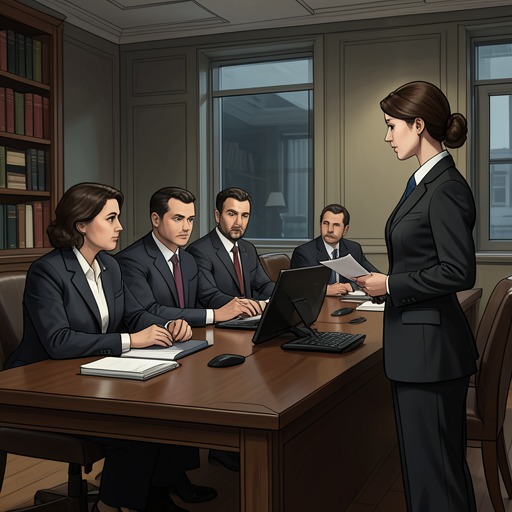
At 1:45 P.M., Sedgewick Sexton’s limousine arrives at the CNN production facility. He enters with Gabrielle Ashe, feeling smug, but a producer warns him that the White House has sent Marjorie Tench as his sparring partner. Sexton and Gabrielle see Tench through the production glass, and Gabrielle’s startled reaction signals that the anticipated encounter has suddenly become more formidable.
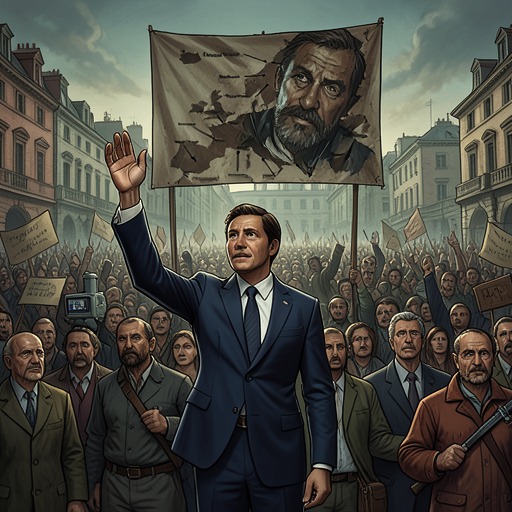
The debate begins with Tench attacking Sexton’s anti-abortion platform as biased against women. When she turns to educational spending and taxes, however, she makes a pointed reference to his habit of scapegoating NASA. Sexton reads the opening as an opportunity: NASA is already central to his campaign message, and he asks whether Tench can comment on rumors of another agency failure. She says she has not heard the rumor. He treats her refusal to elaborate as a useful television sound bite, then presses her about a secret emergency meeting between the President and NASA’s administrator. The sequence shows how the debate rewards not only information but the ability to make a short answer appear to confirm an accusation.
Sexton’s attack has roots in his campaign’s financial and political argument. NASA’s failed missions and enormous budget overruns had made the agency a prominent example in his case against government spending. Gabrielle had helped create that strategy: while Sexton was trailing in the primary polls, she urged him to make NASA a political issue, supplying financial figures, failures, and bailouts as material for the attack. Sexton’s later appearance on CNN brings that campaign framing into direct conflict with the White House’s defense of the agency.
Tench’s Question and Sexton’s Exposure
Tench changes the terms of the exchange when she asks whether Sexton would abolish the space agency if space exploration could not be conducted for less than NASA was then spending. The question is a deliberately structured yes-or-no challenge: it denies him the comfortable middle ground of criticizing the agency’s costs while avoiding a commitment about its future. Sexton initially tries to sidestep it by arguing that proper management could make NASA less expensive, but the question has already made the distinction between reform and abolition the debate’s central issue.
The exchange acquires an additional sting when Sexton dismisses the possibility that he is wrong and says he will eat his hat if he is. Tench answers that she will remember the remark and that everyone else will too. Her confidence is explained by the scene’s cut to the Oval Office: President Zach Herney turns off the television and pours himself a drink, recognizing that Sexton has taken the bait. The broadcast has thus become part of a political setup whose consequences will arrive with Herney’s announcement.
From Debate to National Broadcast
Before the announcement, Herney has arranged for four civilian scientists—independent of NASA, equipped with their own instruments, and possessing reputations to protect—to verify the discovery. He plans to announce it at a White House press conference at eight that evening. The announcement is not simply a scientific disclosure: Herney warns Rachel Sexton that the discovery will become a political football as soon as he makes it public. Even if the evidence is accepted, opponents may cast doubt on it, shifting news coverage from the discovery itself to a possible conspiracy involving NASA and the White House.
CNN’s place in the planned broadcast emphasizes the reach and speed of political communication. The White House’s prepared campaign targets the network alongside other live-feed outlets so that an emergency address can displace scheduled programming. The press operation is designed to achieve broad penetration quickly, combining traditional press releases and telephone calls with email, online updates, and free live feeds. The network’s importance lies not in independently establishing the scientific truth, but in its capacity to deliver the announcement to a large audience at the moment the administration chooses.
Public Consequences and Narrative Role
After Herney announces the discovery, the political interpretation of the debate shifts sharply. A televised analyst says Sexton’s campaign has fallen from its earlier heights and argues that the announcement, combined with Sexton’s admission that he would abolish NASA funding if necessary, amounts to a damaging one-two punch. The commentary also describes the discovery as restoring the agency’s lost credibility and renewing national pride. In this account, the broadcast event changes the public frame around NASA: the agency that Sexton had presented as a symbol of waste is now associated with a claimed scientific triumph.
CNN therefore functions as more than a setting for televised argument. It supplies the public stage on which campaign language is tested, converted into memorable positions, and later reinterpreted in light of new events. The debate’s compressed exchanges help expose Sexton’s vulnerability to Tench’s forced-choice question, while the broader broadcast network gives the President’s announcement the scale needed to reshape the political conversation. The novel’s media conflict rests on this contrast: the same machinery that can amplify suspicion and campaign attacks can also carry a declaration of scientific achievement—and, later, the President’s decision to speak publicly about the truth.