Delta Force
Deception PointDelta Force is the covert armed organization deployed to protect the secret discoveries beneath the Milne Ice Shelf and, later, to suppress people who threaten to reveal the operation. The team’s training prizes emotional detachment, obedience, and concealment; its anonymous controller supplies orders while its members carry them out across the Arctic, the Atlantic, and Washington. Yet the unit’s repeated failures turn that machinery of secrecy into a visible source of danger, exposing the difference between disciplined execution and sound judgment.
Command, Secrecy, and Mission
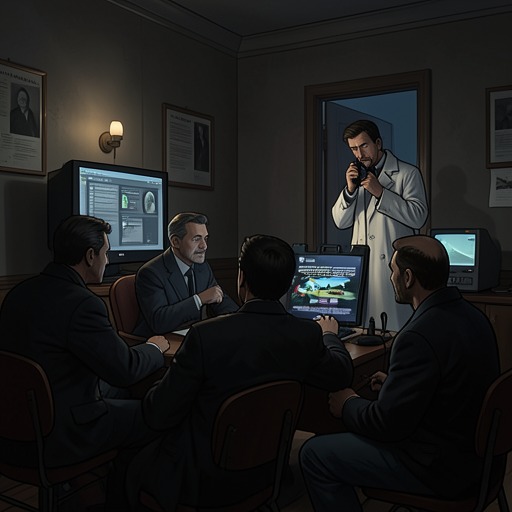
The Delta Force mission begins within a deliberately opaque chain of command. Delta-One and his team receive a faceless briefing through secure electronic channels, and Delta-One has never met the controller directing the assignment. He has been trained not to feel emotion about his work, but this briefing nevertheless raises his heart rate. The separation between the people who authorize a mission and the people who execute it is therefore built into the operation from the start: orders arrive without a face, while responsibility is carried out at close range.
That structure is reinforced by surveillance and controlled communications. On the ice, the team monitors the NASA habisphere through a microbot and reports developments to the controller over a CrypTalk device. When the investigators recognize that the meteorite evidence has been manipulated, Delta-One sends the controller the brief warning that they know. Later, the team intercepts the location of Rachel Sexton’s call to William Pickering rather than trying to decipher its encrypted content. By using signal access and computerized positioning, Delta Force can follow a target without first learning what the target said.
The unit’s orders also cross institutional boundaries. William Pickering explains that the deception grew out of a classified National Reconnaissance Office effort to place hydrophones in deeper water, using a durable submarine developed with NASA material. That underwater operation uncovered geological structures, chondrules, and fossils that could not be openly discussed without exposing the classified program. The secret Delta Force is assigned to protect thus originates in a broader intelligence project: the unit operates as an instrument of concealment for discoveries made during a mission whose existence itself must remain hidden.
The Ice Shelf Operation
At the NASA habisphere, Delta Force first observes the scientists rather than confronting them openly. When Wailee Ming attempts to collect a water sample, Delta-One agrees that the team must stop him because the ice shelf holds secrets they are authorized to protect with force. But the available microbot is an unarmed reconnaissance model, too vulnerable to serve as a weapon. The moment lays bare a practical limit: the team has surveillance in place, yet its immediate equipment cannot resolve the problem it has identified.
The later attack brings the unit into direct view. Three figures in white weather suits approach on short skis, carrying rifles, while Delta-One and his colleagues move against the expedition team. Their assault is designed not only to overcome resistance but to leave the deaths difficult to interpret. Delta-One’s trained procedure is to handle one target at a time while the others are held under watch; the intended result is a scene that can be mistaken for a fatal accident in extreme conditions. The operation turns environmental hazards into cover and treats concealment as part of the tactical plan, not an afterthought.
That plan does not hold. The investigators escape, and Delta-One has to report that the secret has been discovered. The team’s failure on the ice is important not simply because its targets survive, but because the mission’s governing assumption—that force can contain knowledge—has broken down. The unit’s surveillance has helped reveal what the investigators are doing, yet it has not kept them from drawing conclusions or escaping the team’s control.
Escalation and the Washington Attack
Delta Force is redeployed after the Arctic operation, traveling aboard the Aurora aircraft and then transferring to a Kiowa Warrior helicopter at a private military runway outside Washington. The speed and secrecy of the move demonstrate the logistical reach available to the team. Its next assignment is framed as another killing, this time one for which a quiet death is not considered useful. Delta-One reasons that a conspicuous explosion would encourage suspicion of foreign terrorism and direct attention away from the actual operation.
The planned attack at the Franklin Delano Roosevelt Memorial is designed around that misdirection. Delta-One positions the Kiowa near the memorial while Delta-Two monitors the site through night-vision equipment. The unit prepares to use a laser-guided Hellfire missile, whose deployment need not point unmistakably to an aircraft and could be blamed on terrorist access to the weapon. The choice of a public, symbolically prominent location and an explosive method reflects the team’s shift from concealing an operation in remote conditions to exploiting the assumptions investigators may make after a dramatic attack.
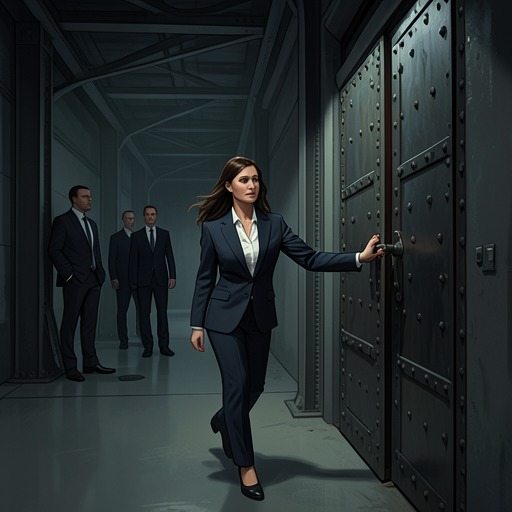
The team later traces Rachel’s call from the Goya by locating the signal rather than reading its encrypted contents. Delta-One advances toward the vessel while the team prepares to prevent the people aboard from calling for help. The Kiowa attacks without warning, firing across the Goya’s deck as Rachel takes cover beside the Triton. Delta Force has converted its tracking capability into a direct assault at sea, but this second attempt to silence witnesses also fails to produce the controlled outcome the team expects.
Failure and Exposure
When the Kiowa returns over the Goya, Delta-One sees an unexpected reversal: Michael Tolland has trapped Delta-Two in the Triton’s robotic arms, while Rachel is on deck with Delta-Three under guard. The unit’s intended prey are now in positions of control, and Delta-One cannot immediately understand how the situation has turned. The sight is especially humiliating because another person is riding in the helicopter with him, making the team’s loss of control visible to someone whose presence matters to the operation.
This defeat completes a pattern established on the ice. Delta Force possesses advanced equipment, can follow communications to their source, and can move rapidly between theaters; none of those advantages guarantees that its targets will remain passive or that violence will erase evidence. Its operations instead create new witnesses, visible confrontations, and opportunities for the protected secret to become public. The organization’s narrative role is therefore double-edged: it embodies the reach of covert power, while its failed attempts at containment show how secrecy enforced through force can magnify the exposure it is meant to prevent.