Delta Force attacks the Ice Shelf expedition team
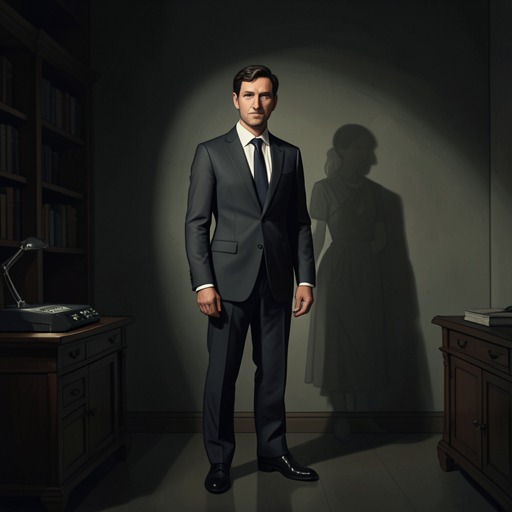
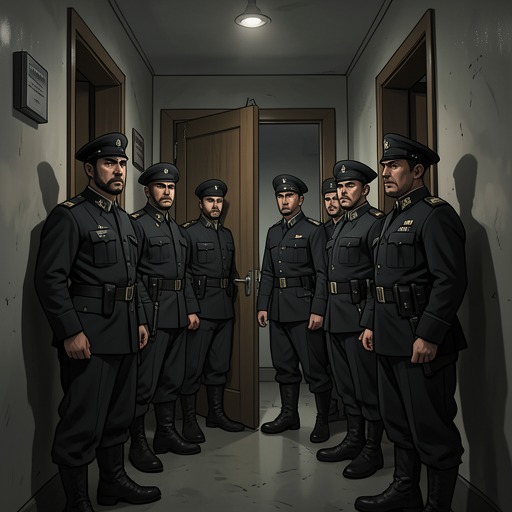
Deception PointDelta Force attacks the Ice Shelf expedition team after the investigators realize that the meteorite was recently planted and set out to expose the deception. The unit turns the Arctic environment into both weapon and cover: experimental ice ammunition leaves little trace, while the planned deaths are to be presented as exposure on the dangerous Milne Ice Shelf. The assault marks the change from scientific inquiry to an attempt to eliminate witnesses, and exposes the deadly logic by which clandestine violence is made to resemble an accident.
Causes and Stakes
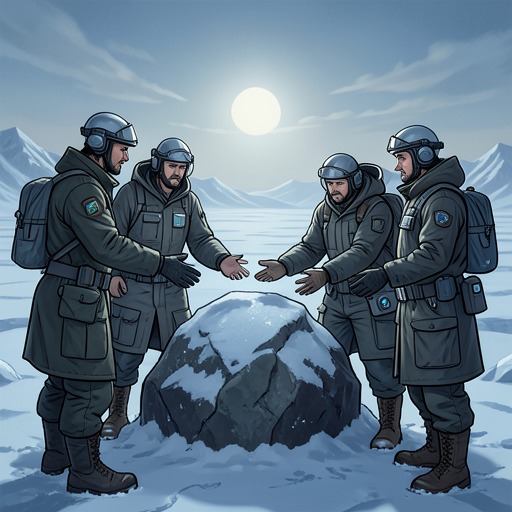
The immediate cause is the investigators’ interpretation of Norah Mangor’s Ground Penetrating Radar printout. The plankton beneath the meteorite could not have survived there for long: Norah concludes that the object was inserted into the ice within the past year, and warns that NASA has given the President false information. She intends to return to the habisphere and confirm the finding with another core sample, while Rachel Sexton cautions that they should scan again and asks who would believe the accusation. Norah’s planned test would turn suspicion into evidence, making the group a direct threat to whoever arranged the deception.
As the team starts back toward the NASA habisphere, Delta-One reports the breach of secrecy to his controller in two words: “They know.” His brief transmission sharply contrasts with the expedition’s attempt to reason through the evidence. To the scientists, the next step is verification and disclosure; to the covert unit, their knowledge is the signal to act.
Weapons and Assault
The attack begins with projectiles that at first appear to be hail. Norah and Corky Marlinson are struck, and Rachel is grazed near the ear before another pellet hits her through the equipment around the sled. The ammunition itself gives her a crucial clue: the smooth, cherry-sized ice sphere has a visible seam and a manufactured finish. Her military clearance allows her to identify the pellets as products of experimental Improvised Munitions weapons, which create ammunition from materials at hand. Ice rifles can compress snow into projectiles on demand, giving their operators a supply of rounds without the weight and traceable residue of conventional ammunition.
Rachel understands what that recognition implies. The weapons are available in the field only to U.S. Special Operations forces, so the attack is not an unknown environmental danger or an ordinary criminal assault. Her knowledge narrows the likely identity of the attackers even as it makes the danger more frightening: the people targeting the expedition are equipped and trained for a covert mission.
The barrage stops abruptly. Three figures in white weather suits then glide into the illuminated area on short skis, carrying rifles and wearing electronic goggles. They approach without speaking and treat the injured expedition members as controlled targets. Michael Tolland, watching from beside the overturned sled, sees the change in the scene: the unseen fire has ceased, but the attackers have not withdrawn. Their arrival makes clear that the shooting was an opening stage of a planned operation.
Attempt to Conceal the Killings
Delta-One and his teammates divide their attention among the incapacitated scientists and the two people sheltering by the sled. The unit intends to kill its targets one at a time and leave no apparent sign of how they died. Delta-One uses a method designed to make a killing difficult to distinguish from an accident or exposure, while the team prevents the others from helping one another. The assault’s objective is therefore not simply to stop the scientists from leaving the ice; it is to erase the people who can connect the meteorite to the deception.
The cover story is tailored to the landscape. Delta-One plans to put the bodies on the sled, move them off course, reconnect their belay lines, and arrange them to be found as victims of the weather. Their deaths would appear plausible on the perilous ice shelf, where flares have gone out and getting lost can be fatal. The ice projectiles would disappear into the snow, while injuries from the attack could be mistaken for mishaps in the storm. The setting is not incidental to the plan: its real hazards provide a ready-made explanation for deliberate violence.
Tolland witnesses the operation as it turns from an assault into an attempt at execution. After Norah is incapacitated, the attackers move toward Corky, who has regained consciousness. Tolland recognizes that the others are being killed rather than merely restrained, while Rachel, despite the danger and her physical weakness, keeps the evidence close and later resolves to act against those responsible. The contrast between the team’s coordinated method and the expedition members’ urgent efforts to protect one another defines the scene’s human stakes.
Consequences and Political Significance
The attack jeopardizes more than the scientists’ lives. The President is about to announce the discovery using information and documentary endorsements supplied by the investigation; if the witnesses are silenced, the false account can proceed unchallenged. Rachel worries that four civilian scientists could be presented as dead witnesses to a story the government has already told incorrectly. She cannot stop the imminent press conference, but vows that those responsible will not escape accountability.
The larger political explanation becomes clearer later. Marjorie Tench had conspired with Lawrence Ekstrom over the PODS deception in hopes that a limited success would help the President resist the rising Sedgewick Sexton campaign. William Pickering later identifies Tench’s investigation of Rachel’s fraud allegations as a danger to that arrangement and says her murder would strengthen sympathy for the White House while casting suspicion on Sexton’s campaign. The massacre on the ice belongs to this broader effort to preserve a political narrative by removing people who could expose it.
Pickering’s later defense of the operation invokes the national-security maxim Iactura paucourm serva multos: sacrifice the few to save the many. Rachel rejects that framing, pointing out that Pickering created the circumstances he claims to confront. The assault thus links the covert unit’s operational secrecy to a wider moral argument: its violence is presented as a controlled, necessary cost, while its victims are treated as expendable obstacles. The landscape that helps conceal the killings becomes an image of the political cover itself—an apparent natural disaster masking a deliberate human decision.