Envelope Switch at the Washington Monument Press Conference
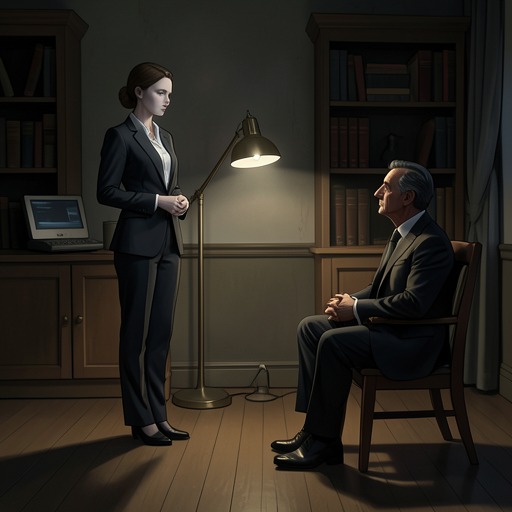
Deception PointThe Envelope Switch at the Washington Monument Press Conference is the reversal in which Senator Sedgewick Sexton’s planned attack on President Zach Herney becomes a public exposure of Sexton himself. At the base of the Washington Monument, Sexton presents himself as a champion of truth carrying proof of government deceit; through Rachel Sexton and Gabrielle Ashe’s envelope switch, the press instead receives photographs implicating him and Gabrielle in an intimate relationship. His intended unveiling of the NASA meteorite fraud becomes a spectacle of political and personal humiliation.
Political Background
Sexton’s confrontation with Herney had been building around NASA funding. NASA’s failed missions and large budget overruns had made the agency a prominent target of Sexton’s campaign against government spending. That line of attack originated with Gabrielle, who, while working in Sexton’s Washington campaign office, urged him to make NASA’s costs, failures, and White House bailouts a political issue. He took up her proposal, making her judgment an important asset in his campaign even as their private relationship created a vulnerability that would later define the press conference.
The NASA issue had already forced Sexton to clarify how far his opposition went. During a televised exchange with Marjorie Tench, he was asked whether he would abolish the agency if space exploration could not be conducted for less than NASA was spending. The question was designed to make him choose a clear position rather than evade the issue. His answer—that better management could allow NASA to explore space for much less—did not prevent the exchange from leaving his stance politically exposed. Later, after NASA’s discovery of the fossil-bearing meteorite, his campaign faced the consequences of having made the agency a defining target.
Sexton’s Planned Revelation
Sexton selected the Washington Monument as the setting for a high-profile announcement, inviting the nation’s ten largest media networks and promising a major scandal. On a clear morning, reporters crowded at the monument’s base. He approached the press area carrying white linen envelopes stamped with his monogram, treating the papers as the means to seize control of the day’s story.
At the podium, Sexton said the envelopes contained evidence of deceit at the highest levels of government. He claimed that Herney had called him half an hour earlier and begged him not to make the evidence public. By presenting himself as a reluctant but principled truth-teller, Sexton framed the forthcoming disclosure in advance: the President, he implied, wanted to suppress information, while Sexton was prepared to risk political consequences to reveal it.
The planned disclosure concerned the authenticity of NASA’s meteorite discovery. Sexton expected the materials to show a GPR image of an insertion shaft in the ice, an ocean species resembling the fossils NASA had reported, and evidence that the meteorite’s chondrules had formed on Earth. He believed these points led to the conclusion that the discovery was fraudulent. His announcement was therefore positioned to unite his longstanding criticism of NASA with a charge of deception against the White House.
The Switch and the Confrontation
Before the envelopes reached the reporters, Rachel arrived. Sexton recognized that their reunion should take place away from the press and maneuvered her behind one of the large partitions flanking the podium. Rachel slapped him there. In their private exchange, she confronted him for having betrayed her after she had turned to him for help and said she had nearly been killed. The family confrontation interrupted the public performance but did not persuade Sexton to abandon it.
The opportunity to switch the evidence came when a late-arriving female reporter, wearing an ABC press pass, knocked Sexton’s envelopes to the ground while attaching a microphone. She gathered the papers and handed them back without looking up. Sexton counted ten envelopes and, satisfied that the stack was intact, returned to the podium. He did not realize that the reporter was Gabrielle, or that she had used the distraction to substitute the contents. The counting reassured him about the number of envelopes, not their contents.
Rachel made one last appeal to her father to do what was right. Sexton dismissed the appeal and returned to the waiting press, distributing the envelopes himself. He expected the reporters to find the meteorite evidence and recognize the fraud he believed it proved. The silence that followed initially seemed to him the pause before his revelation landed. Instead, a reporter called the material scandalous and asked why Sexton was sharing it after previously denying it so vehemently.
Public Reversal and Aftermath
When the reporter handed Sexton the pages, he found photographs of a man and woman together rather than the meteorite evidence he expected. The reporters began laughing and calling their news desks. Rachel stood beside him and said they had tried to stop him and had given him every chance. Gabrielle then revealed herself as the reporter in the cashmere coat and mohair beret, showing Sexton a second stack of white envelopes concealed beneath her coat. The press conference had been transformed: the evidence Sexton had meant to use against Herney was replaced by evidence that exposed Sexton’s relationship with Gabrielle.
The reversal was both political and personal. Sexton had begun the event claiming that Herney had begged him to suppress proof of a government deception; the disclosure instead made Sexton the subject of the scandal. His confidence in the press conference depended on controlling both the documents and the story attached to them. The switch separated those two forms of control: he still delivered ten envelopes, but their contents no longer supported his intended accusation.
The event also completes a wider campaign reversal. The earlier NASA attack had been devised by Gabrielle as a way to give Sexton’s campaign a potent issue. After Herney’s announcement of NASA’s discovery, Sexton’s willingness to abolish NASA funding outright became a liability: political analysis described the discovery and Sexton’s stated position as a damaging combination for his campaign, while NASA’s public standing and national pride rose. At the monument, Sexton attempts to regain initiative by alleging fraud, but the substituted envelopes redirect public scrutiny toward his own conduct. The setting, the staged appeal to truth, and the physical handoff of the documents all make the press conference a contest over who can frame the evidence—and a demonstration of how quickly that power can change hands.