Philip A. Hart Senate Office Building
Deception PointThe Philip A. Hart Senate Office Building is the Washington workplace of Senator Sedgewick Sexton, but its significance extends beyond its role as a political address. Its third-floor offices frame Gabrielle Ashe’s work for the senator, while the building’s rooms and corridors become the setting for the disclosure that upends her confidence in him.
Setting and Character
Located on C Street northeast of the Capitol, the building is described as a neomodern grid of white rectangles. Critics consider its appearance prison-like, and many of its occupants share that impression. The austere institutional setting gives Sexton’s office a distinct contrast with the personal and political relationships unfolding inside it.
Gabrielle Ashe in Sexton’s Office
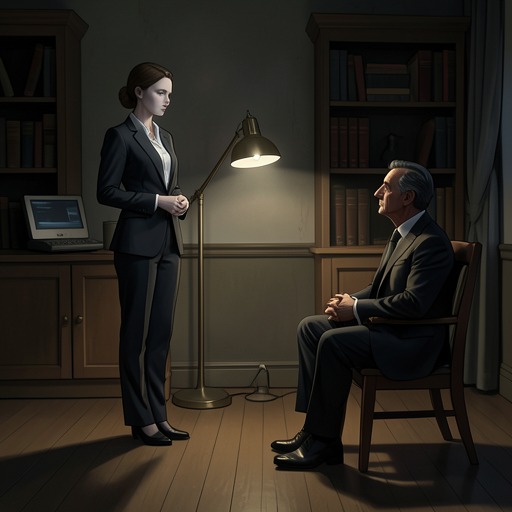
On the third floor, Gabrielle paces in front of her computer terminal while considering a new email. Its opening lines praise Sexton’s performance on CNN, placing the senator’s public political image beside the private communications and loyalties that shape Gabrielle’s work for him. The building is therefore not merely a backdrop: it is where her professional attention to Sexton’s campaign meets the uncertainty of her own position within his circle.
The Photographs and Their Aftermath
The building also contains Sexton’s office, where photographs later establish the affair between him and Gabrielle. The images appear to have been taken from above by a hidden camera and show the pair in the senator’s office among official-looking documents. After seeing them in Marjorie Tench’s office, Gabrielle rushes out and nearly collides with a secretary. Tench catches up with her near the Map Room, carrying the red envelope of photographs, and argues that their source is also the source of other information she wants Gabrielle to trust. The movement from Sexton’s office to the Map Room turns the building’s political interior into a route through which private exposure becomes leverage.
Narrative Significance
The building’s repeated presence links campaign work to personal vulnerability. Its forbidding, prison-like appearance anticipates the constrained atmosphere of the offices, while the hidden-camera photographs make those same rooms evidence of a relationship that can be used in political conflict. In this setting, the boundary between public office and private conduct proves permeable: Sexton’s workplace is both the center of his political operation and the place where Gabrielle’s involvement with him is documented and brought to bear against her.