1559
Diana1559 is the publication date attached to Jorge de Montemayor’s Los siete libros de la Diana, a landmark in Castilian literature identified as its first pastoral novel. The date belongs to the book’s emergence in print: its lovers, shepherds, and embedded tales inhabit settings and historical references without being assigned a single, precise calendar year.
Publication Date and Evidence
The book’s synopsis says that Los siete libros de la Diana was first printed in Valencia and Milan around 1559. Its publication credit, by contrast, gives “Jorge De Montemayor, 1559” as a direct year attribution. Read together, these statements establish 1559 as the date associated with the work’s first appearance while preserving the synopsis’s approximate phrasing about the printing.
The date identifies the publication, not the events narrated. The synopsis distinguishes the book’s print history from its central romantic situation: Sireno returns after being banished and discovers that Diana has married another man. That plot is presented as a tragic love story, but it shares the work with giants, nymphs, and other figures characteristic of its literary world. The publication date therefore gives a historical point of entry for a narrative whose episodes range across several kinds of pastoral and romance material.
Literary Significance in 1559
The book is described as the first pastoral novel in Castilian. Its form joins verse and prose, bringing lyrical expression into a narrative of shepherds, desire, separation, and changing fortune. The year matters as the point at which this combination entered print as a work with a foundational place in the genre’s history; the supplied account does not identify a more specific day or month of publication.
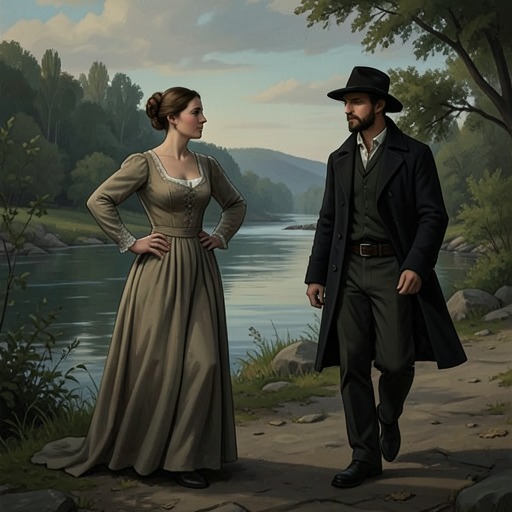
The pastoral setting is not simply a record of rural life. Sireno’s return to the mountains of León and the banks of the Ezla River brings him back to landscapes associated with his earlier happiness and his love for Diana. He recalls tending his flock, playing a rabel or a zampoña, and composing verses praised by local shepherdesses. The contrast between pastoral work and remembered love gives the countryside a literary function: it offers the scene in which private loss becomes lyric speech.
The Book’s Narrative Time
The episodes do not supply a single year that can be equated with 1559. Seasonal markers instead shape their local chronology. In an embedded account, Rodrigo de Narváez and his companions leave Álora on a summer night to patrol near the frontier; elsewhere, Felismena travels through a landscape of rivers, fields, and settlements while continuing her journey. These details place events within a recognizable sequence of days, nights, and seasons, but they do not date them to the year of publication.
Other narrative settings carry their own geographical and social markers. Selvagia recounts a life in the Kingdom of the Lusitanos, near the Douro River and a temple of Minerva visited by shepherds and shepherdesses for a festival. The book’s pastoral world can thus move between distinct regions and communities without providing a unified historical chronology. Its named rivers, ceremonial customs, and travel scenes make the imagined world particular while leaving its calendar largely open.
Historical Anchors and Embedded Narrative
One embedded tale offers a more explicit historical reference than the main pastoral episodes. Felismena begins her account by locating Rodrigo de Narváez in the time of Infante Fernando, who later became king of Aragon, and recalls Narváez’s distinction in war and peace, including his part in the Christian conquest of Antequera. The reference gives the tale a historical frame, but it does not establish that the book’s other shepherds and lovers live in the same precisely defined period.
Within that tale, Narváez’s patrol, the encounter with Abindarráez, and the latter’s journey to Coín unfold through concrete narrative circumstances rather than a stated year. Abindarráez is intercepted while travelling in the borderlands, fights the men who attack him, and is allowed to continue on the promise that he will return as Narváez’s prisoner. His meeting with Jarifa then reveals their love and their intention to marry. The sequence supplies a clear chain of events and a historical reference point, while leaving the date of those events unspecified.
Publication and Reception
The synopsis reports that the work achieved considerable success and was translated into English, French, and German within a short time. This reception makes 1559 more than a bibliographic label: it marks the starting point, in the account provided, for a work that soon circulated beyond its original language. No precise dates for those translations are supplied, so their chronology remains relative to the book’s early success rather than fixed to particular years.