
Nature as Witness and Refuge
Doctor ZhivagoThis flow traces how natural imagery reflects characters’ emotional states while remaining larger than their political struggles.
increasing Bearing strength in each event
 decreasing
Bearing strength in each eventdecreasingThe Funeral Blizzard
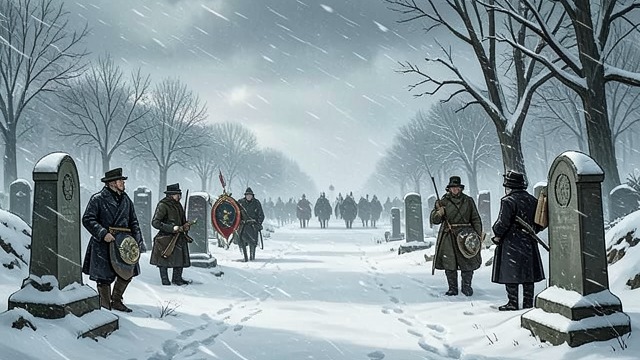
The Funeral Blizzard
Weather mirrors grief
A blizzard covers the graveyard after Zhivago’s mother is buried.
Its force intensifies his fear of losing her completely.
Nature gives emotion an immense and visible scale.
The River’s Renewal
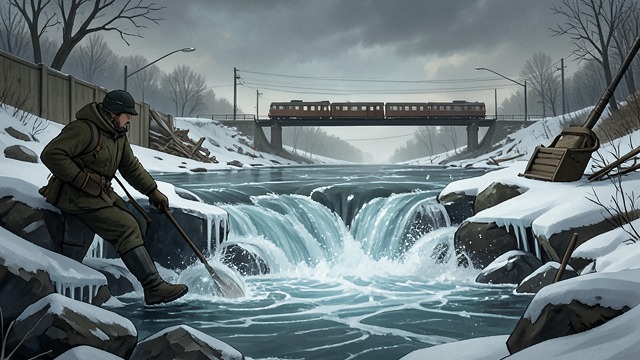
The River’s Renewal
Life moves beneath ice
As the Zhivago train crosses the Urals, thawing waters rush through forests and valleys.
The landscape’s renewal arrives independently of human plans.
Spring offers an image of life continuing through political disorder.
The Rowan Tree
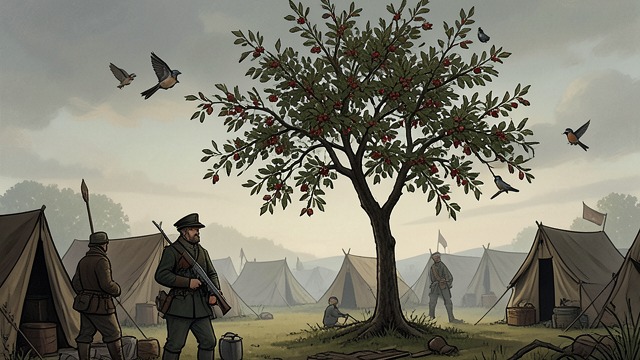
The Rowan Tree
A living sign of endurance
A solitary rowan tree feeds birds at the edge of the partisan camp.
Its berries and branches later become part of Zhivago’s language of love and longing.
The tree holds both refuge and the memory of threatened life.
Wolves at Varykino
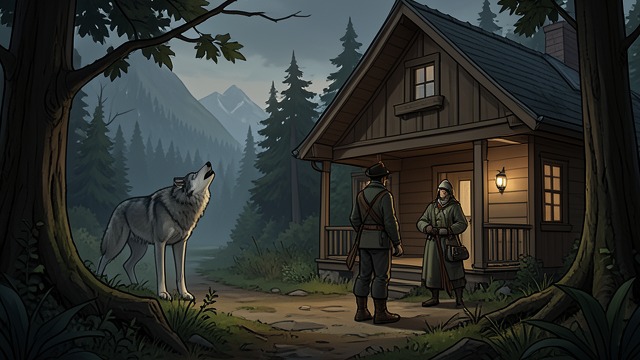
Wolves at Varykino
Fear made audible
Wolves howl near the house as Lara and Zhivago try to live together.
The sound turns the surrounding wilderness into a perceived threat.
Their private refuge remains vulnerable to forces outside their control.
Fields after the War
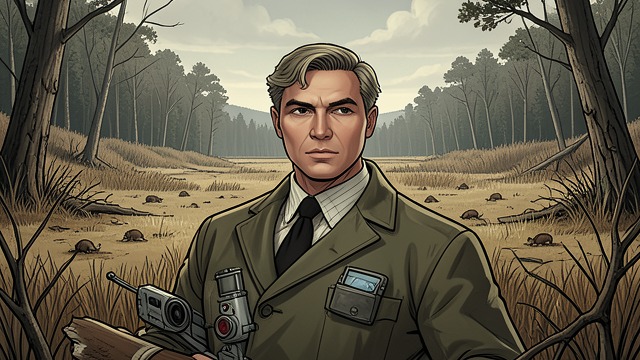
Fields after the War
Nature without people
Zhivago sees abandoned fields, mice, and flourishing woods on his journey west.
The contrast suggests that nature persists while human communities collapse.
The landscape judges neither side, but makes the cost of war visible.
the night after Maria’s burial
during the Urals journey in spring
during the partisan winter
during the winter retreat
during Zhivago’s final trek to Moscow
