
Truth versus Political Performance
Doctor ZhivagoThis flow traces the novel’s repeated conflict between honest perception and the slogans that demand public agreement.
increasing Bearing strength in each event
 decreasing
Bearing strength in each eventdecreasingThe Uncle’s Early Argument
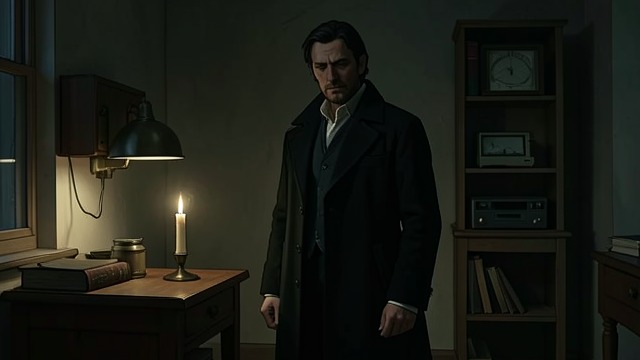
The Uncle’s Early Argument
Truth beyond groups
Vedeniapin argues that truth is sought by individuals rather than secured by fashionable societies.
He connects moral life with inward conviction instead of threats.
The idea becomes a measure against later political performance.
Rhetoric at the Meeting

Rhetoric at the Meeting
Words without listening
Commissar Gints speaks in lofty language to exhausted soldiers and receives hostility.
His failure shows how political phrases can lose contact with their audience.
Zhivago distrusts eloquence that ignores lived conditions.
Slogans in the Hospital
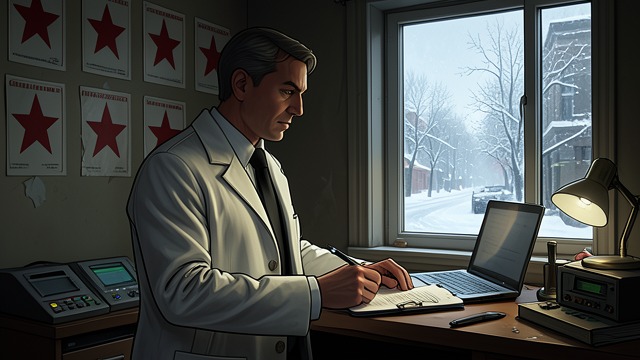
Slogans in the Hospital
Work becomes a test
Zhivago’s medical work is increasingly surrounded by questionnaires and declarations of political loyalty.
He resists replacing observation with mandated explanations.
Everyday practice becomes a quiet site of dissent.
A Teacher Re-Educated
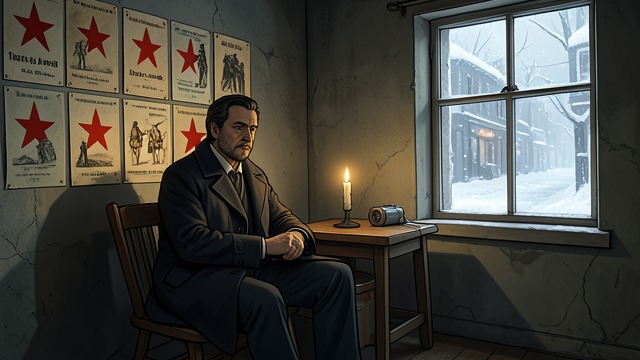
A Teacher Re-Educated
Coercion called growth
Dudorov describes imprisonment as an experience that corrected and matured him.
Zhivago hears the account as a distortion forced on the speaker.
The language of self-improvement conceals the violence of political conformity.
The Body Resists the Lie
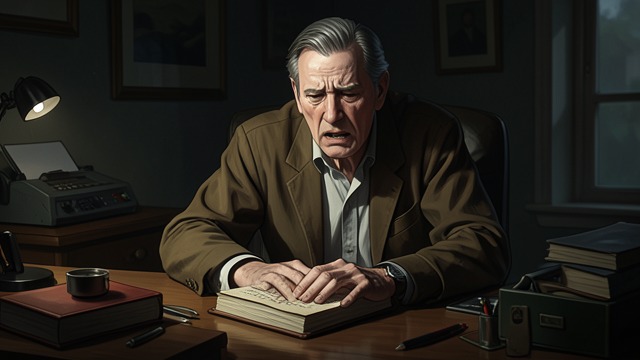
The Body Resists the Lie
A physical cost
Zhivago argues that chronic dishonesty damages the nervous system and the heart.
His illness makes the moral conflict bodily rather than merely theoretical.
The body registers what public language tries to suppress.
summer 1903
during the Meliuzeievo upheaval
after the October Revolution
during the 1930s
in Zhivago’s final Moscow years
