
The Persecution of Jews in Wartime
Doctor ZhivagoThis flow traces the novel’s attention to Jewish vulnerability and its rejection of persecution grounded in collective identity.
increasing Bearing strength in each event
 decreasing
Bearing strength in each eventdecreasingMisha’s Childhood Question
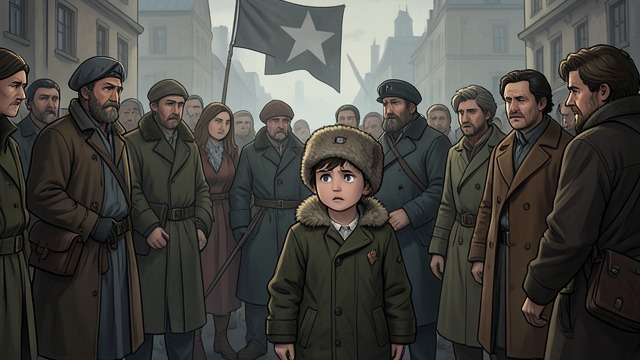
Misha’s Childhood Question
Identity without an answer
Misha Gordon wonders why being Jewish makes him feel unlike others and exposed to rejection.
His father offers no answer deep enough to satisfy him.
The boy’s question anticipates later encounters with antisemitic violence.
A Crowd Mocks an Old Man
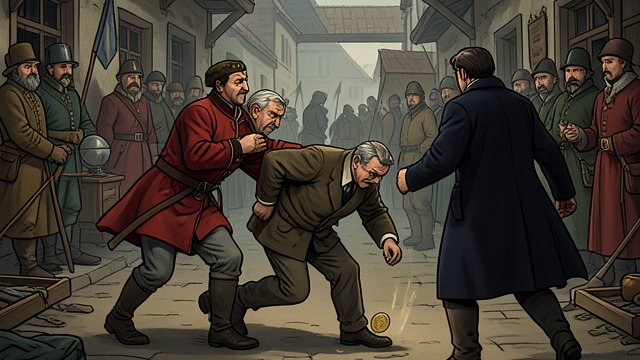
A Crowd Mocks an Old Man
Humiliation before violence
Zhivago and Gordon see a Cossack force an elderly Jewish man to chase a coin.
Zhivago intervenes, stopping the scene before it escalates.
Everyday cruelty reveals the ease with which a crowd can normalize abuse.
Zhivago’s Protest
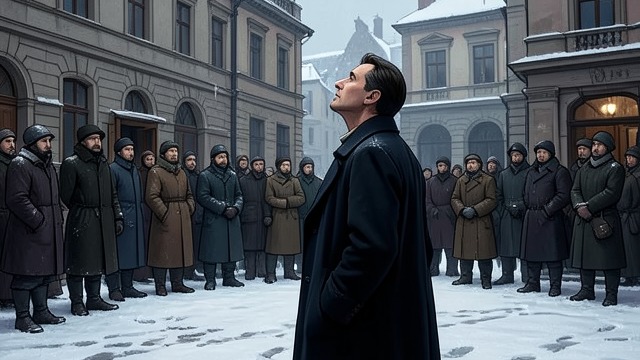
Zhivago’s Protest
Sympathy against prejudice
Zhivago describes the persecution of Jews in the war zone as irrational and unjust.
He rejects demands that the persecuted prove loyalty to those who persecute them.
His protest gives moral weight to individual suffering.
A Political Argument
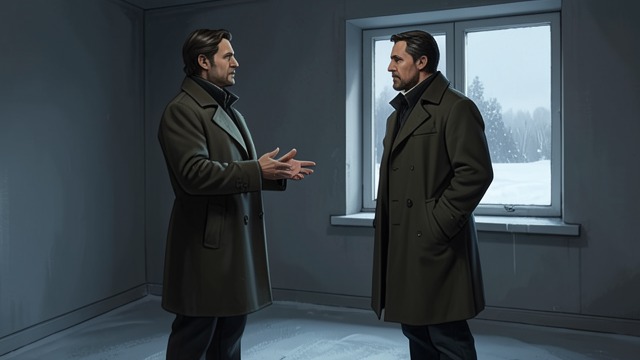
A Political Argument
Identity and universality
Gordon argues that Christian life centers on individuals rather than nations.
His position seeks solidarity beyond inherited divisions, though it risks minimizing lived identity.
The conversation exposes tensions inside universal ideals.
The Pogroms Return
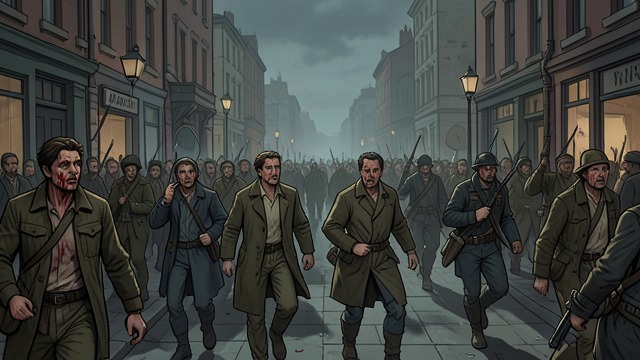
The Pogroms Return
Violence crosses political lines
Lara recalls people being attacked as Jews during the changing regimes in Yuriatin.
She and Galiullin try to protect those caught in the violence.
Political camps shift, but prejudice remains available to each.
during the train journey of his youth
during the First World War
after the roadside incident
during the wartime conversations
during the civil war in Yuriatin
