
The Partisan Families and Civilian Flight
Doctor ZhivagoThis flow traces the burdens placed on families fleeing the war and the tension between military strategy and civilian survival.
increasing Bearing strength in each event
 decreasing
Bearing strength in each eventdecreasingFamilies Follow the Army
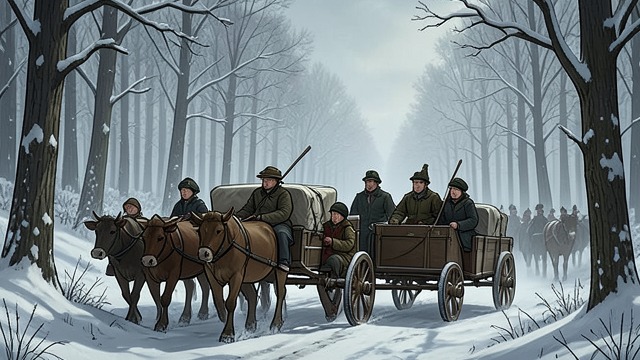
Families Follow the Army
Refugees on the move
Partisan families travel behind the main force with wagons, children, and herds of cattle.
Their presence makes the army’s needs inseparable from civilian survival.
The convoy brings both relief and new logistical strain.
Orders to Relocate
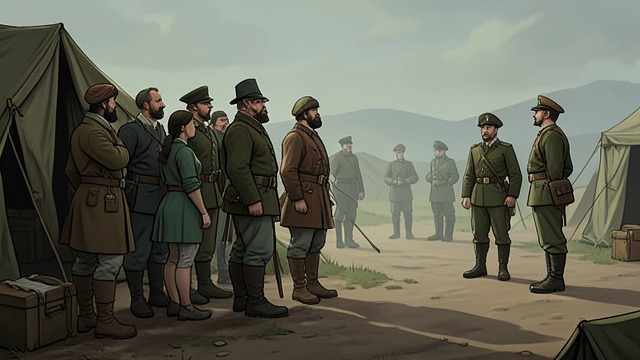
Orders to Relocate
Protection becomes separation
The partisan command plans to send families away from the camp to preserve military discipline.
Fighters fear that their loved ones will fall into White hands.
The policy deepens anxiety even before it is carried out.
The Women Cut a Road
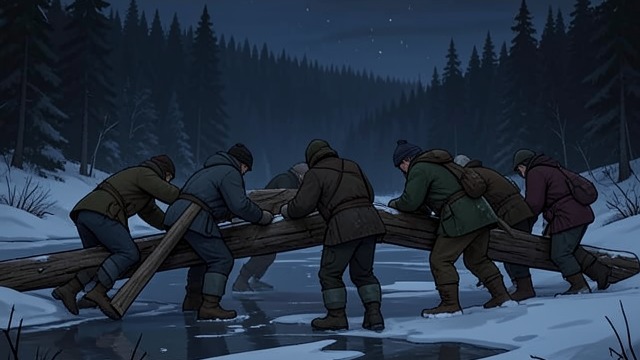
The Women Cut a Road
Unplanned resourcefulness
Women refugees cut paths and build bridges through the taiga after their intended settlement is destroyed.
Their work draws civilians toward the partisan camp despite military orders.
Survival produces its own logistics beyond command.
A Cow and a Family’s Fear
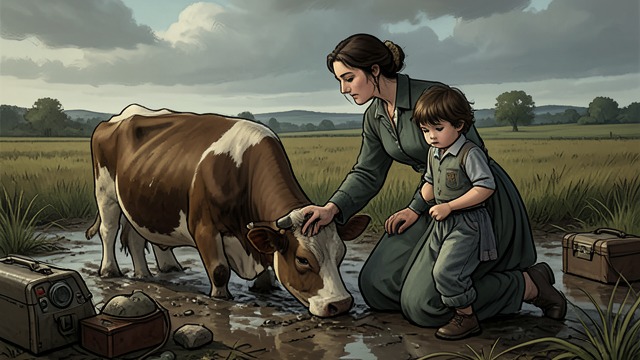
A Cow and a Family’s Fear
Domestic concerns amid war
Agafia seeks Kubarikha’s help for a sick cow and confesses her fear for Pamphil and the children.
The conversation joins ordinary animal care to the family’s terror of reprisal.
The civilian world persists inside a military camp.
Flight through the Taiga
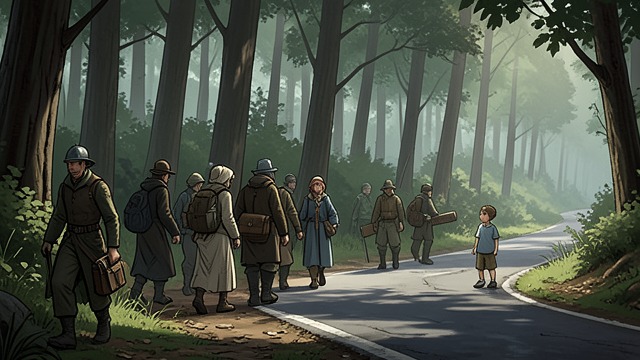
Flight through the Taiga
Families dispersed
As armies move and villages burn, refugees scatter through forests and along roads.
Families lose track of one another, while children are left to uncertain institutions.
The war’s aftermath is measured in broken kinship as much as territory.
during the partisan campaign
as winter approaches
during the White encirclement
during the late autumn camp
after the camp’s collapse
