Kuprian Savelievich Tiverzin
Doctor ZhivagoKuprian Savelievich Tiverzin is a railway worker and revolutionary whose actions connect everyday workplace abuse with the larger labor struggle. He is part of a family of railway workers who shelter Pavel Pavlovich Antipov after Antipov’s father is exiled to Siberia. At work, Tiverzin intervenes when he finds an older foreman mistreating a young apprentice; in the unfolding strike, his signal helps bring workers out, though he mistakenly believes for years that the stoppage was his doing alone.
Identity and Background
Tiverzin belongs to a railway-worker family shaped by political commitment and the pressures of state repression. Pavel Pavlovich Antipov, the son of railway worker Pavel Ferapontovich Antipov, comes to live with Tiverzin and his mother, Marfa Gavrilovna, after his father’s exile to Siberia. Their home thus becomes a place of support for a young person whose family has been disrupted by political events.
Tiverzin’s political outlook is not separate from his working life. The railway, its workshops, and its labor disputes are the settings in which his convictions take practical form. His concern for the people around him is visible not only in his participation in strike activity but also in his response to a young worker being mistreated.
Defense of the Apprentice
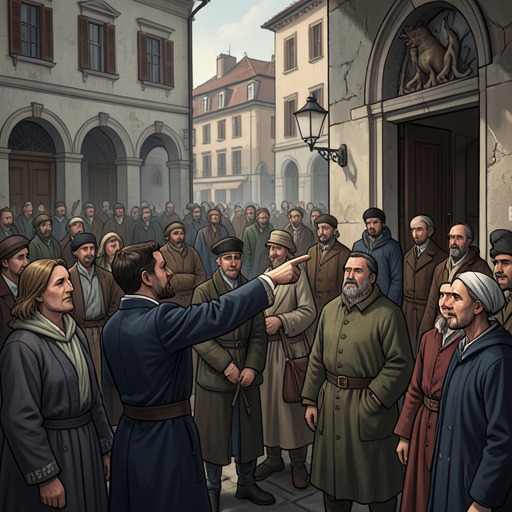
One evening, workers call to Tiverzin outside the workshops because the old foreman Piotr Khudoleiev is again mistreating his apprentice, Yusupka, also known as Osip Gimazetdinovich Galiullin. A woman in the gathered crowd asks Tiverzin to go inside and help. He pushes through the onlookers and directly challenges Khudoleiev, asking why he tyrannizes the boy. Khudoleiev replies that it is none of his business, but Tiverzin persists rather than accepting the foreman’s authority as a reason to stay out of it.
The confrontation becomes a struggle among the people in the workshop. Others call for the men to be separated and taken into custody, and Tiverzin is held back as the conflict intensifies. He breaks free, goes out, and leaves without looking back. His intervention does not end in a simple victory: the attempt to defend the apprentice draws violence toward Tiverzin himself, and he departs frustrated that helping the workers has turned them against him.
Strike and Misunderstanding
The apprentice incident follows days of labor unrest. Tiverzin has been involved in disputes on the railway and in meetings about a strike that has been decided upon but not yet carried out. After leaving an underground shelter with Pavel Pavlovich Antipov, he walks away from the others in an agitated state, convinced that the separate struggles, meetings, and plans are stages on a broader road toward a more rational and harmonious world.
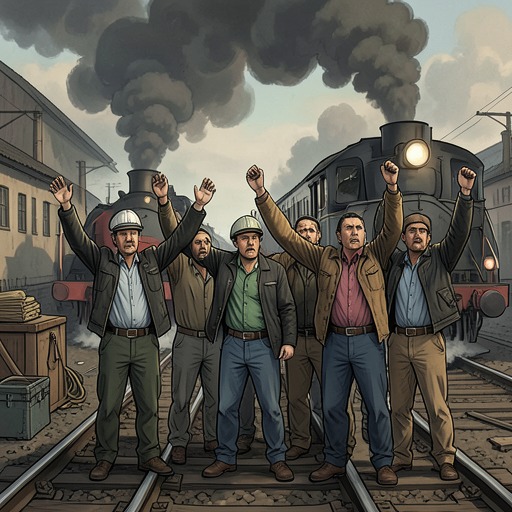
The strike committee makes its decisive choice after Tiverzin has left. Its members decide that the strike should begin that night and assign the tasks needed to bring the railway workers out. When the repair-shop whistle sounds, men are already moving from the depot and freight yard; workers from the boiler room join them after downing tools at Tiverzin’s signal. His act is therefore consequential, but it is one part of a collective action whose organization he does not witness.
For many years, Tiverzin believes that he alone stopped work and traffic on the line that night. Only much later, at his trial, does he learn that he was charged with complicity in the strike, not with inciting it. The revelation distinguishes his remembered role from the committee’s actual decision and shows how a participant can misread the structure of a collective event, even when his own action helps set it in motion.
Relationships and Narrative Significance
Tiverzin’s connection to Pavel Pavlovich Antipov combines family shelter with political association. The two leave the underground shelter together, and Antipov’s place in Tiverzin’s household reflects a network of solidarity among railway-worker families. The evidence also places Tiverzin in the company of workers who are divided by immediate needs: one man worries about a family member’s typhus, while Tiverzin is impatient with delay in the struggle. Their exchange makes visible the strain between political urgency and personal obligation.
In the workshop, Tiverzin’s intervention extends that concern for working people to Yusupka, the apprentice being mistreated by Khudoleiev. Yet the scene resists presenting solidarity as effortless or universally welcomed. Tiverzin is opposed by the foreman, caught in the crowd’s escalation, and ultimately leaves without resolving the dispute on terms he controls.
His mistaken memory of the strike completes this portrait of conviction under pressure. Tiverzin recognizes the larger direction of the labor struggle, but he does not know that the committee has already made the immediate decision. His personal signal matters; it does not make him the sole author of the stoppage. Through that difference, his story links individual initiative to collective organization while preserving the uncertainty and limited knowledge experienced by those acting inside political upheaval.