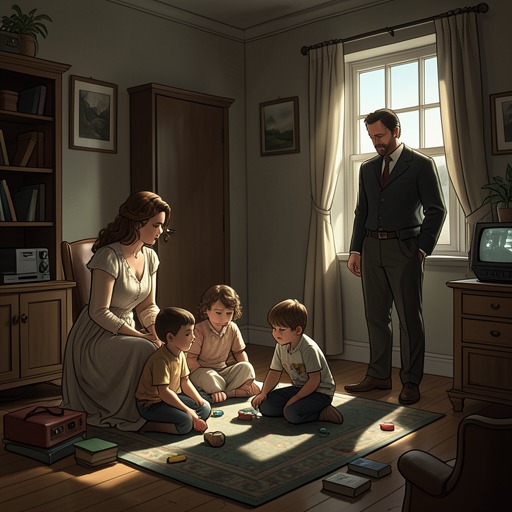
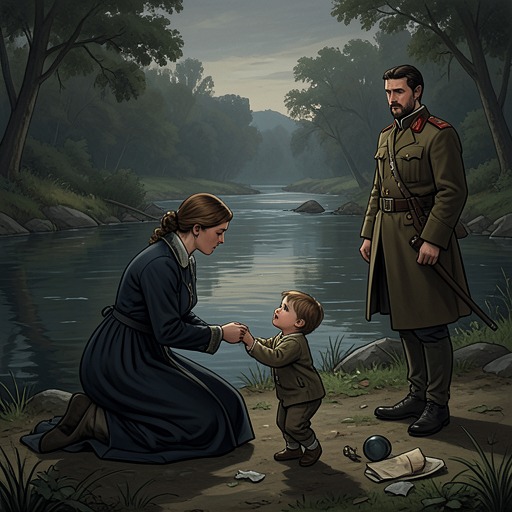
Lara's search for her daughter Katia
Doctor ZhivagoAt Yurii Zhivago’s funeral, Lara Antipova reveals that she is trying to trace a daughter who was entrusted to strangers to be raised. The search is still unresolved in this scene, but it gives her grief a practical, urgent direction: she needs to learn whether records or a central office might help her find the child.
A search disclosed at the funeral
Lara makes the disclosure while speaking with a friend who has asked her not to leave after the cremation. She promises to return and stay as long as needed, and offers to help go through Yurii’s manuscripts. In the same conversation, she asks whether her friend, whom she believes may be a lawyer, knows the current regulations or the government department to contact about a matter concerning a child.
At first she frames the case as imaginary: a child has been turned over to strangers, and someone needs to trace her. Lara asks whether there is a centralized source of information about children’s homes across the country, or any record of waifs and strays. She then postpones the discussion, saying she is frightened and cannot yet explain everything. The tentative phrasing and request to wait leave the details of the child’s separation and upbringing unstated, while making Lara’s need for information unmistakable.
Katia and the planned arrangements
Lara identifies her daughter as Katia and says that she hopes the girl will join her later. For now, Lara does not see why she should leave the flat. She describes Katia as gifted in music and acting: the girl imitates people, performs scenes she invents, and sings operatic arias by ear.
Lara has a specific plan for her daughter’s education. She wants Katia admitted to junior classes at either a drama school or a conservatory, depending on which will accept her, and intends to apply for a scholarship. She explains that arranging this is why she has come without the girl; once the arrangements are made, she plans to go back. The proposed schooling gives the search an immediate practical purpose, even as Lara’s questions suggest that she does not yet know how to locate or bring her daughter to her.
Grief, assistance, and interruption
The conversation takes place amid the funeral preparations. Lara worries that Yurii’s friends have been kept waiting and notes that mourners may already be arriving from the undertaker. She also asks for a footstool to be placed near the coffin so people can reach Yurii for a final kiss, including Marina and the children. Her attention moves between the funeral’s ritual obligations and her own unresolved family crisis.
Her friend offers help without demanding an immediate explanation and urges her not to despair, affirming that hope and action are duties in misfortune. But Lara no longer hears him as he opens the door and admits the mourners. Overwhelmed by the gathering and its noise, she withdraws into memories, reflections, and conjectures, imagining a future in which she has grown old. The scene ends without a lead to Katia or a solution to the search: Lara’s request for records remains an unanswered question, held against the surrounding farewell to Yurii.