Lara's shooting at the Christmas party
Doctor ZhivagoLara's shooting at the Christmas party is the culmination of her attempt to break with the life she has known and the moment her private conflict with Komarovsky becomes a public crisis. On the night of December 27, she goes to seek money from him so she can leave the Kologrivovs and become independent, carrying a loaded revolver with its safety catch off. At the gathering, after waiting and watching for a chance to speak with Komarovsky, she fires but wounds Kornakov instead. The shooting exposes the force of Lara’s distress while leaving its immediate consequences to be managed through Komarovsky’s influence and intervention.
Background and decision
By Christmastime in 1911, Lara feels overwhelmed by the tangled pressures of Pasha, Lipa, the Kologrivovs, and money. She believes she is losing her bearings and wants to break with everything she has known and begin again. Her decision is to leave the Kologrivovs at once and become financially independent.
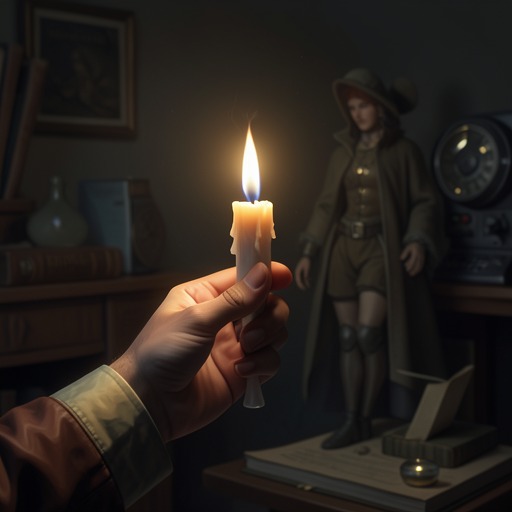
She chooses to ask Komarovsky for the money. Lara assumes that, given their past and the independence she has achieved, he ought to help her without explanations or degrading conditions. Yet she also anticipates refusal or humiliation: Rodia’s revolver, loaded and with its safety catch off, is hidden in her muff, and she intends to shoot Komarovsky if he treats her as she fears he might. The plan therefore joins a practical appeal for a new life to a threat of irreversible violence.
At the party
Lara arrives at the Christmas gathering while Yura and Tonia spend part of the evening backstage. She is not in evening dress and knows no one, yet remains in the ballroom, waltzing with Koka Kornakov or wandering without purpose. A few times she pauses outside the sitting room where Komarovsky is playing cards, hoping he will notice her. His attention stays on his cards; whether he fails to see her or pretends not to, Lara feels humiliated.
When Komarovsky looks warmly at a young woman who enters the sitting room, Lara recognizes in the exchange a reflection of her own past with him. She nearly cries out, but learns that the young woman is Kornakov’s daughter and that her suspicions were mistaken. Lara does not abandon her plan to speak to Komarovsky; instead, she decides to wait for a more convenient moment and returns to the ballroom.
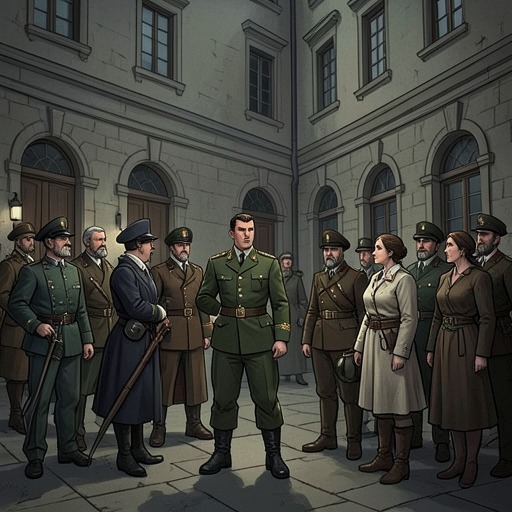
The shot comes from the sitting room, abruptly breaking the party’s activity. Guests turn toward the doorway, then scatter into confusion: some rush and scream, while others run in to see what happened or emerge arguing and weeping. Mrs. Kornakov cries out for her son and demands a doctor, then threatens Lara when she sees her. Her reaction gives the incident a public, accusatory dimension before the facts have fully settled.
What the shot changes
A group leads Lara from the sitting room by the arms, while Kornakov comes out laughing and dabbing at a scratch on his left hand. Lara has not hit Komarovsky; Kornakov is the one wounded. Yura recognizes Komarovsky as the lawyer connected with his father’s estate and sees Lara being brought into the ballroom, but initially mistakes the shooting for a political attack on the prosecutor. He soon realizes she is being supported because her legs have given way, and that the apparent aggressor is in a state of collapse.
The reversal is central to the event: Lara arrives intending to confront Komarovsky, but the shot wounds someone else, and the scene’s immediate attention turns to the injured Kornakov and Lara’s condition. The violence she had imagined as a means of forcing a decisive break instead leaves her exposed before the assembled guests and places her future in the hands of others. Komarovsky’s repeated, distressed question about what she has done registers both the shock of the incident and his recognition of its consequences.
Komarovsky’s response and aftermath
After the party, Komarovsky is agitated by the scandal and fears damage to his position and reputation. His concern is not only public: he recognizes that he has wounded Lara deeply and that she is acting with a fierce determination to reshape her life. He concludes that he must help her, perhaps by finding her a room, while also keeping away from her so as not to provoke another crisis.
The legal danger is immediate. Police have already visited, and Komarovsky sees that the case will require establishing whom Lara meant to shoot; even if that question is resolved in her favor, she could still face prosecution. He decides to use psychiatric testimony to establish that she was not responsible for her actions when she fired and to have the proceedings dropped. He then secures a vacant room in the eight-room apartment of his friend, the lawyer Ruffina Onissimovna Voit-Voitkovsky. Lara is taken there a few hours later, only half conscious with brain fever.
The aftermath does not resolve Lara’s wish for independence on her own terms. Instead, the shooting makes her need for shelter and protection urgent, while Komarovsky’s assistance remains entangled with the history that drove her to confront him. The scene thus turns her intended escape into another dependence: a bid to sever the past ends with Komarovsky arranging her room and legal defense.