Marina
Doctor ZhivagoMarina enters Yurii Andreievich Zhivago’s life not through ceremony or declaration but through household work. Her voice, which seems to possess a life of its own, announces a woman who will not remain merely an object of other people’s conversation: she speaks up for the doctor, offers him help, and gradually makes a shared home with him. Their relationship becomes a quiet, improvised domestic life, formed under conditions that leave his earlier marriage unresolved and their own union unregistered.
Identity and Introduction
Marina is the daughter of Markel and Agafia, and she is living with her family when Yurii Andreievich returns from Siberia. Her first appearance in this episode is framed by a household’s teasing. Markel mocks the doctor’s misfortunes and his decision to leave his house at a dangerous time, while Marina has repeatedly defended him, insisting that he is unfortunate and that he should not be hurt. The family’s laughter makes her protective impulse visible before she acts on it herself.
When Yurii Andreievich asks for water to clean the house and wash his things, Marina’s parents are astonished at his request. Agafia offers to send her daughter to do the washing and scrubbing. He resists the offer, objecting that Marina should not dirty her hands for him. Marina immediately challenges the distinction implied by his refusal: if he may dirty his hands, she asks, why may she not? She also asks whether he would really drive her out if she came to see him. The exchange gives her care an active, self-assertive character. She is not simply assigned domestic service by her family; she claims the right to choose it and to approach him.
Her voice is described as pure, well-modulated, wide-ranging, and unusually strong without being loud. It seems to come from beyond the immediate speaker, as though it has an independent life. The narration presents that voice as a kind of protection: listeners would be reluctant to distress a woman who possessed it. The quality is more than a physical attribute. It marks Marina’s presence in a room where others have been speaking about the doctor, and it gives her a medium of authority distinct from the family’s laughter and reproaches.
The Beginning of Their Life Together
The doctor’s water-carrying on a Sunday becomes the starting point of their friendship. Marina often comes to help with his housework; on one visit she stays with him and does not return to the family lodge. The narrative describes the transition plainly, through repeated visits and shared labor rather than a formal courtship. Yurii Andreievich later jokes that their romance could be counted in twenty buckets, as if their love story were a novel in twenty chapters. The image keeps the practical origin of the relationship in view: its chapters are measured by the water she carries and the work they do around the house.
Marina becomes Yurii Andreievich’s third wife, although he has not divorced his first wife, Tonia, and he and Marina never register their marriage. They have children together. Markel and Agafia nevertheless speak of their daughter as the doctor’s wife, while Markel complains that there has been no proper wedding, either in church or at the registry. Agafia points out that, with Tonia still alive, a wedding would amount to bigamy. Markel dismisses the legal protection due to the absent wife, treating Tonia as though she were already dead. The family’s disagreement exposes the precarious status of Marina’s household: it is recognized in daily life, but not secured by ceremony or law, and the practical fact of the doctor’s new partnership coexists with his still-living first marriage.
Care, Domestic Labor, and Partnership
Marina’s care is expressed through the work Yurii Andreievich needs done and the company she gives him. When he says the house needs cleaning and his things washing, she resists his attempt to refuse her help; the offer is not an abstract promise but a response to a particular, ordinary need. She often helps with his housework, and their relationship grows out of this recurring labor. The episode makes domestic work the material form their affection takes, without suggesting that such work resolves the legal or emotional complications of his other marriage.
She also accepts the disorder and volatility of the life she shares with him. The doctor is described as letting himself go and knowing it: he brings dirt and disorder into the house, and lives with moods, fancies, grumbling, tempers, and nervousness. Marina forgives these eccentricities and bears with him. Her patience does not turn her into a silent background figure; her earlier interruption of his self-denying politeness shows that she can insist on her own view. Rather, the relationship joins her practical persistence to his unruly habits, making their home a place sustained by her repeated acts of care.
In the early summer of 1929, Marina and the doctor live on Spiridonovka Street. They have two daughters: Kapka, also called Capitolina, who is five, and the baby Klazhka, or Claudia, who is six months old. These precise details establish the household that has grown from the Sunday errands into a family with young children. They also place Marina within a circle of nearby friends: Misha Gordon has a room on Malaia Bronnaia Street, close to where she and Yurii Andreievich live.
Death and Aftermath
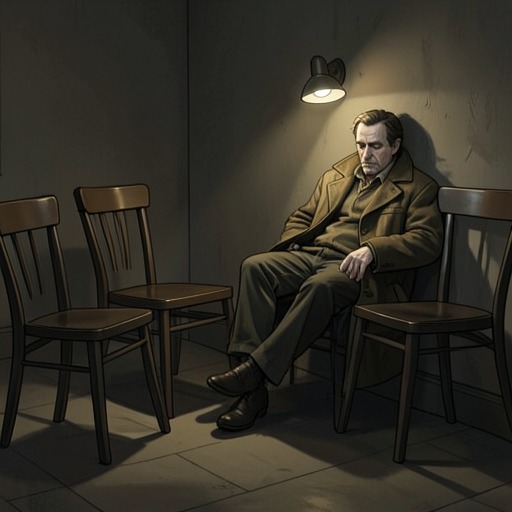
When Yurii Andreievich dies, his body is taken to the flat in Kamerger Street, his last registered address. His friends arrive there and bring Marina with them. Her first response is bodily and uncontrolled: half out of her mind with shock, she throws herself on the floor and beats her head against the edge of the long wooden chest in the hallway. She clings to the body and can scarcely be separated from it when it is time for it to be washed and placed in the coffin. The outward intensity of this grief contrasts with the quiet routines through which their life together began.
The next day the frenzy has subsided into weary numbness. Marina sits in silence, still scarcely conscious of herself or her surroundings, after remaining in the room through the preceding day and night. Her baby is brought in for her to feed; Kapka and the young nurse come and go. These details keep her grief within the continuing demands of motherhood. The dead man is the center of the room, but the children still need feeding and care, and Marina’s vigil takes place alongside the practical life she must continue to inhabit.
Her parents and sisters come and go, while Markel sits beside her on a bench, sobbing and blowing his nose into his handkerchief. Misha Gordon and Innokentii Dudorov are also present, numb with grief. Marina’s loss is thus held in a room shared with the doctor’s friends and her own family. She remains there after her initial lament has given way to silence, and the last image of her is not a formal widow’s role—the relationship was never registered—but a woman keeping vigil over the man with whom she made a household.
Narrative Significance
Marina’s relationship with Yurii Andreievich is defined by a tension between lived intimacy and incomplete public recognition. She is treated by her parents as his wife, bears his children, and tends to the conditions of his daily life, yet their union has no registered or religious ceremony, and Tonia remains alive. The family’s argument over the wedding makes the contradiction explicit: household practice recognizes Marina, while the circumstances of the first marriage prevent an uncomplicated formal status.
The narrative gives the relationship weight through small, repeated acts rather than a single declaration. Water, washing, cleaning, an untidy house, and a shared life with two young daughters establish the partnership in concrete terms. At the end, the same domestic bond is measured against death: Marina stays with the body, then sits in exhausted silence while her baby is brought to her. Her arc moves from defending the doctor in her parents’ home to building a family with him and mourning him in the presence of their children. The modesty of that arc is significant: amid legal ambiguity and personal loss, Marina’s care makes a real household, and its reality persists in the children and in her vigil after Yurii Andreievich is gone.