October Manifesto
Doctor ZhivagoThe October Manifesto enters the narrative as news of sweeping reform, passed from person to person before it has even been officially made public. Marfa Gavrilovna understands it as a promise that peasants will receive land and that everyone will be treated equally; the demonstration organized in its wake soon tests the distance between those assurances and political reality.
News of the Manifesto
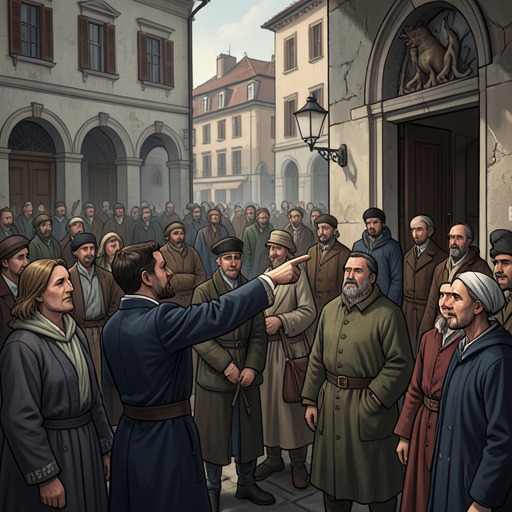
Marfa Gavrilovna tells Kuprian Tiverzin that Prov Afanasievich has visited to borrow logs and brought news of the Tsar’s signed manifesto. According to her account, the document will change everything: people will be treated justly, peasants will have land, and they will stand equal with the gentry. She has heard that the text is signed but not yet public. She also recalls that the Synod has sent something to be included in church services, apparently a prayer of thanks, though she has forgotten its wording.
The news arrives in ordinary domestic conversation rather than through an official announcement. Marfa initially forgets what Prov has told her, then abruptly remembers and shares it with Kuprian. That informal circulation gives the manifesto immediate force as expectation and rumor, even before its provisions have been publicly presented.
Demonstration and Violence
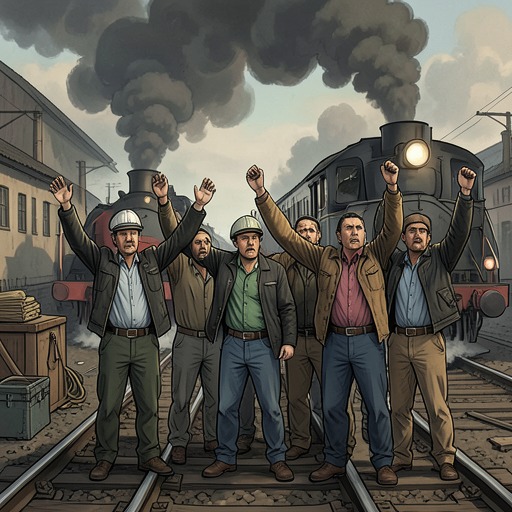
Soon after the manifesto of October 17, several revolutionary organizations call for a large demonstration, planned to travel from the Tver Gate to the Kaluga Gate. The organizers quarrel, and one after another withdraws; when they learn that crowds have nevertheless gathered on the appointed morning, they hastily send representatives to lead them. The episode places spontaneous public action beside the organizers’ difficulty in controlling or coordinating it.
Despite Kuprian’s efforts to dissuade her, his mother joins the demonstrators, and Pasha Antipov accompanies her. The march is interrupted by mounted dragoons, and the crowd disperses. Pasha, too frightened to speak during the confrontation, rushes back to Marfa. The violence makes the promise of freedom sound precarious: the public gathering formed in response to political change is met by force.
Promise and Disillusionment
On the way home, Marfa condemns the dragoons and interprets their actions as an attempt to distort or undo the freedom the Tsar has granted. Her anger extends beyond the horsemen to the turmoil around her, which she sometimes blames on what she calls Kuprian’s bunglers and fumblers. The manifesto’s meaning in this scene is therefore divided: it inspires hope of land and equality, but its announcement does not prevent violence or settle the political struggle.
Marfa’s response also exposes the uneven passage from declaration to consequence. The manifesto is described as signed but not yet public; demonstrators gather amid organizational confusion; and the march ends in dispersal rather than visible reform. The episode presents the document less as a completed transformation than as a promise whose credibility is immediately tested by events.