Pavel Ferapontovich Antipov
Doctor ZhivagoPavel Ferapontovich Antipov is a railway worker, political exile, and father whose story connects the material world of railway labor with the human costs and changing ideals of revolution. Though much of his life reaches the reader through the experiences and recollections of others, his presence spans two generations: first as an arrested worker whose family is left vulnerable, and later as an old revolutionary whose son remains unknown to him in public life.
Identity and Background
Pavel Ferapontovich Antipov is a railway worker and the father of Pavel Pavlovich Antipov, known as Pasha. His family is drawn into the revolutionary world through both his work and political circumstances. After his exile to Siberia, Pasha lives with the Tiverzins, Kuprian Savelievich and Marfa Gavrilovna, another family of railway workers and revolutionaries. The move places the boy among people whose shared working-class and political commitments give him a substitute household while his own father is absent.
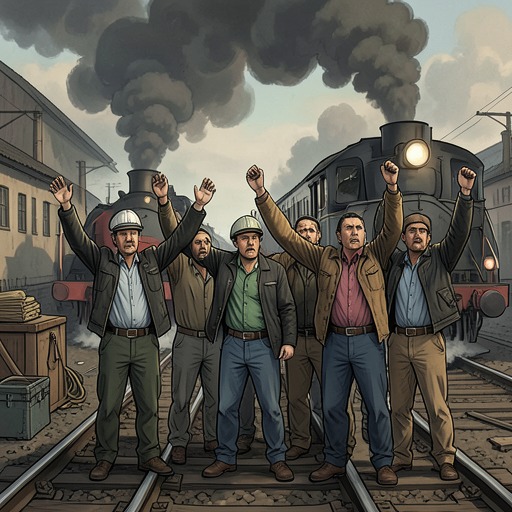
The novel first presents Pavel Ferapontovich in the setting of the railway itself. On a cold October morning, when railway employees are being paid, he walks beside Fuflygin, the divisional manager, along the tracks. As track overseer for the station area, Antipov has been pressing the repair shops over the quality of the replacement steel. The rails fail the strain tests, and he fears they will crack in frost. His practical knowledge makes him alert to an imminent danger that the administration chooses not to address; he suspects that someone is profiting from the contracts.
Fuflygin brushes aside the warning by treating the sidings and dead ends as unimportant, even suggesting that wooden rails would be adequate there. The contrast is not simply between two opinions about engineering. Antipov is responsible for the safety and soundness of working railway infrastructure, while the manager treats the lesser-used track as beneath concern and is preoccupied with his own appearance and haste. Antipov's professional judgment is therefore bound up with a larger conflict between the worker's attention to material conditions and management's indifference to them.
Arrest, Exile, and Family Consequences
Antipov's political history becomes visible through its consequences for his household. He is arrested after officials arrive at night, search his flat, turn it upside down, and take him away in the morning. At the same time, his wife Daria is in hospital with typhus, and their son Pasha, a student at the Realgymnasium, is left at home with his deaf aunt. The family also faces eviction. Arrest and illness thus converge: the father's removal is not an isolated political fact but the beginning of immediate insecurity for those dependent on him.
The Tiverzins respond by proposing to take Pasha in. Their intervention gives the boy shelter, but it also shows how political repression and mutual aid operate within the same network of railway workers. Antipov's exile to Siberia has already separated him from his son; the arrest account makes plain how quickly state action can unsettle the rest of a family's life as well. Pasha's later connection to the Tiverzins grows out of this concrete emergency rather than an abstract shared cause.
Antipov remains an important presence even when he is absent from Pasha's daily life. Lara, who loves Pasha, secretly sends money to his exiled father and helps his ailing mother. She also reduces Pasha's own expenses by paying part of his board directly to his landlady and finding him a room on Kamerger Street near the Art Theater. These acts of support connect Antipov's exile to the practical arrangements and private loyalties that shape his son's life. Pasha does not know that Lara is helping his father, so the support is an unpublicized bond among people whose lives have been divided by exile and hardship.
Antipov and His Son
The separation between Pavel Ferapontovich and Pasha persists even after both are in the same region. In Yuriatin, Lara explains that Antipov lives in a settlement along the highway, the place where he had been sent as an exile. Tiverzin is there too, and both older men have become members of the local revolutionary court. Pasha, now operating under another identity and living as Strelnikov, has not visited his father or told him who he is.
The estrangement is not described as a quarrel. Antipov assumes that if his son wishes to remain incognito, then that is how matters must stand; he does not take the silence as an insult. Lara sees this acceptance as evidence of a discipline so severe that ordinary family feeling seems to have been suppressed. Her account emphasizes the painful asymmetry: she waits in the street outside the building where Pasha works, does not claim to be his wife, and knows that personal appeals carry little weight there, while his father accepts that he cannot see his son because the son has chosen not to be known.
This father-son separation makes the revolutionary transformation of private identity especially tangible. Pasha's hidden identity prevents recognition, and Antipov's principles prevent him from forcing contact. Neither man is shown simply repudiating the other; instead, political discipline and secrecy occupy the space where a family meeting might have occurred. Antipov's acceptance of the silence gives the scene its particular gravity: the father does not demand that private kinship override the son's chosen public role.
The Older Revolutionary
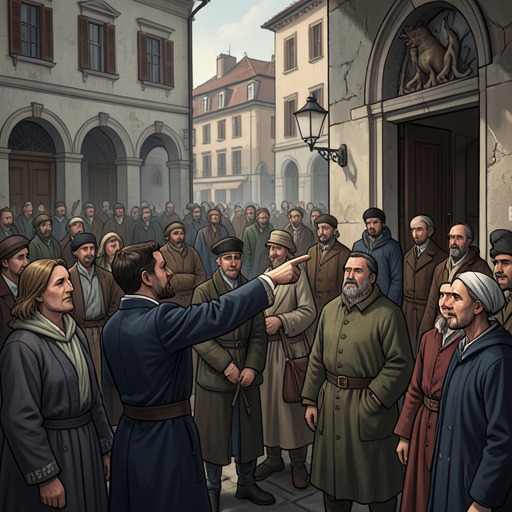
When Antipov reappears, he is an old worker and veteran of the revolution of 1905, sitting among the honored guests at a meeting in a shed. Tiverzin is beside him, morose and greatly changed from his Moscow days. Antipov agrees with every word Tiverzin says, and the two men sit silent and grim while the gathering treats them as venerable figures of the revolutionary past.
The image is sharply different from the earlier scene on the tracks. There, Antipov speaks up about a specific danger in the railway's construction and confronts a manager who dismisses his evidence. Here, the old worker's significance is acknowledged, but his voice is not individually foregrounded: he appears as one of the veterans whose authority derives from the movement's history. The gathering's reverence has a troubling edge. The older revolutionaries are likened to idols at whose feet the revolution has laid its offerings, and the narrator describes them as dehumanized by political conceit. Antipov's old age and public honor therefore do not amount to a simple triumph; the political status gained by revolutionary veterans is accompanied by a loss of ordinary human dimension.
Narrative Significance
Antipov's appearances form a quiet arc from practical responsibility to political memory. The railway worker's warning concerns steel, strain, frost, and the possibility that neglected rails will fail; his later life is known through exile, family separation, and membership in a revolutionary court. This movement links the concrete systems of labor and transport to the larger political structures that claim the workers' allegiance. The same workerly identity that makes him attentive to the rails also places him within a revolutionary community, but the community's discipline can exact a cost in private relationships.
His story also offers a generational counterpoint to Pasha's transformation into Strelnikov. The father remains in the settlement as an old exile and revolutionary, while the son becomes a public figure whose identity is concealed even from his father. Lara's secret financial help, the Tiverzins' earlier care for Pasha, and Antipov's quiet acceptance of his son's absence reveal a network of personal obligations surviving beneath political upheaval. Antipov is not given a final reconciliation with Pasha in the supplied narrative; the unresolved distance itself is part of his significance, marking the point where revolutionary principle and family intimacy fail to meet.