Seriozha Rantsevich's amulet
Doctor ZhivagoSeriozha Rantsevich's amulet saves him from a bullet in the fighting between the partisans and the Whites, and its discovery makes a small, battered object the hinge between apparent death and unexpected survival. The paper inside bears the Ninety-first Psalm in its original Slavonic text: a striking contrast with the corrupted, orally transmitted version found on a dead telephonist moments earlier. For Yurii Andreievich Zhivago, the amulet's material protection is inseparable from a sudden moral reversal: the young enemy soldier he thought he had killed is still alive.
Appearance and contents
The amulet hangs from a chain at Seriozha's neck, among a cross and a locket. Inside it is a paper copy of the Ninety-first Psalm, protected within the small case. The text is the full, original Slavonic version, unlike the altered prayer on the other soldier's paper, which had been transliterated into Russian script and worn into the folds of cloth.
The contrast is precise rather than abstract. The telephonist's brittle paper has accumulated the distortions of repeated popular recitation: phrases shift into new, sometimes incoherent forms. Seriozha's paper, by contrast, preserves the psalm in its original wording. Both are treated as protective objects, but the story sets the fragile, worn traces of oral transmission beside a text presented in its intact form.
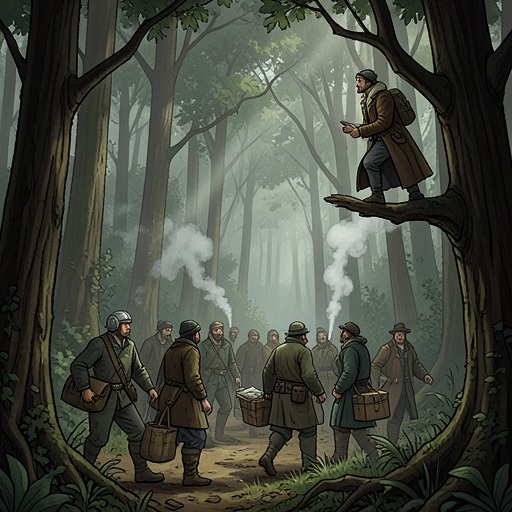
Discovery on the battlefield
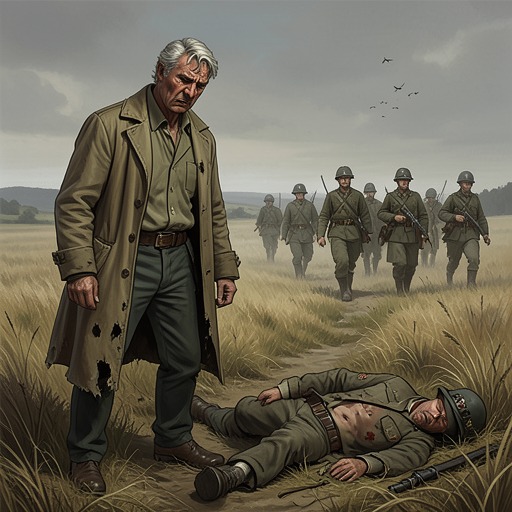
After finding the telephonist dead, Zhivago leaves him and goes into the field to the young White Guardsman he believes he has killed. Seriozha's handsome face appears to bear the marks of innocence and suffering, and Zhivago thinks, "Why did I kill him?" As he opens the boy's coat, he notices the name embroidered in cursive on its lining: Seriozha Rantsevich, carefully marked by a hand the narration suggests was probably his mother's.
A cross, a locket, and a small, flat gold case hang from Seriozha's shirt. The case is dented, as if a nail had been driven into it. A paper falls out; when Zhivago unfolds it, he recognizes the complete Ninety-first Psalm in Slavonic. This recognition links Seriozha's amulet to the talisman just taken from the dead telephonist, while the differing texts make the two objects more than repetitions of the same devotional practice.
The bullet and the reversal
As Zhivago examines the paper, Seriozha groans and stirs. He has not died: he was stunned by a slight internal injury, and the bullet was stopped by his mother's amulet. Its protective power is thus shown through the physical consequence that changes Zhivago's understanding of the scene. The doctor had approached the boy as a dead enemy and as the object of his own guilt; now the supposed victim is a living, unconscious young man whose fate remains unsettled.
That reversal takes place amid a world in which the wounded are in immediate danger. The narrative states that prisoners did not reach headquarters alive and that enemy wounded were knifed in the field. The question of what to do with Seriozha is therefore not resolved by the amulet's success: it has preserved his life, but cannot itself protect him from the violence surrounding him.
Protection, belief, and survival
The Ninety-first Psalm is believed to be miraculous and to protect its wearer from bullets. The text gives that belief a concrete wartime echo in Seriozha's survival, while retaining the distinction between belief and the events that can be observed: the case stops the bullet, and the young man lives. Its history also extends beyond this battlefield. Soldiers wore such a talisman in the last imperialist war; decades later, prisoners sewed the text into their clothes and muttered its words in jail when summoned at night for interrogation.
The amulet therefore belongs to a recurring human response to danger: a written prayer is carried close to the body when death feels near. Its chain, case, and paper place that hope directly against the body exposed to violence. Yet the scene does not turn survival into safety. Seriozha remains unconscious in enemy hands, and in a conflict where wounded opponents may be killed, the amulet's apparent miracle opens a further moral and practical crisis for Zhivago.