Sventitsky house
Doctor ZhivagoThe Sventitsky house is at once a private refuge, a venue for inherited social rituals, and a stage on which political violence abruptly enters domestic festivity. Its crowded old rooms hold the view from which Nikolai Nikolaievich watches demonstrators flee, and its Christmas party brings Yuri, Tonia, Lara, and Komarovsky into the same charged space. The contrast between a house organized by familiar customs and the upheavals outside it gives the residence a significance beyond its walls.
Setting and domestic character
The Sventitskys, childless and living in a house too large for them, occupy a two-story building their late parents had rented for generations from the Princes Dolgoruky. The house stands within Flour Town, an untidy group of buildings in various styles, arranged around three courtyards and a garden on the Dolgoruky property. Three narrow side streets bound the cluster, giving the setting an enclosed, irregular character rather than the order of a grand urban avenue.
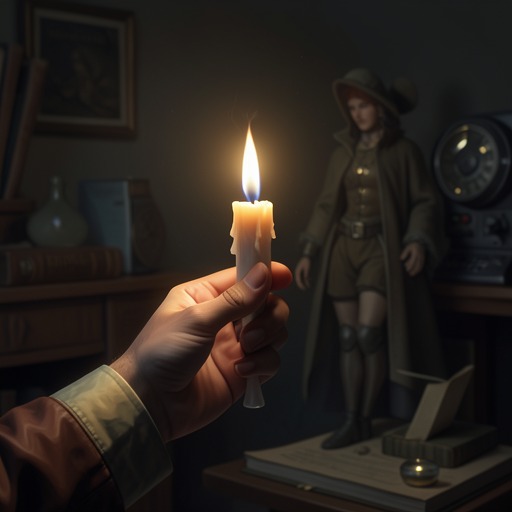
The study is cluttered with books, papers, rugs, and prints. Though it has four windows, it remains darkish; a balcony curves around the corner of the house, its double glass door sealed for winter. The balcony and two windows look onto an alley stretching away between sleigh tracks, houses, and fences. From the garden, purple shadows fall into the room, where frost-laden trees appear to press their burden toward the floor. These details make the house at once inhabited and secluded: the outside world is visible through windows and glass, but winter closes the balcony and the room’s accumulated furnishings turn it inward.
Nikolai Nikolaievich and the view of unrest
When Nikolai Nikolaievich arrives from Petersburg in autumn, he has no apartment in Moscow and prefers not to stay in a hotel. The Sventitskys take in their distant relative and give him the corner room on the second floor. From its window he sees demonstrators fleeing and tries to determine whether Yura is among them. He recognizes the crowd but cannot find his friends; he thinks he may have glimpsed the wounded Dudorov boy, recently shot in the shoulder, again in a place where he should not be.
The scene makes the house a precarious vantage point on public disorder. Nikolai watches from a furnished room rather than joining the street, yet his attention is fixed on the possible presence of the young people he knows. The window separates observer from demonstrators without making their danger abstract: the question of whether Yura is in the fleeing crowd turns a political spectacle into a personal concern.
The Christmas party and Lara’s shooting
The Sventitskys’ Christmas parties follow a longstanding pattern. At ten, after the children have gone home, the tree is lit again for the adults, and the gathering continues until morning. The more staid guests play cards in the Pompeiian sitting room, curtained off from the ballroom by a heavy portiere hung on bronze rings; before daybreak, everyone gathers for supper. Yuri and Tonia arrive together, take off their things, and look into the ballroom before greeting their hosts. The party’s order is made tangible by its recurring schedule and by the curtain dividing dancing from card-playing.
Lara is in the ballroom despite not being in evening dress and knowing no one there. She dances with Koka Kornakov almost like a sleepwalker and drifts around the room; more than once she pauses outside the sitting room, hoping Komarovsky will notice her. He keeps his eyes on his cards, held in his left hand, and either fails to see her or pretends not to. When Lara sees him look warmly at a young woman who enters, she interprets the encounter through the history of her own liaison with him and nearly screams. She later learns that the woman is Kornakov’s daughter and that her suspicion was mistaken, but the episode shows how the house’s separate rooms and partial views intensify her isolation and humiliation.
During the interval, Lara refuses tea and eats tangerines, wiping her fingers and mouth with a small handkerchief. As she passes the frowning Yuri while dancing with another partner, she presses his hand and leaves the handkerchief in it. He raises it to his lips and eyes: its scent of tangerine and Tonia’s touch strikes him as an unfamiliar, intimate sensation. Then a shot rings out from the sitting room. The abrupt sound breaks through the party’s repeated ritual, turning the portiere between ballroom and sitting room into a threshold between dancing and crisis.
The guests turn toward the curtain, then rush between the rooms, shouting, weeping, and arguing. Komarovsky repeatedly asks what Lara has done. Mrs. Kornakov cries out that her son Boria is alive and demands a doctor; she first mistakes the situation, then learns that Lara shot at Komarovsky. Kornakov emerges laughing and dabbing a napkin at a scratch on his left hand, while Lara is led by the arms. Yuri recognizes Komarovsky as the prominent lawyer connected with his father’s estate, and recognizes Lara as the girl who fired the shot. He misreads the scene as an attack on a prosecutor for political reasons, pities her, and is struck by her haughty beauty as the others support her toward an armchair. The mistaken identification, the superficial wound, and Lara’s collapse all complicate the room’s first impression of the shooting: the event is at once a public commotion, a personal crisis, and a scene Yuri does not yet understand.
A house within a fractured social world
The Sventitsky house connects moments that the novel sets against the larger disintegration of ordinary life. Its Christmas gathering offers a recognizable social pattern—children departing, the tree lit again, cards, dancing, supper—while Lara’s attempted shooting brings a history of coercive intimacy into the center of that pattern. Yuri and Tonia’s presence as a couple further sharpens the contrast between familiar domestic companionship and the dangerous entanglements unfolding in the adjoining room.
The house’s later associations are carried not only by physical rooms but by the novel’s changing forms of narration. In the wartime setting, Yuri writes to his wife about the continuing disintegration of the army and mentions his work with Antipova, a nurse from Moscow born in the Urals. Later, revolutionary bureaucracy places him at an old table beside a staff-room window, where charts and forms compete with his medical notes and his private prose-and-verse journal about people acting unfamiliar parts. Still later, a long, soiled letter from Tonia reaches him in Yuriatin after five months in transit; as he reads it, he loses awareness of Lara’s house and of the people around him. These are not rooms in the Sventitsky house, but they echo its narrative function: windows, tables, curtains, and papers repeatedly frame the collision between public history and private recognition.
The Sventitskys’ residence therefore matters less as a permanent center of action than as a sharply composed point of convergence. From its study, political unrest is seen at a distance; in its ballroom and card room, Lara’s past erupts into a festive gathering; and around its doors and curtains, Yuri encounters people whose significance he only partly grasps. The house’s familiar architecture and customs do not hold history outside. They make its arrival visible in the room, in the crowd’s sudden movement, and in the meanings its witnesses struggle to read.