Tonia's letter to Zhivago
Doctor ZhivagoTonia's letter to Zhivago turns a message delayed by months into a final act of intimacy and separation. In its worn, opened envelope, it carries news of a daughter Zhivago has never met, the family's impending exile, and Tonia's clear-eyed account of love that is no longer returned. As he reads in Lara's house in Yuriatin, the letter takes him out of his immediate surroundings and ends with him collapsing unconscious.
Delivery and Form
The letter reaches Zhivago through an unlikely chain of personal connections. A former post-office worker explains that it came from Moscow five months earlier, had passed through many hands, and could not be delivered because its addressee was unknown. He recognized Zhivago from a previous haircut and brought the letter to Lara's house. Lara hands it over without his noticing.
Its material state registers the delay: written on many sheets, the letter is crumpled and soiled, and its tattered envelope has been opened at the post office. The message's physical journey precedes its emotional arrival. Zhivago begins reading while still aware that he is in Yuriatin, but attention to the pages gradually displaces awareness of the house and the people in it. Sima comes out to greet him and say goodbye; he answers automatically, then fails to notice her departure.
News from the Family
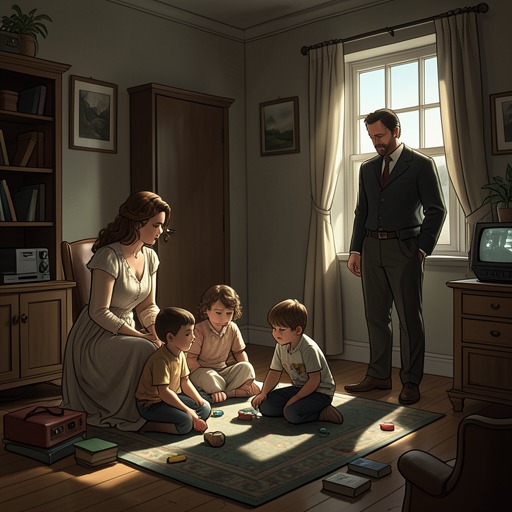
Tonia first tells Zhivago that they have a daughter, christened Masha in memory of his mother, Maria Nikolaievna. The news gives their separation a new dimension: while Zhivago has been absent, their family has grown, and the child bears a name linking her to his past. Tonia also describes Sasha as a large, strong boy who cries bitterly whenever the family speaks of his father.
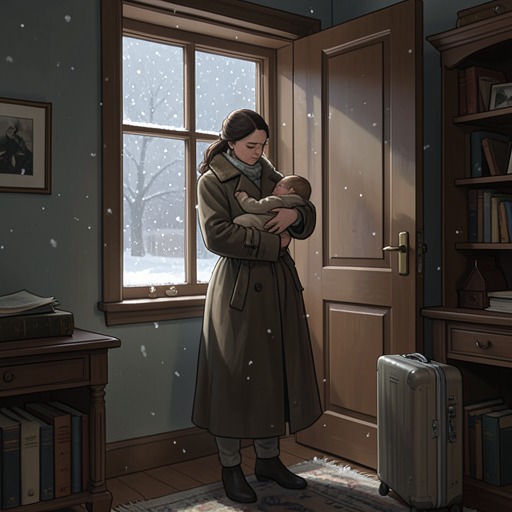
The letter reports that Tonia, her father, Uncle Nikolai, and several prominent professors and political figures are to be deported abroad. She presents exile as a misfortune, but also as a comparatively mild outcome in a time when worse could have happened. The family is probably going to Paris. Because Zhivago is missing, Tonia does not know whether he will receive permission to join them; she continues to believe he is alive and hopes that he may eventually obtain a separate visa and reunite with them, while admitting that she cannot truly expect this happiness.
Love and Separation
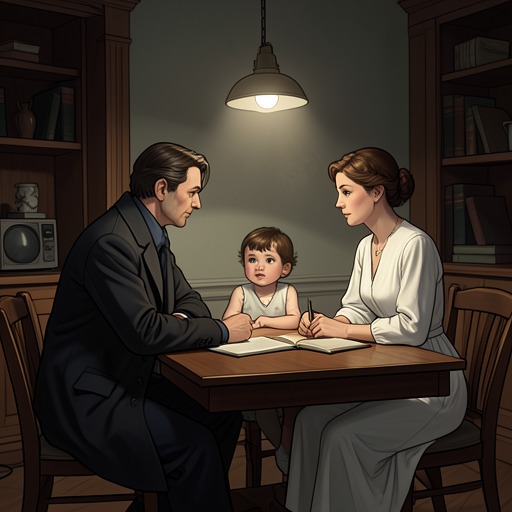
Tonia does not disguise the central wound of their marriage: she loves Zhivago, but believes he does not love her. She searches their shared life and her own conduct for the cause of this judgment, yet cannot identify what she did to bring it about. She feels that he sees her through a distorting mirror. Her account is not simply an accusation; she tries to understand how the truth of her own feelings could have remained hidden even from herself. Fear of the pain and shame of failing to love, she writes, might have kept her from recognizing it.
At the same time, Tonia's affection is specific and unsparing. She loves what is unusual in Zhivago as well as his ordinary traits, and describes his face in relation to his thoughts, his gifts, and his intelligence. She regards his intelligence as having taken the place of a will he lacks, and says she knows no better man. Her love therefore includes an understanding of him that does not erase the hurt caused by their unequal attachment.
Tonia blesses Zhivago for the long years ahead and says she will not reproach him: he is to live as he chooses, provided he is well. Yet the prospect of never seeing him again breaks through that composure. As she is hurried to pack, she imagines the people who have come for the letter as coming to take her to her death, and repeats his name in disbelief at their permanent parting. The letter's unfinished, urgent farewell makes the act of writing itself feel caught up in the departure it records.
Lara and the Letter's Aftermath
Tonia also writes about Larisa Feodorovna, whom she came to know before the family left the Urals. She is grateful to Lara for staying beside her in a difficult period and helping her through childbirth. Tonia calls her a good person, while insisting that they are opposites: she sees herself as someone who simplifies life and seeks sensible solutions, and Lara as someone who complicates it and creates confusion. The description acknowledges Lara's practical care even as it marks the contrast between the two women.
When Zhivago reaches the end, he looks up with tearless, grief-stricken eyes and remains insensible to what is around him. Snow falls outside, but his gaze seems to remain among the letter's small black characters and the white spaces between them. He groans, clutches his breast, staggers to the sofa, and falls unconscious. The letter thus changes from a source of family information into an experience that overwhelms his ability to respond: the distant news of his children's lives and Tonia's farewell becomes immediate, while the possibility of reunion recedes into uncertainty.