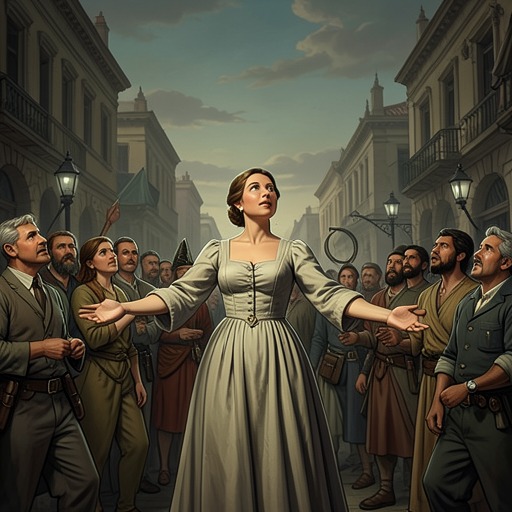
You in others—this is your soul
Doctor Zhivago“You in others—this is your soul” is the central formulation of an argument that relocates the self beyond the boundaries of the individual body. Rather than promising that private consciousness will continue unchanged after death, it locates a person’s enduring life in the effects and memories that continue in other people and enter the future.
From Consciousness to Identity
The argument begins by asking what a person actually recognizes as the self. Looking inward through memory does not reveal an identity grounded in organs or bodily processes; the speaker instead directs attention to a person’s outward, active manifestations: the work of their hands, their family, and other people. Identity is thus encountered through relation and activity, not as an isolated inner possession.
This shift also clarifies the limits of consciousness. The preceding argument calls consciousness a light directed outward, useful for illuminating the way ahead but destructive when turned obsessively upon itself. In that framework, the self is not secured by watching private consciousness or imagining its continued existence. It takes shape in what a person does and in the lives with which that person has been connected.
The Soul as Life in Others
The expression compresses this account into a direct identification: a person’s life in others is that person’s soul. The surrounding passage expands the claim through work, family, and other people, making the soul neither a disembodied substance nor merely an inward feeling. It is the self as it has been lived, received, and carried by human relationships and actions.
The argument makes this persistence personal as well as social. It insists that what enters the future is not simply an anonymous influence: the self that has lived in others becomes part of what comes next. The possibility that later generations may call this survival memory does not, the passage argues, make it any less continuous with the person who lived and acted.
Immortality and the Future
The expression therefore answers anxiety about death by changing the terms of the question. Instead of assuring the individual that their consciousness will remain intact, it proposes that human life has already exceeded the individual: people have always existed in others, and that existence continues into the future. The passage links this relational account to its broader insistence that there is no death and that life is continually renewed.
Its final emphasis on a “talent for life” gives the claim an active dimension. Immortality is not presented only as a condition to be believed in, but as a way of understanding life’s capacity to continue through human connections and action. The expression’s significance lies in making that continuation concrete: the self endures not by remaining sealed within itself, but by becoming part of other lives.