
Political Loyalty and Parnell's Shadow
DublinersThis flow traces the divide between inherited Parnellism and contemporary political compromise in the Ivy Day committee room.
increasing Bearing strength in each event
 decreasing
Bearing strength in each eventdecreasingIvy in the Lapel
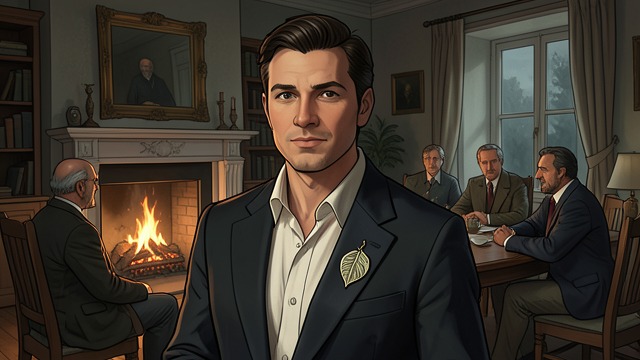
A Commemorative Sign
The leaf displayed
Mat O'Connor's ivy leaf catches the firelight, and Joe Hynes later reveals one in his own lapel. The symbol marks the anniversary of Parnell's death.
Loyalty made visible
The leaf provides a simple sign of political memory in a room where allegiances are otherwise negotiated. It does not, by itself, resolve the men's disagreements.
The King's Welcome Disputed
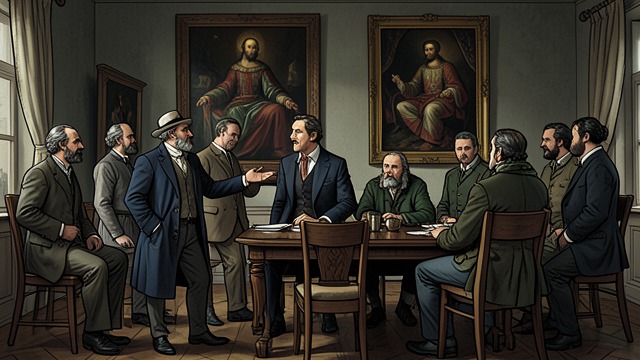
Competing Political Claims
Against royal deference
Joe Hynes argues that welcoming Edward VII would dishonor Irish political independence. He praises the working class as more deserving of representation than political opportunists.
Economic defense
Mr Henchy argues that the King's visit could bring capital and work. The disagreement pits symbolic loyalty against a practical promise of economic gain.
Henchy's Changing Position
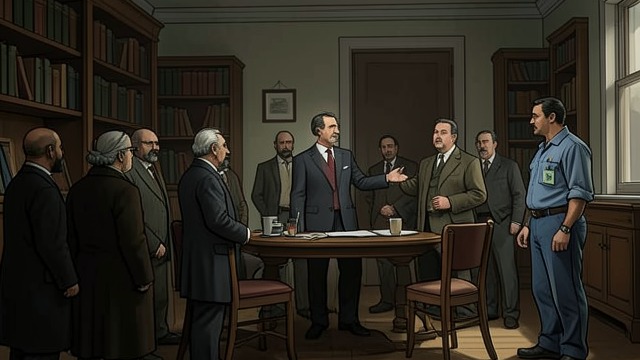
Principles Reframed
Campaign pragmatism
Mr Henchy defends Richard J. Tierney and explains how he wins votes by stressing property, rates, and local respectability. His arguments shift with his audience.
Trust eroded
The workers complain that Tierney has not paid them. Political rhetoric becomes difficult to separate from the candidate's immediate financial obligations.
Hynes's Parnell Poem
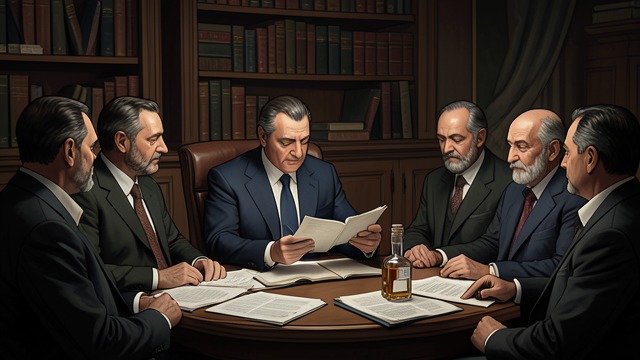
A Public Accusation
The recitation
Joe Hynes reads a poem blaming hypocrites and traitors for Parnell's fall. The performance revives grief and anger in the committee room.
Mourning as a substitute
The applause offers temporary unity, though the men soon return to drinking and the campaign. Commemoration gives emotion a voice without changing present conduct.
The Room Falls Silent
Emotion Contained
Applause ends
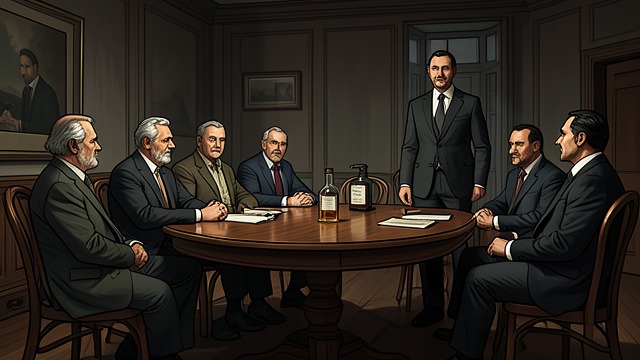
The men stop clapping and drink from their bottles in silence. Hynes remains flushed and bareheaded after speaking.
A past that cannot govern
The poem's idealism lingers, but the room's practical dealings resume. Parnell's memory exposes the distance between political reverence and present political action.
Early in the committee-room evening
After Hynes questions the proposed address
As the men discuss Tierney's candidacy
Later in the evening, before the group's applause
Immediately after the recitation
