
The Learner's Transformation
ElementsThis flow traces the implied learner's movement from confusion and dependence on memory toward visual recognition and independent reasoning.
increasing Bearing strength in each event
 decreasing
Bearing strength in each eventdecreasingInitial Prejudice

Initial Prejudice
Difficult Entrance
The novice encounters propositions presented with intimidating formality and excessive repetition.
The subject appears to demand memory before understanding.
Emotional Cost
Aversion grows because the learner cannot yet see the sequence of evidence.
Visual Recognition
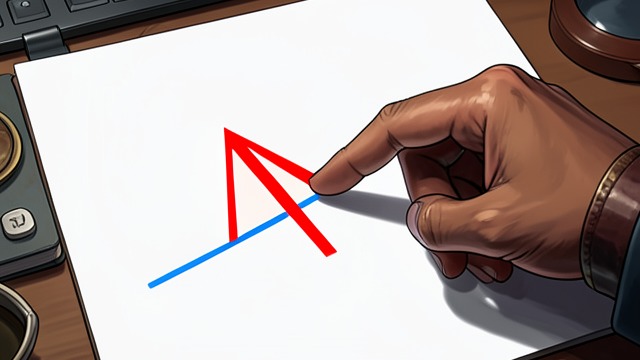
Visual Recognition
Immediate Reference
Colours identify the relevant line angle or region without a long verbal search.
The learner begins to recognize mathematical parts as stable visible objects.
Reduced Load
Attention can move from decoding names to following relations.
Constructive Confidence
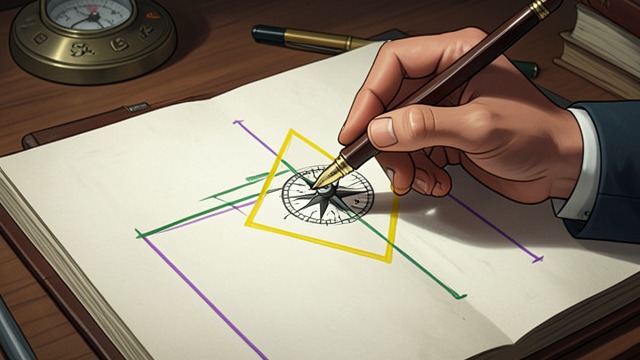
Constructive Confidence
Making Figures
The learner sees that a triangle perpendicular or parallel can be constructed through limited operations.
Each successful construction demonstrates that geometry is active and reproducible.
Agency
The novice shifts from receiving diagrams to understanding how they are made.
Proof Independence

Proof Independence
Connected Reasons
Earlier results are used as tools rather than memorized as isolated answers.
The learner follows why a construction proves equality or parallelism.
Intellectual Change
Understanding begins to replace recitation as the basis of recall.
Reasoning Habit

Reasoning Habit
Durable Knowledge
The learner is expected to retain relationships because they were seen and reasoned through.
Memory becomes the consequence of understanding rather than its substitute.
Final Aim
The transformed student is prepared to think with figures instead of merely repeating their proofs.
at the opening criticism of ordinary instruction
during the first coloured demonstrations
during the early propositions of Book I
during the propositions on triangles and parallels
near the conclusion of the introduction
