
From Foundations to Theorems
ElementsThis flow follows the book's progression from elementary definitions and axioms toward increasingly elaborate demonstrations.
increasing Bearing strength in each event
 decreasing
Bearing strength in each eventdecreasingBasic Objects

Basic Objects
Foundational Vocabulary
The book begins by defining point line surface angle figure and circle.
Each definition limits the possible meanings of the objects that later proofs will manipulate.
Logical Consequence
The sequence establishes geometry as a language whose later conclusions depend on disciplined terms.
Permitted Operations

Permitted Operations
Three Postulates
The learner is granted the ability to join points extend lines and draw circles.
These permissions define the practical reach of the Straightedge and Compass.
Constructive Discipline
The proofs must work within these limits, making every construction answerable to a stated operation.
Common Notions
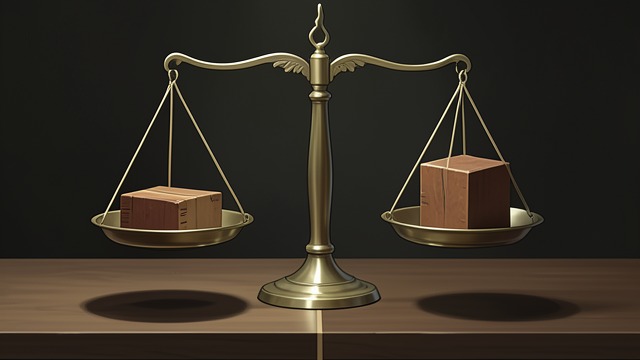
Common Notions
Equality and Magnitude
The axioms establish addition subtraction coincidence and the superiority of a whole over its part.
They provide general rules that allow geometric magnitudes to be compared without redemonstrating arithmetic intuition.
Proof Framework
Every later inference depends on these shared foundations.
Theorem and Problem

Theorem and Problem
Two Kinds of Proposition
A problem asks for a construction, while a theorem asserts a principle that must be proved.
The book separates making a figure from showing why the figure satisfies its required conditions.
Methodological Clarity
This distinction turns geometry into a sequence of controlled questions rather than a collection of diagrams.
Cumulative Demonstration

Cumulative Demonstration
Dependent Results
Later propositions repeatedly invoke earlier results about equality parallelism and triangles.
The text therefore models knowledge as a structure in which each secure step supports the next.
Growing Complexity
The learner moves from simple operations toward compound arguments without abandoning the original foundations.
at the beginning of Book I
immediately after the definitions
at the axioms section of Book I
in the explanatory notes after the axioms
near the end of the preliminary exposition
