
The Parallel Postulate Conflict
ElementsThis flow traces how the book handles the special difficulty of parallelism and the axiom required to govern it.
increasing Bearing strength in each event
 decreasing
Bearing strength in each eventdecreasingA Special Axiom

A Special Axiom
Meeting Conditions
The axiom concerns two lines whose interior angles on one side are less than two right angles.
It asserts that the lines will meet when produced.
Global Consequence
A local angle condition controls the future behaviour of extended lines.
Alternative Forms
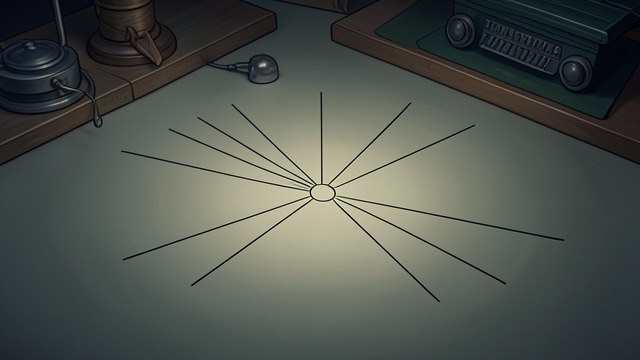
Alternative Forms
Equivalent Statements
The axiom is restated through unique parallels and the intersection of lines crossing parallel lines.
These forms make its practical meaning easier to recognize.
Conceptual Pressure
The many formulations reveal how much geometry depends on this single principle.
Alternate Angles

Alternate Angles
Criterion
Equal alternate angles imply that two lines are parallel.
The proof proceeds by contradiction, since an intersection would produce incompatible angle relations.
Local Evidence
Parallelism is inferred from a visible angular pattern.
Supplementary Interiors
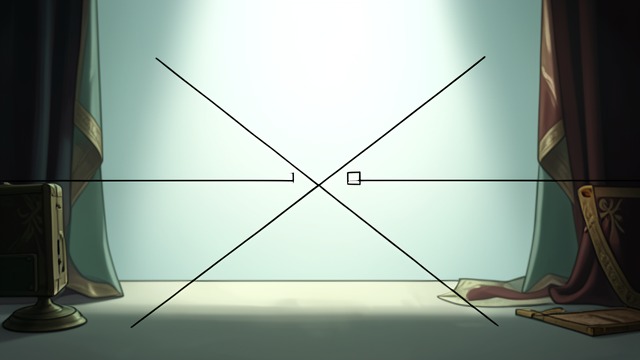
Supplementary Interiors
Second Criterion
An exterior angle equal to the opposite interior angle, or interior angles equal to two right angles, also establishes parallelism.
The proposition broadens the available tests.
Practical Control
Different diagrams can now be recognized as instances of one governing relation.
Consequent Geometry
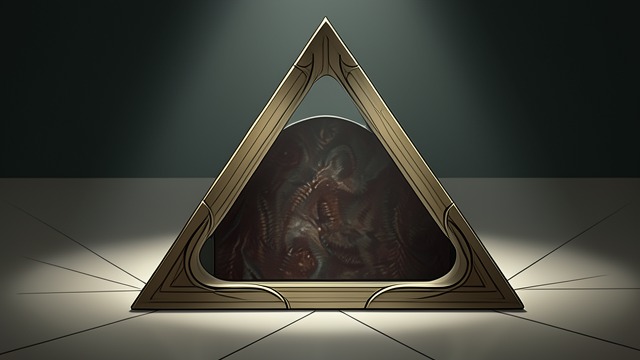
Consequent Geometry
Derived Relations
Once parallelism is granted, alternate angles are equal and a triangle's angles combine into two right angles.
The earlier axiom becomes a foundation for a large family of results.
Resolution
The conflict between local intersection and global parallel order is settled by deduction.
at the twelfth axiom of Book I
in the elucidation immediately after the axiom
at the twenty-seventh proposition of Book I
at the twenty-eighth proposition of Book I
at the twenty-ninth through thirty-second propositions
