
Author and Archive
ElementsThis flow traces the changing relationship between a nineteenth-century authorial project and its later archival readers.
increasing Bearing strength in each event
 decreasing
Bearing strength in each eventdecreasingAuthorial Address
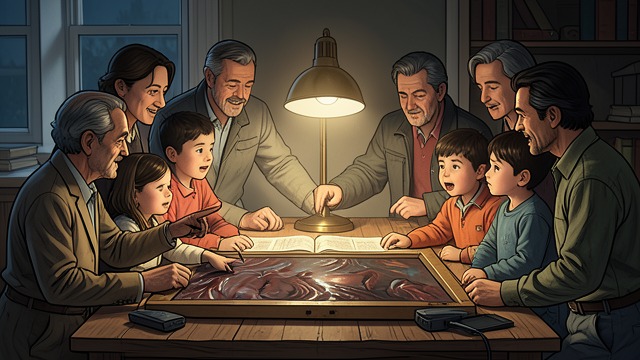
Authorial Address
Intended Readers
The book addresses patrons teachers students and educational reformers.
Its pages imagine a community capable of using the method.
Invitation
The author seeks a future in which the work is practiced rather than merely admired.
Printed Companion

Printed Companion
Material Presence
The reader receives colour text and diagram together on the page.
The book acts as a companion for looking and reasoning.
Relationship
Its physical design asks the reader to participate actively in the demonstration.
Historical Distance

Historical Distance
Changed Context
The educational language belongs to an earlier period of schooling and printing.
Later readers approach the work through a different technological and institutional world.
Persistence
Despite that distance, its questions about attention and proof remain recognizable.
Digital Encounter
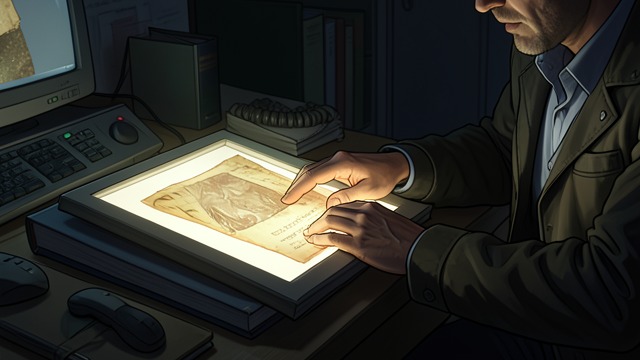
Digital Encounter
New Reader
The Internet Archive and University of Toronto make the volume available through digital preservation.
A reader can now approach its pages without possessing the original object.
Reconnection
The archive renews the author-reader relationship across time.
Continuing Conversation

Continuing Conversation
Reopened Questions
Modern readers can reconsider whether colour genuinely changes mathematical understanding.
The book remains a proposal inviting judgment rather than a closed historical curiosity.
Afterlife
Archival access keeps the conversation between method author and learner alive.
at the dedication and title matter
during the original publication
between the original imprint and 2011
in 2011 during digitization
at the present archival endpoint
