
Vision as Knowledge
ElementsThis flow traces the book's theme that visual form can organize preserve and transmit abstract knowledge.
increasing Bearing strength in each event
 decreasing
Bearing strength in each eventdecreasingSigns and Meaning

Signs and Meaning
Representation
Words represent objects through conventional signs.
The introduction asks whether a more immediate sign can serve geometric reasoning better.
Question
The issue is not decoration but the precision and speed of representation.
Colour as Name
Colour as Name
Immediate Identity
A coloured part identifies itself to the eye without a chain of arbitrary letters.
The learner can retain its identity while the proof changes its relation to other parts.
Knowledge
Colour becomes a temporary name embedded in form.
Diagram as Proposition
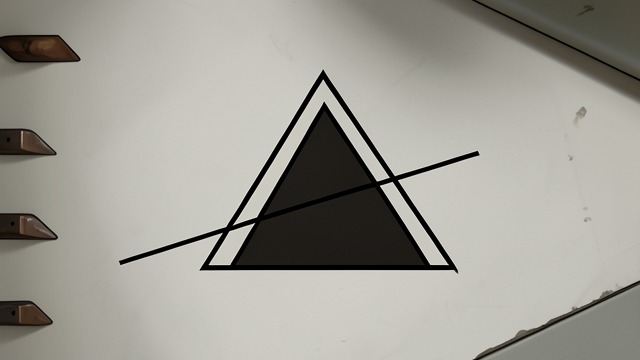
Diagram as Proposition
Visible Relations
The diagram presents equality addition subtraction and comparison as spatial relations.
Text explains what the eye has located.
Compression
A single visual arrangement can carry several connected claims at once.
Abstract Visibility

Abstract Visibility
Beyond Simple Shapes
Proportion and duplicate ratio are increasingly abstract, yet they remain tied to diagrams.
Lines areas and figures give the relations a visible embodiment.
Continuity
The method argues that abstraction need not mean complete separation from perception.
Knowledge Preserved
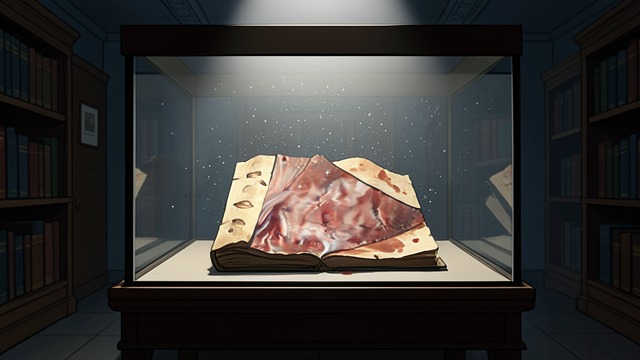
Knowledge Preserved
Page as Archive
Digital preservation retains coloured diagrams as evidence of the original visual argument.
The method's material form remains available for inspection.
Final Implication
Knowledge survives more fully when its structure and its representation are preserved together.
during the opening account of language
during the coloured triangle example
during the examples of equal angles and squares
during the proportion and similarity books
during the digitization record of 2011
