
Proof as a Moral Habit
ElementsThis flow traces the theme that geometrical demonstration cultivates honesty patience and dependence on reasons rather than authority.
increasing Bearing strength in each event
 decreasing
Bearing strength in each eventdecreasingGranted Premises

Granted Premises
Explicit Foundations
The learner is shown which operations and common notions are accepted.
Nothing essential should remain hidden behind unexplained authority.
Intellectual Honesty
The proof begins by declaring its grounds.
Controlled Construction

Controlled Construction
Limited Means
A figure must be made with Straightedge and Compass under stated conditions.
The restriction prevents convenient but unjustified shortcuts.
Patience
Certainty grows through disciplined procedure.
Contradiction
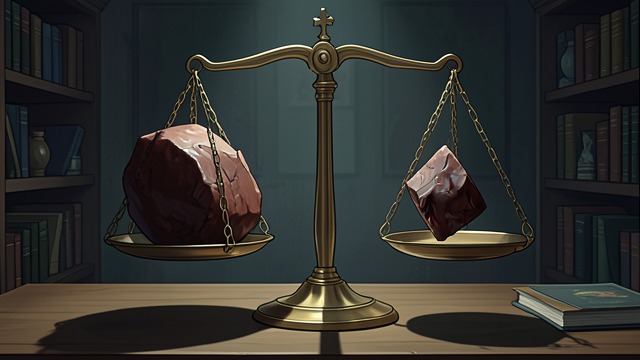
Contradiction
Testing Alternatives
Several proofs assume the contrary and show that it would make a part equal to or greater than the whole.
The false possibility collapses under a common notion.
Judgment
The learner practices rejecting appearances through consequence.
Accumulated Trust
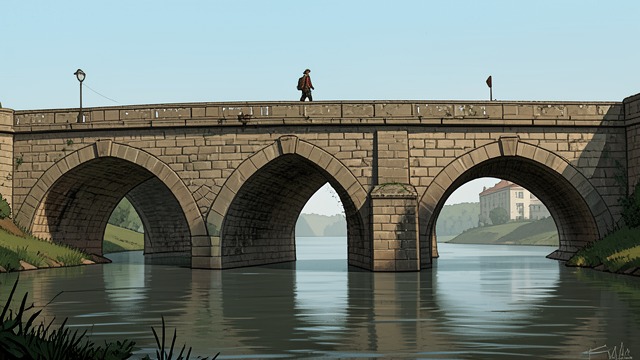
Accumulated Trust
Earlier Results
New arguments cite propositions already established.
The learner learns to trust a conclusion because its supports can be retraced.
Discipline
Proof creates confidence through accountability rather than assertion.
Reasoned Closure
Reasoned Closure
Completed Chain
The work ends its selected course with a demonstration joining circular and proportional ideas.
Every result depends on a visible and logical sequence.
Habit
The learner leaves with a practice of asking what warrants each claim.
at the postulates and axioms of Book I
during the early problems of Book I
during the propositions on unequal sides and parallel lines
during the propositions on parallelograms and triangles
at the final proposition of Book VI
