
The Geometry of Transformation
ElementsThis flow traces how figures are repeatedly divided compared extended reflected and recombined to reveal invariant structure.
increasing Bearing strength in each event
 decreasing
Bearing strength in each eventdecreasingDivision
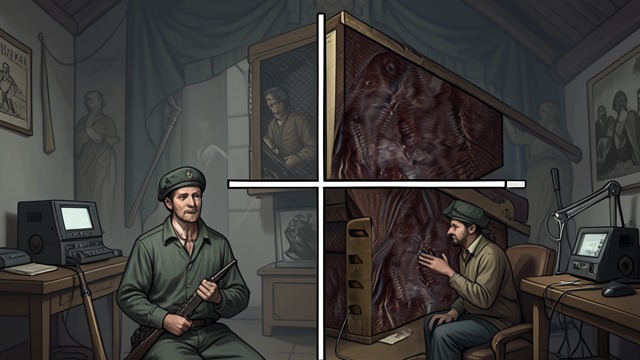
Division
Bisected Forms
Angles and line segments are divided to create symmetry and perpendicularity.
The act of division exposes a hidden centre or balance.
Invariant Result
What changes in the drawing reveals what remains equal.
Extension
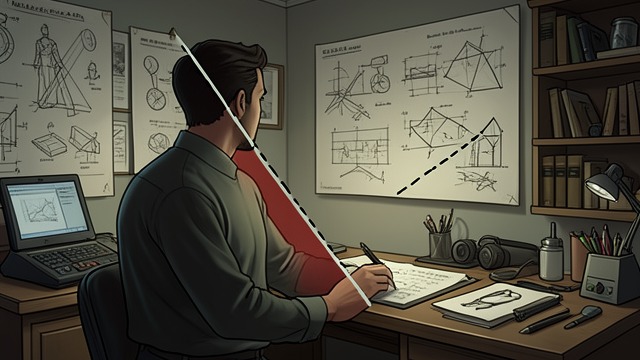
Extension
Produced Sides
Sides are prolonged beyond a triangle to create external angles and auxiliary figures.
The extension enlarges the diagram without abandoning its original relations.
Discovery
New equality becomes visible only after the original boundary is crossed.
Recomposition

Recomposition
Areas Rearranged
Rectangles and squares are partitioned and recombined to establish identities.
The parts change position while their total area remains equal.
Insight
Transformation reveals algebraic truth without numerical calculation.
Circular Transformation
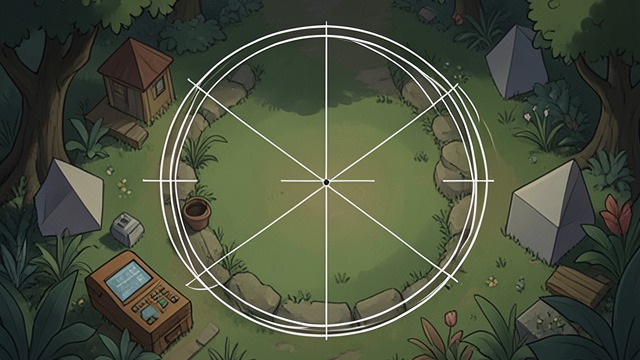
Circular Transformation
Position and Relation
Chords tangents radii and secants are compared through changing positions around a circle.
The circle preserves equality while the lines move.
Stability
Geometric truth resides in invariant relations rather than a single fixed drawing.
Scaled Transformation
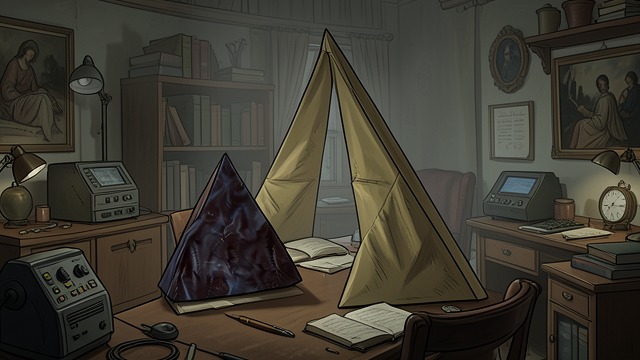
Scaled Transformation
Enlarged Figures
Similar triangles and polygons reproduce form at different scales.
Angles remain while lengths and areas transform according to ratio.
Completion
The book ends by showing how geometry controls change itself.
during the constructions of Book I
during the isosceles and exterior-angle propositions
during Book II's square and rectangle proofs
during Book III's chord and tangent propositions
during Book VI's similarity propositions
