
The Ethics of Education
ElementsThis flow traces the book's deeper claim that educational method determines whether knowledge produces obedience or independent judgment.
increasing Bearing strength in each event
 decreasing
Bearing strength in each eventdecreasingPassive Reception

Passive Reception
Memorized Authority
The student receives propositions as finished verbal objects.
The teacher's formal language can demand submission without understanding.
Educational Danger
Knowledge becomes obedience to a text rather than participation in reason.
Awakened Curiosity

Awakened Curiosity
Active Mind
The teacher is urged to awaken curiosity and dormant powers.
A learner should want to know why a relation holds.
Moral Stakes
Good instruction respects the mind by giving it work worthy of attention.
Visible Accountability
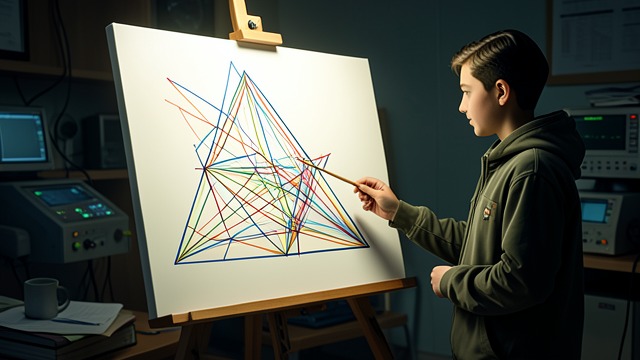
Visible Accountability
Evidence in View
The coloured diagram keeps the premises present while the proof unfolds.
The student can inspect whether the conclusion follows from what was shown.
Agency
Authority is replaced by a shared field of evidence.
Reasoning Practice

Reasoning Practice
Repeated Judgment
The learner compares equal sides removes equal magnitudes and follows constructed consequences.
These operations train habits of judgment through repeated use.
Formation
Education becomes the cultivation of a capacity rather than the storage of answers.
Independent Thought

Independent Thought
Final Standard
The ideal student can reason from evidence and recognize the structure of a proof.
The book's success is measured by intellectual independence.
Educational Ethic
Its guiding maxim is to teach people how to think rather than what to think.
during the criticism of conventional schooling
during the introduction's call for better teaching
during the coloured demonstrations
during the propositions of Books I and II
at the final educational conclusion
