
Circles as a Second World
ElementsThis flow follows the book's expanding study of circles from centers and chords to tangents arcs and cyclic figures.
increasing Bearing strength in each event
 decreasing
Bearing strength in each eventdecreasingFinding the Center
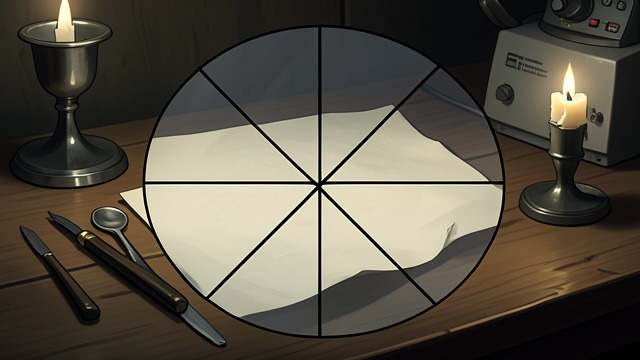
Finding the Center
Perpendicular Bisectors
Two chords are bisected and crossed by perpendicular lines.
Their intersection is shown to be the unique point from which the relevant radii are equal.
Geometric Location
The center emerges not from inspection but from the invariant relations of chords and right angles.
Chord Interior
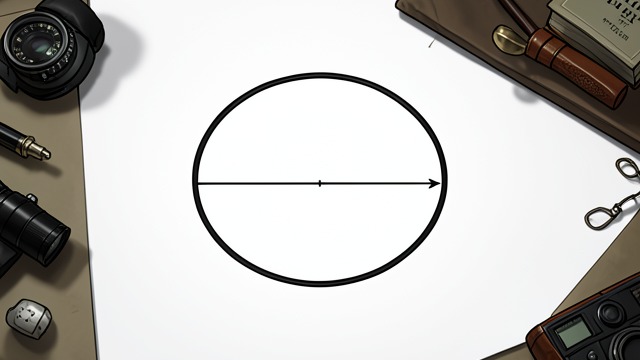
Chord Interior
The Chord
A straight line joining two points of a circle lies wholly within the circular boundary.
The proof compares the chord with radii and uses triangle inequalities.
Boundary and Region
The result clarifies how a circle contains not only its circumference but the entire interior figure.
Center Chord Relations

Center Chord Relations
Perpendicularity
A diameter bisecting a chord is perpendicular to that chord, and the converse also holds.
Equal distances from the center therefore become equivalent to equal chords.
Structural Symmetry
The circle's apparent symmetry is translated into exact relationships between lines and distances.
Tangent Discovery

Tangent Discovery
Constructing Contact
A tangent can be drawn from a point on or outside a circle.
The radius to the point of contact is proved perpendicular to the tangent.
Uniqueness
The argument also shows that the perpendicular through contact must pass through the center, making tangency a rigid relation.
Cyclic Consequences
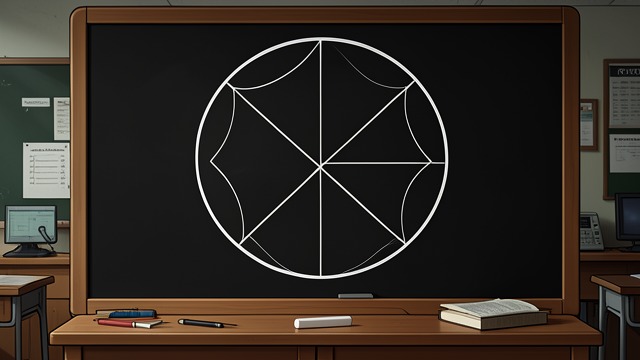
Cyclic Consequences
Angles and Arcs
Angles at the center and circumference are related through the arcs they intercept.
Angles in the same segment become equal, while opposite angles of an inscribed quadrilateral are supplementary.
Metric Completion
Intersecting chords and secants convert circular position into rectangle and square relations.
at the first proposition of Book III
at the second proposition of Book III
at the third and fourteenth propositions of Book III
at the seventeenth through nineteenth propositions of Book III
at the twentieth through thirty-sixth propositions of Book III
