
Slavery and Moral Awakening
EragonThis flow traces Eragon’s growing recognition that resistance must oppose not only personal enemies but the social violence sustained by Galbatorix’s Empire.
increasing Bearing strength in each event
 decreasing
Bearing strength in each eventdecreasingThe Auction
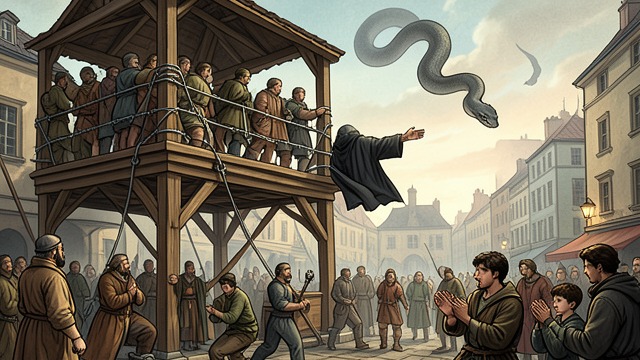
The Auction
Human Beings for Sale
Eragon witnesses men, women, and children auctioned in Dras-Leona. The public cruelty forces him to confront oppression that is not aimed specifically at him.
Power Without Strategy
He considers freeing a captive but realizes that an isolated magical gesture would expose the slave to recapture. The moment teaches him that compassion must be joined to planning.
The Empire’s Justification
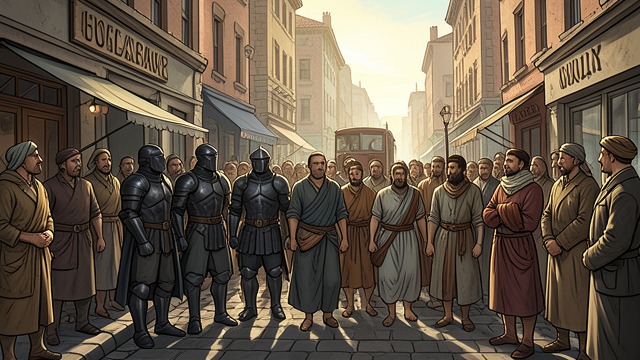
The Empire’s Justification
Violence Made Ordinary
The auction operates openly beneath Imperial authority. Its existence reveals that Galbatorix’s order depends not only on soldiers but on institutions that normalize ownership of people.
A New Standard
Eragon can no longer define evil only through the Ra’zac or Durza. The Empire’s everyday practices become part of the enemy he must eventually oppose.
The Choice of Resistance
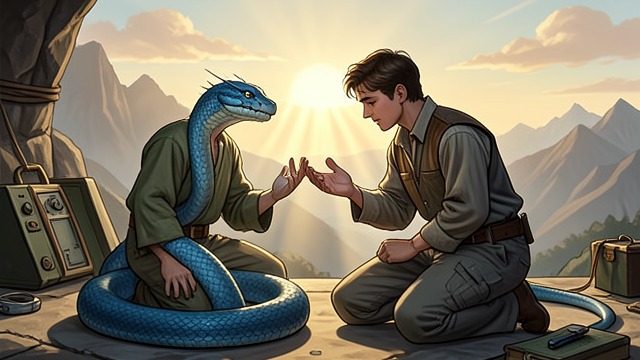
The Choice of Resistance
From Revenge to Justice
Eragon realizes that his powers could protect those without strength to resist Galbatorix. His mission expands beyond the deaths of Garrow and Brom.
A Public Duty
The thought of freeing slaves helps him accept that becoming a Rider entails service. Power becomes morally empty if it is used only to settle private grief.
Murtagh’s Hard Lesson
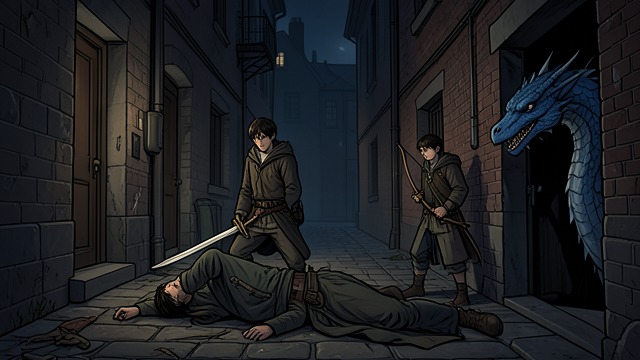
Murtagh’s Hard Lesson
Execution Without Trial
Murtagh kills Torkenbrand after the slaver’s followers flee. Eragon condemns the act because the leader is defenseless and no longer an immediate threat.
Survival Ethics
Murtagh argues that a dangerous enemy cannot be left alive. Their argument exposes two competing moral systems: restraint based on justice and violence based on lifelong insecurity.
The Unresolved Standard
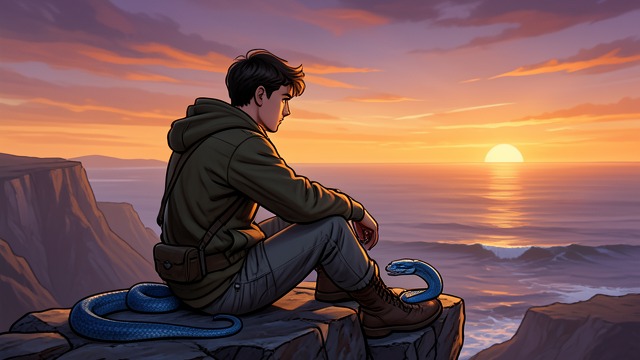
The Unresolved Standard
No Simple Answer
Saphira tells Eragon that some decisions have no perfect answer. He must learn from Murtagh’s violence without pretending the world offers clean choices.
Moral Maturity
Eragon begins to distinguish mercy, justice, necessity, and revenge. The distinction will matter when he gains political power and faces enemies who cannot be judged by emotion alone.
during Eragon’s first day in Dras-Leona
after the slave auction
during Eragon’s walk after the auction
during the encounter with Torkenbrand
during the journey toward the Varden
