
Confession Versus Restraint
Eugene OneginThis thread follows two declarations of love and shows how truthfulness, timing, and obligation lead to opposite responses.
increasing Bearing strength in each event
 decreasing
Bearing strength in each eventdecreasingTattiana’s Uncertain World

Tattiana’s Uncertain World
Longing without an object
Tattiana’s imaginative life has prepared her to desire a love that will answer her deepest hopes. Yet before Eugene arrives, that desire has no clear target.
Romances provide models for interpreting what she has not yet experienced.
The risk of idealization
Her openness makes her capable of sincere attachment, but leaves her vulnerable to seeing destiny where there is only an encounter.
The tension between honesty and illusion will shape her first confession.
The Letter Sent
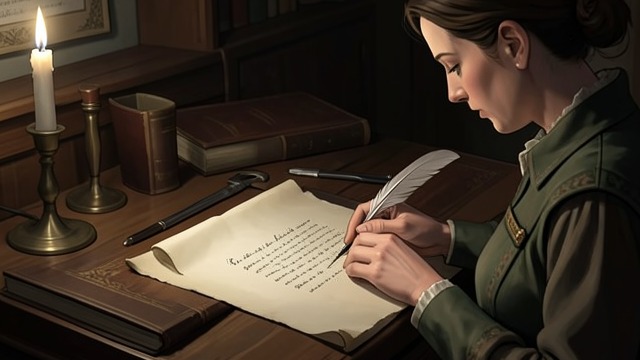
The Letter Sent
A direct confession
Tattiana writes to Eugene in French, disclosing her love and asking him to respond with either compassion or reproach.
She risks her reputation rather than continue to conceal what she feels.
Dependence on his answer
The letter gives Eugene power over the immediate outcome, though Tattiana’s act remains her own.
Her vulnerability makes his response an ethical test as much as a romantic turning point.
A Careful Rejection
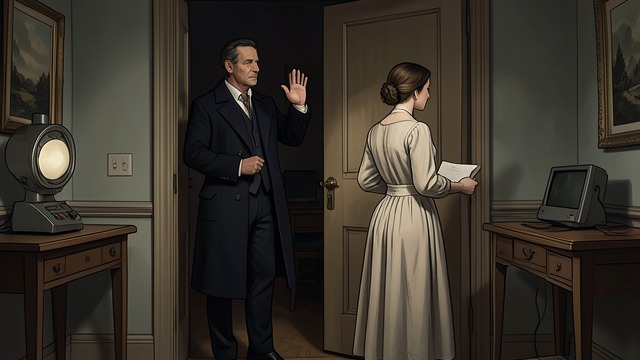
A Careful Rejection
Sympathy without reciprocity
Eugene praises Tattiana’s frankness and says that he might have chosen her if he could offer happiness. He believes his nature would make their marriage unhappy.
His refusal avoids exploiting her trust, even though it causes pain.
A moral limit
He warns her to exercise caution with future admirers. His advice contains care, but also leaves him free of the emotional commitment she seeks.
The scene tests whether honesty can be kind when it cannot return love.
Eugene’s Second Confession

Eugene’s Second Confession
The pursuer’s reversal
Years later, Eugene writes to Tattiana and describes the suffering he feels when she is unavailable. His words echo the exposed vulnerability of her earlier letter.
The change reveals that his former indifference was not a permanent immunity to love.
Changed moral circumstances
Tattiana is now married, and Eugene’s desire would require a breach of her commitment. His sincerity cannot make the situation ethically simple.
The repeated act of confession produces a different problem because time and responsibility have changed.
Love Meets Duty
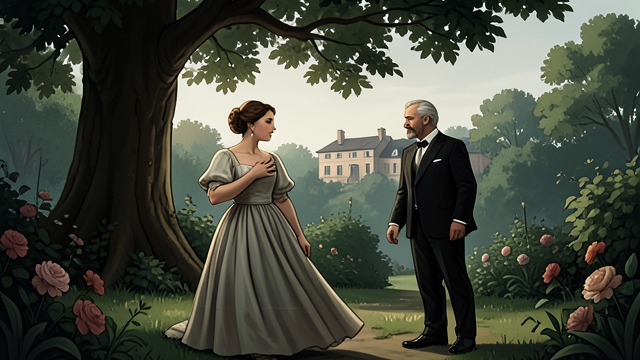
Love Meets Duty
The truth spoken aloud
Tattiana acknowledges her continuing love and names the humiliation of Eugene’s earlier rejection. She also sees that his present pursuit is entangled with her social position and marriage.
Her response refuses to reduce the conflict to a choice between feeling and coldness.
A costly boundary
She leaves Eugene and remains faithful to her husband. The decision makes duty an active choice, not an absence of desire.
The lovers’ histories end in separation because honesty arrives too late to erase obligation.
before her first meeting with Eugene
after Eugene’s visit to the Larina home
during Eugene’s garden response
after the Petersburg reunion
at Tattiana’s last conversation with Eugene
