
The Village Against the Capital
Eugene OneginThis thread traces the contrast between rural conventions and fashionable urban life as the characters move between them.
increasing Bearing strength in each event
 decreasing
Bearing strength in each eventdecreasingThe City’s Empty Pleasures

The City’s Empty Pleasures
A polished routine
Eugene moves through the capital’s restaurants, theatres, balls, and late hours. The sophistication of the setting disguises a repetitive life.
He grows bored with pleasures that once made him appear successful.
The urban condition
The city offers status and diversion but little lasting purpose. Eugene’s withdrawal from its social life exposes the difference between participation and fulfillment.
That dissatisfaction follows him into the countryside.
Provincial Custom

Provincial Custom
Local measures of life
In the countryside, neighbors discuss harvests, food, marriage prospects, and household routine. Their conversation seems narrow to Lensky and Eugene, though it reflects the practical concerns of their community.
Hospitality and custom bind the district together.
A different kind of confinement
Rural life offers closeness and continuity, but it can also constrain the characters through gossip and expectation.
The village is neither an ideal refuge nor a mere caricature; it is a social world with its own pressures.
The Fête’s Social Machinery
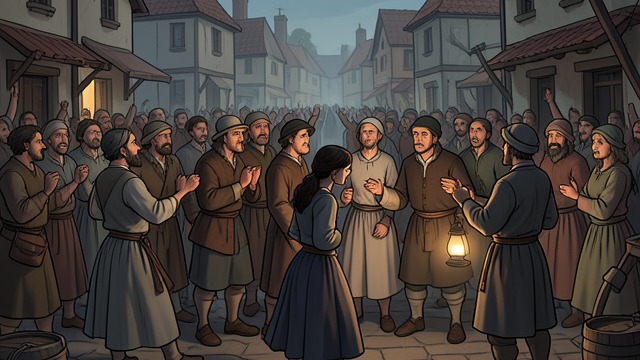
The Fête’s Social Machinery
Hospitality as obligation
The Larin celebration gathers neighbors, ritual greetings, food, music, and dance. Its crowded form makes private emotion visible to a community of observers.
Eugene resents the demands of the occasion, while Lensky and Tattiana experience it more personally.
A local world turns dangerous
Gossip and public attention help convert flirtation into an issue of honor. The rural gathering produces consequences as serious as those of the capital’s grand balls.
The contrast shows that social pressure does not belong to one setting alone.
Moscow’s Marriage Market
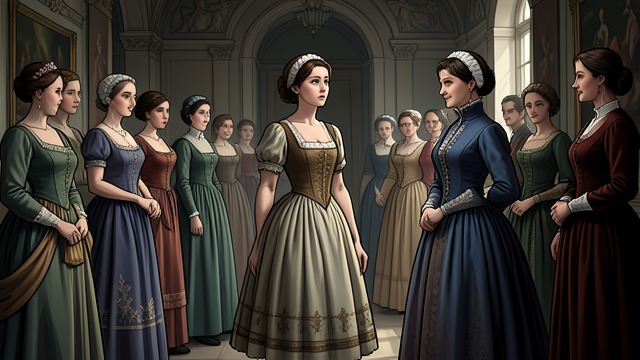
Moscow’s Marriage Market
Family introductions
Tattiana is carried into a network of relatives and social gatherings. Her mother hopes the capital will improve her marriage prospects.
The journey makes personal future a family project, shaped by money, connections, and public judgment.
Adaptation under scrutiny
At first Tattiana seems provincial to the young women she meets, but she observes the social world closely and learns to inhabit it.
Moscow does not simply liberate her from country life; it places new expectations around her.
The Capital’s New Hierarchy

The Capital’s New Hierarchy
Tattiana’s recognized position
In Petersburg, Tattiana is treated with respect and attention as a prince’s wife. Eugene sees the authority and polish that were absent from their first meeting.
His changed response exposes the value society now assigns to her.
Status and intimacy
The public world makes Tattiana admired but not emotionally accessible. Their private conversation recalls a country garden beneath the formal surface of elite life.
The contrast exposes both the power of social rank and its inability to settle the question of love.
during Eugene’s early years in St. Petersburg
during Eugene and Lensky’s first visits to the Larin neighborhood
on Tattiana’s name day
after the Larinas arrive in Moscow
during the final Petersburg ball
