
Lensky and Olga’s Courtship
Eugene OneginThis thread traces Lensky’s idealized devotion to Olga through their engagement, jealousy, and her quick departure after his death.
increasing Bearing strength in each event
 decreasing
Bearing strength in each eventdecreasingA Childhood Attachment
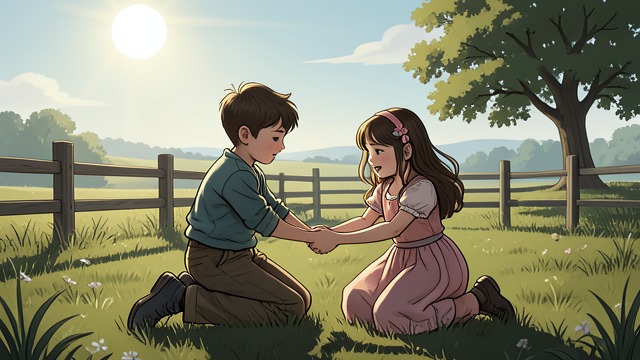
A Childhood Attachment
Familiar affection
Lensky has loved Olga since childhood, when their families and shared play made a future marriage seem natural.
He remembers their closeness as the origin of his poetic feeling and treats the bond as uniquely meaningful.
The ideal and the person
Olga’s cheerful simplicity matches the uncomplicated image Lensky cherishes, although the narrator hints that she is less mysterious than he imagines.
The gap between poetic idealization and ordinary character foreshadows how poorly Lensky will interpret later events.
An Engagement Expected
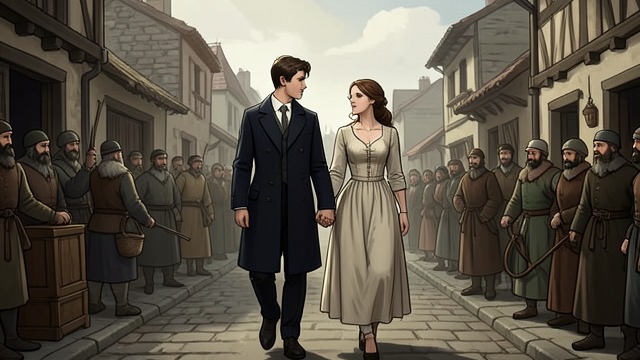
An Engagement Expected
A local match
Because Lensky is young, handsome, and prosperous, local families regard him as a desirable husband. His established attachment to Olga makes the expected match seem especially secure.
Their courtship unfolds amid familiar country visits rather than the more calculating social maneuvers Eugene describes.
Romantic confidence
Lensky reads shared walks and small gestures as signs of a destiny already promised. He imagines marriage as the natural continuation of love, not a new test of it.
That confidence leaves him unprepared for ambiguity or disappointment.
The Name Day Dance
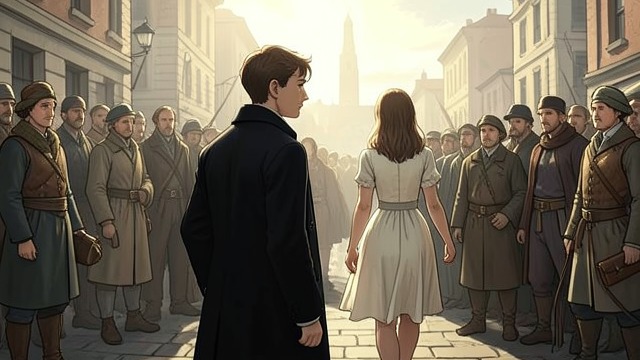
The Name Day Dance
A calculated flirtation
Eugene dances with Olga and pays her conspicuous attention to irritate Lensky. Olga accepts the attention without recognizing its deliberate purpose.
Lensky sees the pair together and experiences the scene as proof that his trust has been betrayed.
Jealous interpretation
His distress grows in the noisy social setting, where he cannot calmly ask what the flirtation means. He leaves the gathering in anger.
A passing provocation transforms an idealized relationship into a public crisis.
A Brief Reconciliation
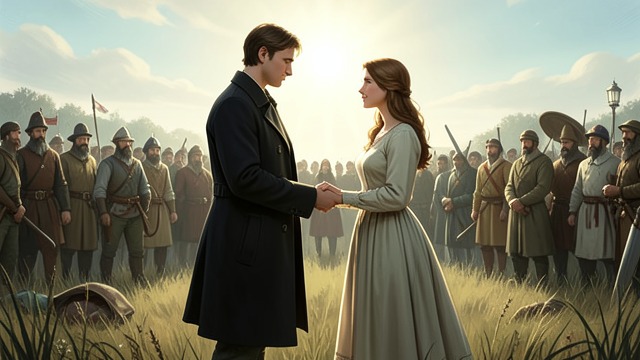
A Brief Reconciliation
Olga’s ordinary welcome
Lensky returns expecting signs of alarm or remorse, but Olga greets him with her usual warmth and asks why he left early.
Her ease reassures him that she still loves him, and his anger subsides.
The unspoken decision
He does not tell Olga that he has challenged Eugene. Instead, he turns his fear into a protective fantasy about saving her from a supposed seducer.
Their affectionate meeting does not cancel the duel; it makes the coming violence more tragic.
Olga’s New Marriage
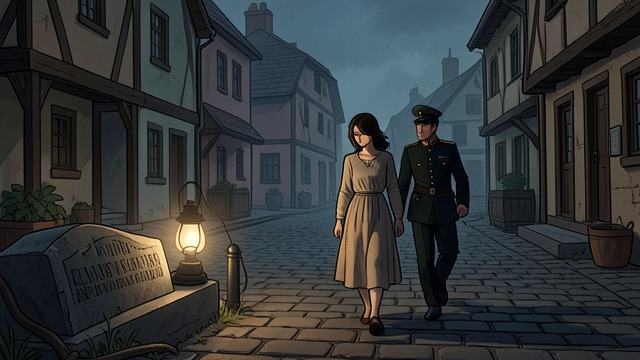
Olga’s New Marriage
Grief gives way to life
Olga mourns Lensky only briefly before a lancer wins her affection. She marries and leaves the family home with him.
Her quick transition contrasts with the permanent loss of Lensky and Tattiana’s prolonged attachment to the past.
A different measure of love
The poem does not present Olga’s new marriage as proof that her earlier affection was false. Rather, it shows her capacity to return to ordinary life.
Lensky’s idealized image of her could not predict how she would live after his death.
before Lensky returns from Germany
after Lensky settles in the district
during Tattiana’s name-day fête
the day after Lensky leaves the fête
after Lensky’s death and burial
