Olga's marriage to a lancer
Eugene OneginOlga's marriage to a lancer is the swift, unsettling turn that closes the story of her attachment to Vladimir Lenski: after his death, she soon gives her heart to another man, marries him, and leaves the home she shared with her sister. The marriage is at once a new beginning for Olga and a permanent separation for Tattiana, who escorts the couple to their carriage.
From Mourning to a New Attachment
The narrator addresses Lenski as “My poor Vladimir” and says that his loss was bewailed only briefly, with bitter tears. The mourning is not presented as enduring. Olga soon appears faithless to the dead poet, and another man is able to assuage her sorrow through flattery and the arts of courtship. The reversal is brisk: the grief that might have seemed to bind her to Lenski gives way to a new attachment.
The new suitor is a lancer, and the verse states that he captivates Olga’s heart and becomes the object of her devotion. The marriage is therefore not merely a social arrangement reported after Lenski’s death; it marks a change in where Olga’s affection is directed. The text moves from the dead Lenski, addressed in apostrophe, to the living lancer who wins her love, making the contrast between bereavement and renewed attachment central to the episode.
Marriage and Departure
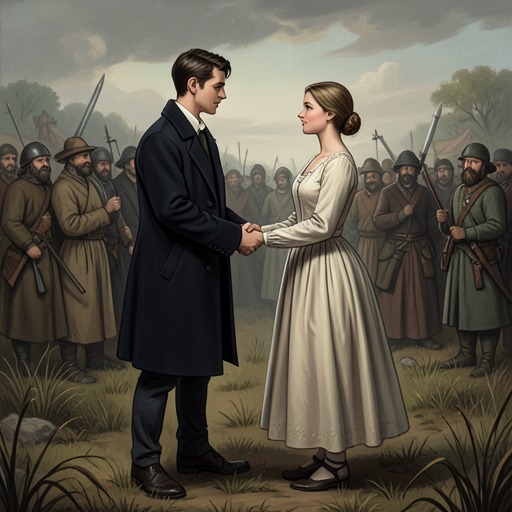
The marriage is shown through the image of the pair before the altar, where Olga is described as appearing with a modest air. The account then shifts from the wedding to its consequence: Olga’s voice no longer rings through her former home. The lancer is bound to his calling, and the couple set out together, so the marriage carries Olga away from the household as well as into a new relationship.
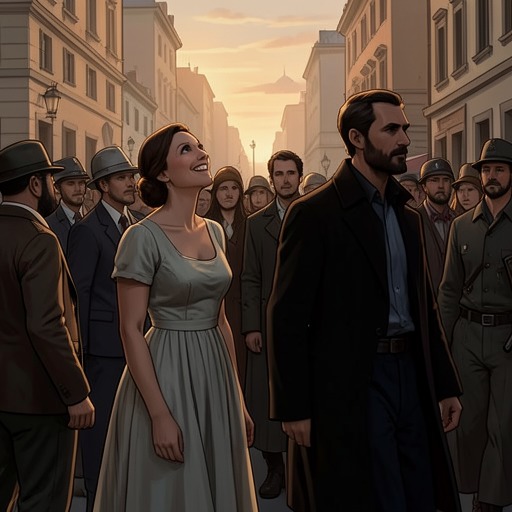
Their departure becomes a public farewell. People crowd around the entrance and gather by the couple’s carriage, making a bustle of saying goodbye. Tattiana gently leads the pair there. That small act gives the leave-taking its emotional focus: rather than being left behind in the house, Tattiana accompanies her sister and the lancer to the vehicle that will carry them away.
Separation and Narrative Significance
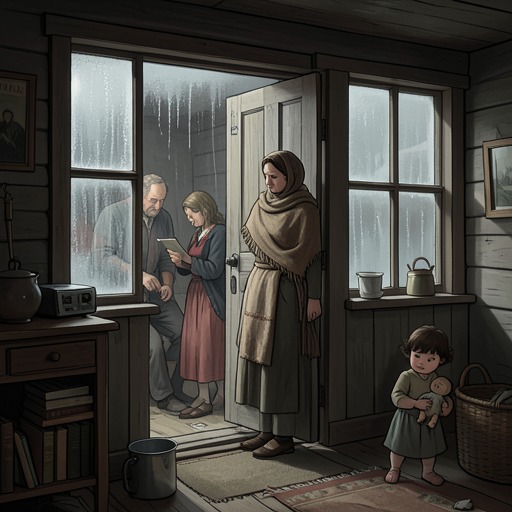
The marriage’s decisive consequence is separation. Tattiana’s heart is set on her sister, but cruel fate bears Olga far away, and the sisters are separated for ever. The language of permanent loss lends the departure a weight that contrasts with the speed of Olga’s recovery from grief. For Olga, marriage opens a new life; for Tattiana, the same event removes the sister to whom she is devoted.
The episode thus turns an apparently ordinary marriage into a hinge between loss and departure. Lenski’s death is followed not by a lasting memorial attachment but by Olga’s marriage and removal from home. The carriage gathers the event’s human consequences into one image: the couple leaving, the crowd pressing around them, and Tattiana leading them out before she wanders alone into the garden. The union closes Olga’s connection to her former home while making Tattiana’s separation newly palpable.