Tatyana rejects Onegin
Eugene OneginTatyana rejects Onegin’s pursuit at their final meeting, reversing the earlier imbalance between her avowed love and his refusal. Now he declares that he can no longer conceal his inner struggle and places his life in her hands; she answers that happiness with him might once have been possible, but that she is another’s bride and will remain faithful. The scene makes love and choice collide with time: recognition comes, but too late to restore the possibility Onegin once dismissed.
The Final Encounter
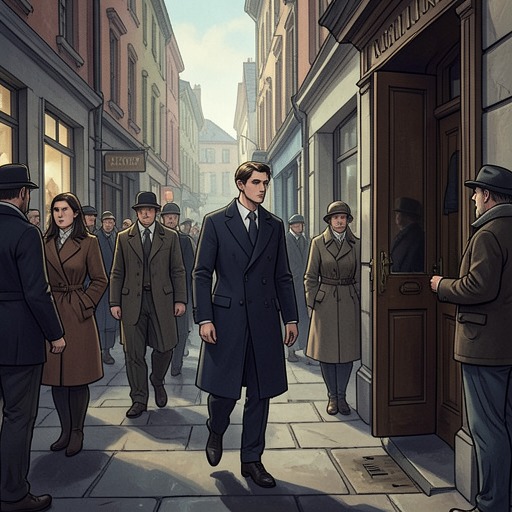
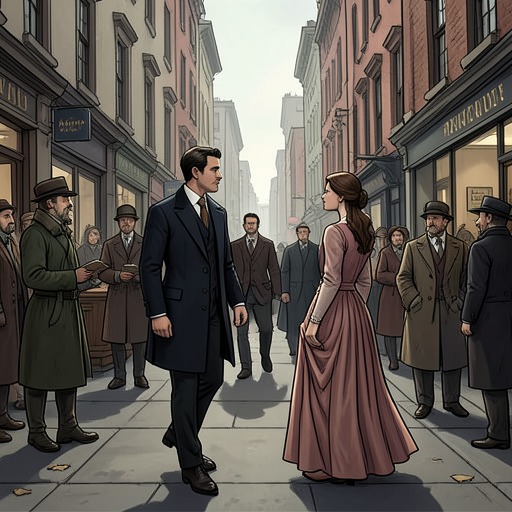
The event belongs to the concluding movement of Canto the Eighth. After Tatyana appears again in society as a princess, Onegin recognizes her and, tormented by regret, falls at her feet. She starts and initially says nothing. When she finally speaks, she asks him to rise and proposes that they explain themselves without disguise. The scene moves from his exposed desperation to her measured insistence on an honest reckoning.
Onegin’s appeal is not a passing compliment or a concealed intention. His letter has already laid out his secret, and in their meeting he says he can no longer wage his internal struggle in concealment: the die is cast, and his life is hers. The declaration marks a sharp reversal from his earlier rejection of Tatyana. Yet its intensity does not determine the outcome; the decision remains hers, and she answers not by denying what she feels but by setting out what her present life requires.
Tatyana’s Answer
Tatyana recognizes that happiness with Onegin had once been possible, even near, but says that destiny has decreed otherwise and that her lot is fixed. Her account gives the refusal a history: the present is not an abstract judgment on love, but the result of a possibility that was once within reach and is no longer hers to choose. The happiness she recalls is framed by the missed moment and by the changes that followed.
She tells Onegin to leave her forever. She acknowledges that he possesses honour and pride, and openly admits that she loves him, asking what purpose there would be in pretending otherwise. That admission makes her answer more complex than a simple absence of feeling. She distinguishes love from permission: her emotion persists, but it does not authorize her to abandon the commitment she has made.
Her final statement is categorical. She is now another’s bride and will remain faithful forever. The refusal therefore joins two claims that might otherwise seem to pull apart: she still loves Onegin, and she will not pursue a life with him. The scene offers no reconciliation in which renewed mutual feeling cancels the consequences of the past; Tatyana’s fidelity, rather than the intensity of Onegin’s late appeal, decides what happens next.
Reversal and Consequence
The encounter reverses the emotional positions established earlier in the poem. Tatyana once disclosed her love while Onegin refused her; now Onegin is the supplicant, and Tatyana is the one who draws a boundary. His regret confirms that his feelings have changed, but the change arrives after Tatyana has married and after the earlier possibility has been lost. The reversal is real, yet it cannot make the two moments interchangeable.
The outcome is separation rather than a renewed courtship. Tatyana’s instruction that Onegin leave her forever closes the immediate possibility of their union, while her avowed love prevents the closure from reading as emotional indifference. The final decision leaves both facts standing: Onegin has come to love her, and Tatyana will remain faithful to her husband.
Significance in the Poem
Tatyana’s refusal completes the poem’s recurring pattern of delayed recognition. Earlier, Onegin’s rejection determined the course of Tatyana’s love; at the end, her refusal determines the consequence of his. The symmetry is not a simple exchange of punishment. Tatyana does not claim that she never loved him, nor does she treat her marriage as proof that her feeling has vanished. She recognizes the former possibility and still chooses fidelity in the present.
The scene also distinguishes emotional truth from a happy outcome. Onegin’s declaration is sincere in the passage, and Tatyana does not conceal her own love, but sincerity cannot recover the time in which they might have chosen each other. Her final answer makes the poem’s ending depend not on whether love exists, but on what obligations and choices remain possible after its recognition has been delayed.