Tatyana’s name-day fête
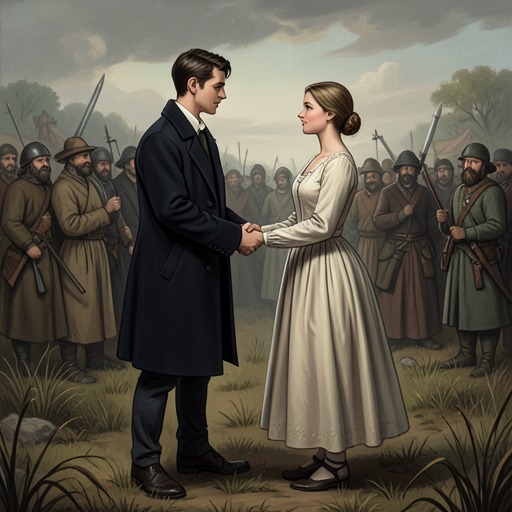
Eugene OneginTatyana’s name-day fête is the social occasion at which Eugene Oneguine converts private irritation into a public provocation, helping set in motion the conflict that ends in Vladimir Lenski’s death. The celebration gathers neighbors around the pale, uneasy Tattiana Larina; Oneguine, trapped among the guests and angry at the feast, takes revenge on Lenski by dancing and flirting with Olga Larina. What begins as an evening of customary visits and company becomes a scene in which humiliation, jealousy, and the code of honor acquire lethal consequences.
Invitation and Arrival
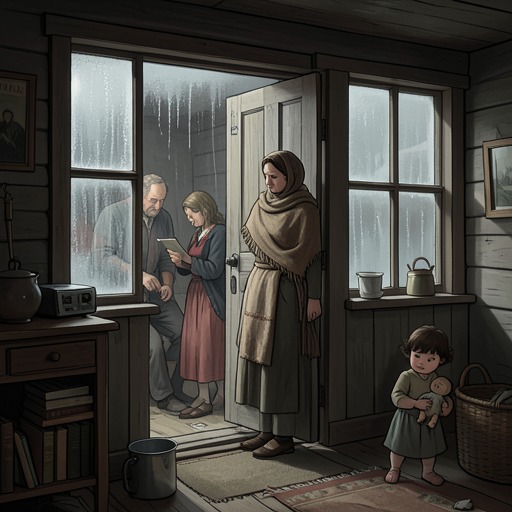
The fête is announced to Oneguine as a Saturday gathering: the Larina household has asked him to attend Tattiana’s celebration. The invitation places him inside a social obligation he does not welcome. The party is not a private meeting between the principal characters but a country-house assembly, with the family’s neighbors arriving in sledges, britzkas, kibitkas, and coaches.
Their arrival produces a crush in the hall: greetings overlap with barking and the kisses of young ladies. This noisy, public entrance establishes the party’s social texture before its emotional conflict comes into focus. The celebration’s conventional hospitality brings together the very people whose relationships are about to be tested before an audience.
Tattiana at the Feast
Placed opposite Oneguine, Tattiana appears paler than the morning moon and more timid than a hunted doe. Her agitation is apparent to him. The contrast between her exposed, uneasy presence and the crowded festivity makes the gathering more than a neutral backdrop: the party puts her feelings in view while giving Oneguine an audience for his response.
Oneguine has endured the feast against his inclination and is full of ire. Rather than withdraw or quietly tolerate the gathering, he decides to punish Lenski by riling him. The turn begins in resentment, but its chosen instrument is social attention: Oneguine means to use the celebration’s public rituals of conversation and dancing to make his friend jealous.
The Provocation
As the waltz sweeps couples around the room, Oneguine approaches Olga and takes her into the dance. He seats her on a chair, talks with her, and returns to her company; the action is conspicuous within the moving crowd and gives Lenski a direct view of the pair. The revenge is deliberate, not accidental: Oneguine has chosen Olga because he knows the display will strike at Lenski’s attachment to her.
Bouyanoff leads Olga and Tattiana to Oneguine, and he presses Olga’s hand. The attention brings a brighter blush to her cheek, while Lenski sees what is happening and becomes beside himself with jealous indignation. Oneguine’s conduct therefore has a double public effect: it draws Olga into the performance and turns Lenski’s private distress into something witnessed by the company.
From Jealousy to the Duel
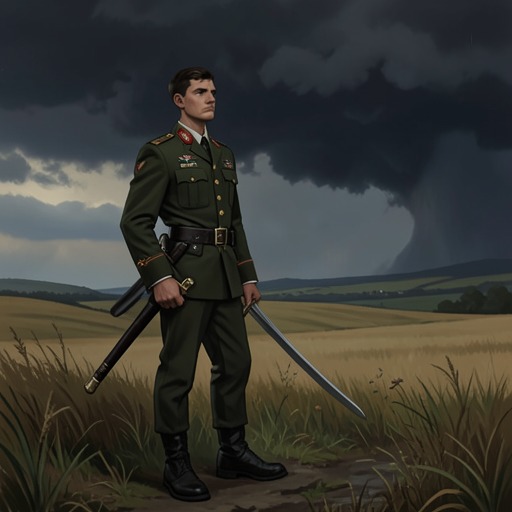
Lenski cannot bear the scene. He curses womankind, leaves the fête, orders his horse, and gallops home. The sudden departure changes the evening’s social affront into an impending confrontation. The narrator sharply reduces the apparent means of that consequence to two pistols and a pair of bullets: the instruments are few, but they will decide Lenski’s fate.
The fête thus marks the passage from Oneguine’s retaliatory amusement to a lethal crisis. His intention is to rile Lenski, yet the visible provocation collides with Lenski’s jealous response and the social force of honor; Lenski’s exit does not end the conflict but carries it beyond the party, toward the duel. The occasion’s importance lies in this reversal: a gathering called to celebrate Tattiana becomes the scene from which the story moves toward the death of one of its guests and the destruction of the friendship between the two men.
Social Performance and Consequence
The evening’s sequence is organized around watching and being watched. Neighbors assemble, the dance carries couples through the room, Oneguine makes his attention to Olga visible, and Lenski sees the display. Tattiana’s unease is also legible to Oneguine, but instead of treating that distress as a reason for restraint, he uses the occasion to settle his own grievance against Lenski. Public sociability makes the provocation effective because the gesture can be witnessed and interpreted as an insult.
The fête’s consequences extend beyond its immediate scene. It changes the direction of the friendship: Oneguine’s prank becomes the circumstance of Lenski’s challenge, and the pistols invoked at the end of the episode foreshadow the duel and Lenski’s death. The celebration does not itself contain the fatal outcome, but its crowded room, dance, blush, and abrupt departure form the chain by which festive custom gives way to violence.