The Larinas' Journey to Moscow
Eugene OneginThe Larinas’ Journey to Moscow turns the family’s move into a measured passage through weather, distance, and deteriorating roads. After a departure date repeatedly postponed finally arrives, the Larinas set out by their own horses rather than the post, fearing the expense; seven days and nights later they draw near Moscow. The journey gives Tatyana the pleasures of the road, while making clear that the move toward society is governed by practical constraints and the slow pace of travel.
Departure and preparation
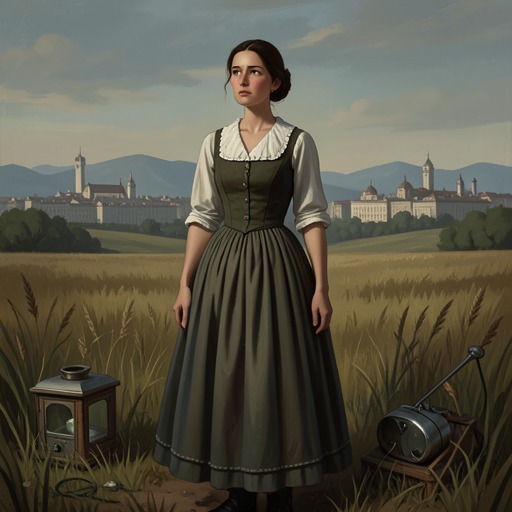
The journey begins only after a date that has been fixed and postponed more than once at last approaches. The delay gives the departure a sense of accumulated anticipation: leaving is not an instantaneous change of scene but a plan repeatedly deferred before it becomes unavoidable. The preparations are concrete and domestic. The coach of state is harnessed, cooks prepare breakfast, and baggage is heaped up, turning the family’s decision to travel into a visible operation involving servants, provisions, vehicles, and luggage.
The circumstances of departure also establish the family’s economy. Rather than travel by the post, the Larinas choose their own horses because they fear the cost. The saving carries a consequence: their progress is measured in a week of travel rather than in a swift relay. The narrative does not treat the journey as frictionless movement between country and city; expense determines the means, and the means shape the time the family must spend on the road.
The road in winter
The trip unfolds in winter, when a sledge journey can be pleasurable despite the rough conditions. The text sets that pleasure against neglected infrastructure: bridges are rotting, and the posting stations are associated with bugs and fleas. The route is not an idealized landscape of effortless passage. Its inconveniences are part of the family’s actual experience, and the poor roads make distance felt rather than merely named.
The movement of the sledge gives the journey its own visual rhythm. Along the way, the verst posts catch the eye and flash past like a palisade. The comparison transforms a familiar roadside marker into a rapidly repeating image, while the rapid succession of posts registers the travellers’ forward motion. The narrator also recalls that the palisade joke had circulated in different national guises and traces its Russian form to the reign of Catherine the Great: a courier sent by Prince Potemkin drove so fast that his projecting sword rattled against the verst posts as though against a palisade. The anecdote makes the road’s markers part of a broader comic tradition, even as the Larinas travel at the slower pace imposed by their own horses.
Tatyana and the experience of travel
The practical choice of transport creates room for Tatyana to enjoy the journey. Because the family travels by its own horses, she can taste the pleasures of the road to her heart’s content. The episode gives her a perspective distinct from the itinerary’s logistical burdens: what arises from fear of expense for the family becomes, for Tatyana, an opportunity to experience the passage itself. Her pleasure does not erase the discomforts of the route; it coexists with the rough conditions and the long duration.
That duration is stated plainly: the travellers plod on for seven days and nights. The word conveys effort and slowness, contrasting with the passing verst posts and the sledge’s capacity to move through a frosty landscape. The journey’s rhythm thus holds motion and delay together. Tatyana’s enjoyment is not the result of arriving quickly, but of having the road itself extended into an experience.
Arrival and narrative significance
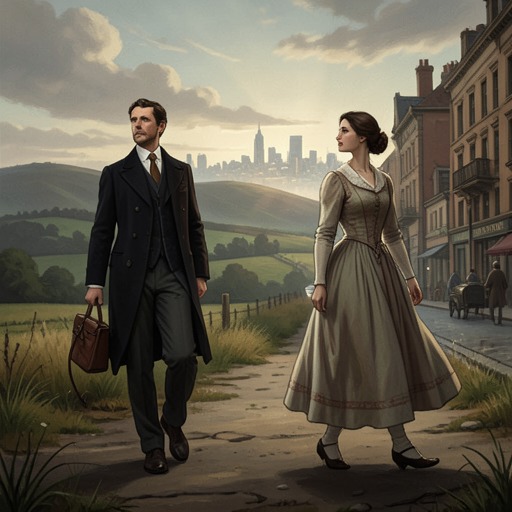
As the travellers draw near, the narrative turns toward Moscow and the next phase of the family’s story. Their departure from the countryside has involved postponed plans, packed baggage, breakfast preparations, cost-conscious transport, and a week of difficult roads; arrival is therefore the consequence of sustained, material movement, not a simple cut between settings. The journey relocates the Larinas and brings Tatyana closer to the social world in which her future will unfold.
The passage also links the novel’s wider seasonal and travel imagery. Earlier, winter is awaited after an autumn that lingers; elsewhere the dissolving beams of spring send snow rushing from the hills in turbid streams. Here winter is not only a season but a condition of travel, capable of making a sledge journey pleasing while leaving bridges neglected and stations disagreeable. The family’s move takes place within these physical cycles, so that weather and infrastructure help set the pace at which the plot can carry its characters from one social space to another.