Unrequited love
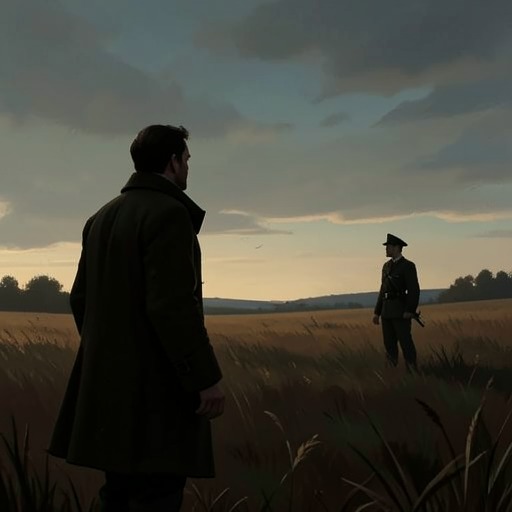
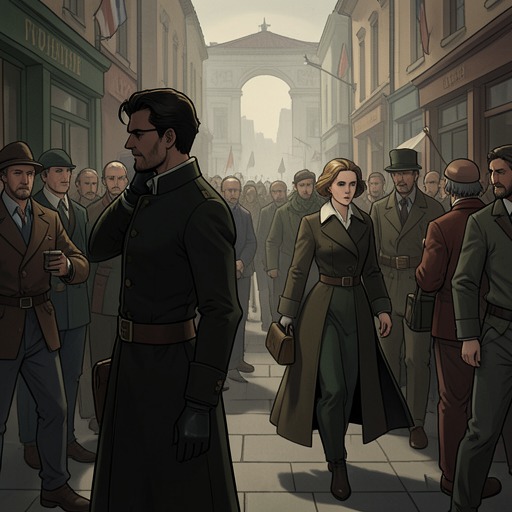
Eugene OneginUnrequited love in Eugene Oneguine changes hands without becoming mutual happiness. Tattiana’s earlier love for Oneguine, once refused, returns as Oneguine’s belated passion; but by the time he declares himself, she is married and will not leave her husband. Their final exchange makes the novel’s central asymmetry unmistakable: love may persist on both sides, yet timing, choice, and fidelity keep the lovers apart.
The reversal of the earlier refusal
At the close of the poem, Oneguine’s letter to Tattiana is introduced as the exact text of his letter, and its opening acknowledges that he expects his secret to sound like an insult to her. The confession is not the beginning of their story but a reversal within it: the man who once refused Tattiana now writes from a position of longing, addressing a woman whose life has changed. His awareness that she may receive his disclosure as an offense registers how little a declaration can undo the past.
The letter makes the change in his position concrete through its desire to see Tattiana’s face and follow her everywhere. His words describe attention fixed on her smiling lips and bright eyes, while the intensity of his pursuit contrasts with the earlier refusal. Yet longing does not give him a claim on her. The letter exposes his emotional change, not a promise that she will answer it in kind.
Confession and surrender
Oneguine’s letter frames his confession as the end of concealment: he can no longer wage the internal struggle in secret, and he declares that his life is hers. This language makes surrender the culmination of his appeal. The letter’s movement from foreboding about the effect of his secret to an unreserved offering of himself dramatizes the force of his present desire, even as its outcome remains beyond his control.
That gap between declaration and answer defines the exchange. Oneguine can state what he feels and name the life he would place at Tattiana’s disposal; he cannot determine what she will choose. The letter thus becomes an act of exposure rather than a successful courtship: the formerly withheld emotion is now spoken, but speech does not erase the circumstances under which it arrives.
Tattiana’s answer and the limit of reciprocity
Tattiana’s response begins by acknowledging the possibility that her image may have disappeared from Oneguine’s breast. She also refers to his suppressed sarcasm, connecting his present appeal with the history of the pair rather than treating it as an isolated declaration. Her answer recalls the earlier injury even as it recognizes the intensity of the present confession.
She then sets a boundary. Tattiana tells Oneguine to leave her forever, invoking the honour and pride she knows him to possess. Her command makes separation an explicit decision, not a failure to understand his feelings. The appeal to his own sense of honour also turns his former refusal into a standard by which he must now accept her refusal.
The answer does not deny love. Tattiana states that she loves him, but immediately asks what purpose there would be in deception: she is now another’s bride and will remain faithful forever. The conjunction is decisive. Love is present, but it does not supersede marriage or become permission to abandon it; her fidelity gives her response its firmness even as it makes the separation painful.
The ending of an unreturned love
The final exchange creates a deliberate reversal without a romantic reunion. Oneguine’s desire is belated; Tattiana’s love survives, but her answer is governed by a commitment already made. Each has become emotionally legible to the other at a moment when mutual feeling cannot produce a shared future. The poem closes this relation not by resolving the mismatch, but by letting Tattiana name both parts of her truth: she loves him, and she will remain faithful to her husband.
Unrequited love here is therefore relational and temporal rather than simply one-sided. Tattiana’s earlier declaration met Oneguine’s refusal; later, his confession meets her refusal to leave her marriage. The feelings have changed, but the pattern of non-fulfilment remains. His letter can no longer be answered by the unmarried Tattiana he once rejected, and her final words make clear that emotional recognition has arrived too late to reverse her choice. The ending gives love no guarantee of possession: its persistence sharpens the cost of separation instead of overcoming it.