Vladimir Lenski
Eugene OneginVladimir Lenski is a young poet whose bright, ardent character brings literary idealism into the provincial world of the poem—and whose death turns a quarrel with his friend Eugene Oneguine into irreversible tragedy. Introduced as a newcomer from Germany, he is at once a student of philosophy, a bard, and a lover; his promise is finally preserved not in the life he might have led, but in the stark words on his grave.
Identity and Background
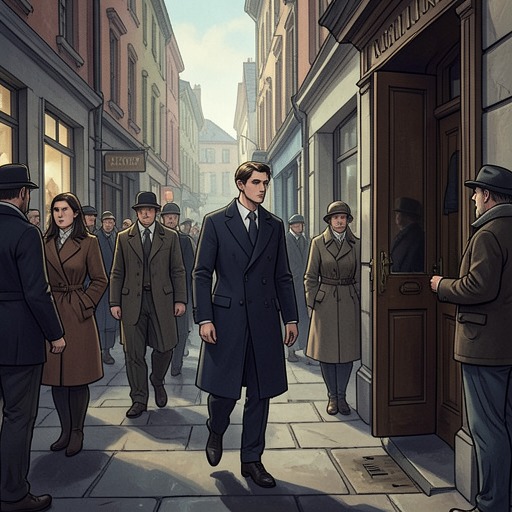
Lenski arrives in the district as a new proprietor, and the neighborhood finds fresh material for speculation in the newcomer’s close analysis. His name is given with deliberate emphasis: Vladimir Lenski. He has come inspired by Göttingen, worships Kant, writes poetry, and is described as young and handsome. These details make him more than a local landowner: his intellectual and literary formation comes from beyond the rural society into which he has settled.
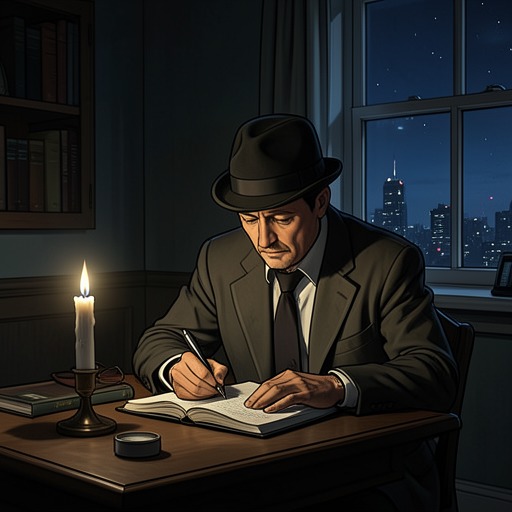
He brings from “mystic Germany” the fruits of learning, joined to a fiery and eccentric mind. The pairing matters. Lenski’s education does not cool his temperament into detached reason; it gives a learned vocabulary and imaginative intensity to a sensibility already ruled by feeling. He stands between philosophical study and poetic fervor, a combination that shapes both his ideals and his vulnerability.
Love and Friendship
Lenski’s attachment to Olga began when he was a boy. Before he knew the ache of a mature heart, he had already witnessed her tenderly and with emotion; the passage presents his love as an early bond, preceding his adult understanding of desire. In the later account, he becomes increasingly a captive of Olga’s bright beauty, surrendering himself to what the poem calls a delicious bondage. His love is thus both longstanding and idealizing: the girl he has cherished since childhood remains the center of a feeling that grows more consuming as he grows older.
His connection with Oneguine offers a contrasting attachment. Lenski has no desire to break his matrimonial vows to Olga, yet he aspires to friendship with Oneguine. The distinction places loyalty to his beloved alongside a chosen male companionship. It also establishes the relationship whose collapse will prove fatal: the poet seeks closeness, but the friend he approaches is capable of turning their social encounter into a test of honor.
Challenge and Death
The decisive conflict takes the form of a courteous challenge. The narrator characterizes the cartel as cheery and generous, an unsettlingly light description of a summons to fight. That formal civility does not soften what follows. In the duel, Lenski closes his left eye and takes aim; Oneguine fires, and the narrator marks the shot with a sudden lament. Lenski drops his pistol silently. The movement from ritualized politeness to gunfire makes the violence feel both socially prepared and abruptly final.
Oneguine hurries to the fallen young man, gazes at him, and calls to him, but care is useless: Lenski is already dead. The poem names him again as the youthful bard, now disappeared forever, while the storm is hushed. The quiet after the shot does not undo the act; it registers the cessation of a life whose defining qualities had been youthful promise and poetic intensity. Lenski’s death is the decisive consequence of the conflict with his friend, and the narrative’s return to the word “bard” makes the loss literary as well as personal.
The Tomb and Narrative Legacy
The poem later shifts from the immediate aftermath to a marble tomb beneath the spread branches of two old pines. A passing traveller reads the inscription: “Vladimir Lenski lies beneath, / Who early died a gallant death,” The scene gives the dead poet a fixed place in the landscape, but the grave’s brief epitaph reduces a vivid, passionate young man to the fact and manner of his early death.
That contrast completes Lenski’s arc. The newcomer once supplied the neighborhood with fresh sport through his analytical mind; the poet who came bearing learning and ardor is finally encountered as a name beneath stone. His love for Olga and his friendship with Oneguine converge in a death that cannot be recalled, while the tomb preserves only a compressed public memory. Lenski’s promise remains visible precisely through what the story withholds: the future his youth suggested is cut off, and the silence after the shot gives way to the traveller’s reading of the grave.