Izumi and Keiko erase Tooru from Maori’s records
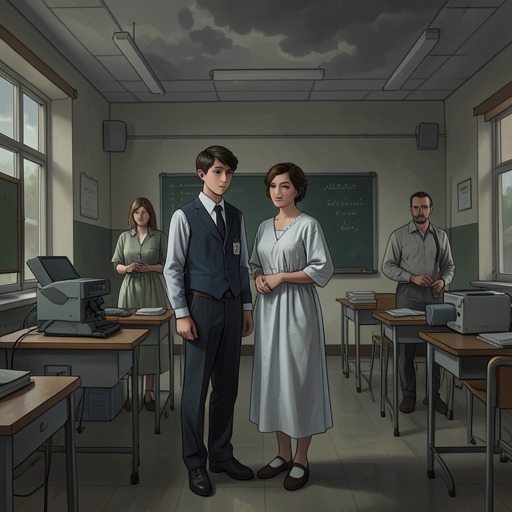
Even If This Love Disappears From the World TonightIzumi Wataya and Keiko Nishikawa erase Tooru Kamiya from Maori Hino’s records after his death, fulfilling the last request he entrusted to Izumi. The operation is at once an act of care and a profound intervention in Maori’s life: it is meant to spare her the repeated shock of learning that her boyfriend is dead, but it removes evidence of their relationship without her consent. Its painstaking substitutions reveal that memory can be edited across many media, while the traces they cannot bring themselves to destroy preserve the possibility of its return.
The request and its dilemma
After Tooru’s death, Izumi is left to decide whether to carry out his wish. She recognizes that she alone can do it, yet is uncertain whether erasing him would be right. In conversation with Keiko, she lays out the danger of leaving the records intact: Maori might suffer whenever she rereads that her boyfriend has died. Erasing him could help Maori, but Izumi might live with guilt, and the outcome of either choice remains uncertain.
Keiko offers practical help rather than claiming the authority to settle the moral question. She says she can type the journal and binder into a computer and repair the passages from which Tooru is removed. Her reasoning leaves the decision with Izumi: either course could cause suffering, and neither can be judged in advance by its result. Keiko is willing to follow Izumi’s choice and help fulfill Tooru’s request, but insists that Izumi must decide whether she wants to act.
Izumi ultimately decides to proceed without telling Maori, believing Maori would stop her if asked. She also judges that delay would prolong the risk of harm. While Maori is away from her room, Izumi takes the binder and journal from a drawer, makes copies, and prepares to alter them. The secrecy is not incidental: the plan depends on withholding the decision from the person whose account of her own life is being changed.
Rewriting the written record
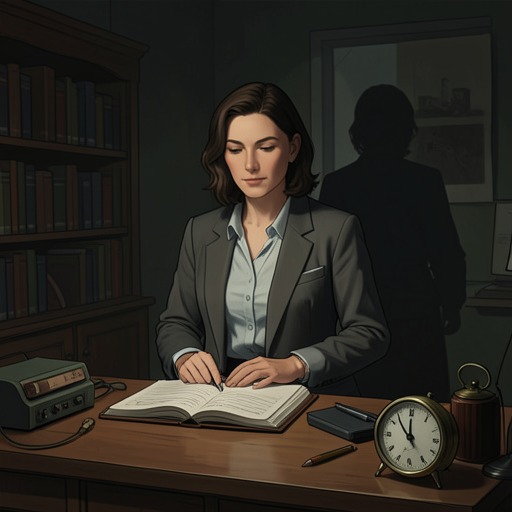
Keiko stays up through the night transferring Maori’s journal and binder to her laptop. Rather than simply deleting Tooru’s name, she substitutes Izumi into the entries and adjusts surrounding details so that the revised account will read naturally. For example, she changes the record of Maori and Izumi being in different classes in their third year of high school to say they were classmates, as they had been the year before, and smooths references to other people to fit the alteration.
Izumi compares the rewritten diary with the original. Every original entry carries memories of Maori and Tooru together, and reading the two versions side by side makes the erased relationship vivid to her. Keiko’s editing is therefore more than a search-and-delete operation: it constructs an alternative continuity in which Izumi occupies Tooru’s place in the record. The new account must be plausible enough to guide Maori through her daily life without alerting her to what has been changed.
The erasure extends beyond the paper records. Tooru appears in Maori’s current phone in photographs, videos, messages, and text exchanges with Izumi. The group decides that Maori needs a new phone, with her parents to explain that the old one broke. They also plan to say that the messaging-app data was lost in a failed transfer, and to give the same explanation in the digital journal and notes. The replacement phone and the account of a technical mishap turn a deliberate removal into an apparently ordinary inconvenience.
On the morning of the third day after Tooru’s funeral, Izumi enters Maori’s room while Maori is sleeping in her parents’ room. She gathers the binder and the numerous volumes of the journal, then installs the revised digital records on Maori’s laptop. Keiko has also created entries covering the days since Tooru’s death, and has altered the folders’ and documents’ timestamps with a program so the new material will fit the apparent chronology. From then on, Maori is expected to read and add to the digital journal and notes on the laptop, believing this is how she has always kept them.
Izumi also registers Maori on a new messaging app and deliberately disrupts the data transfer, leaving no access to earlier exchanges that mention Tooru. She takes away the old phone, but keeps it rather than discarding it. She removes the pages depicting Tooru from Maori’s sketchbooks, carefully places the drawings in a large folder, and cuts the remaining torn edges from the books. These different treatments distinguish concealment from destruction: the accessible record is stripped of him, while some physical evidence remains in Izumi’s possession.
The notes on the wall
The wall notes require the same intervention as the journal and phone. Izumi replaces all of them, not just the notice telling Maori to read her records, because changing a single sheet might look suspicious. She prints the replacement notes from her computer and knows their wording by heart. The central adjustment shifts the location of Maori’s daily record from her desk to her laptop, aligning the wall instructions with the new system.
While replacing the notes, Izumi discovers a sticky note on the back of one sheet. It reads, “Even if I recover, always remember Tooru Kamiya. The important things will always be in an important place.” Because it is hidden behind the note, Izumi suspects Maori placed it there to be found when she took the sheet down after recovering. She cannot know whether it reflects a conscious suspicion of the concealment or the strength of Maori’s feelings, but she keeps it rather than removing it from her possessions.
Izumi tapes up the printed replacements and leaves the room with the sticky note preserved in her bag. The sight of the new sheets strikes her as lifeless beside the notes that had watched over Maori day after day. The rewritten instructions direct Maori toward a curated version of her past; the concealed message, kept outside that version, points in the opposite direction. It is a small surviving record of the person the larger operation is designed to remove.
Aftermath and the limits of protection
When Maori resumes reading from her laptop, she does not know that Tooru has died. Yet the altered records and missing messages do not make her feel well. She notices that the conversations with Izumi are no longer available and says they had reminded her how much fun they had; the failed transfer, as she understands it, means she cannot look at them anymore. Her unease persists without the information that would explain it.
Izumi responds by embracing her and promising that they will have more fun together, in messages and in real life, and that she will make Maori’s tomorrows enjoyable. Maori is confused by Izumi’s unusual intensity, but accepts the comfort and rests her face on Izumi’s shoulder. The reassurance echoes the broader care that has sustained Maori through her memory loss, while exposing the cost of the plan: Izumi must comfort her without telling her what has been taken away.
The sequence makes the records both practical supports and instruments of control. Maori has relied on written notes and journals to learn her own circumstances, so replacing their contents changes not merely what she remembers but the information available to her each morning. The edited diary, new phone, modified wall notes, and removed drawings form a coordinated account of a life from which Tooru appears to have been absent. At the same time, Izumi’s retained phone, the folder of drawings, and the hidden sticky note keep parts of that past outside the official version. The act can protect Maori from repeated grief in the short term, but it cannot establish that forgetting is what she would have chosen—or make the erased relationship cease to matter.